


Botanical illustrations bring a lovely mix of color and detail to junk journal spreads, from delicate leaves to bold garden blooms.
I enjoy pairing them with paper scraps, simple notes, and little bits of pattern to see how each layout comes together.
These 16 ideas show different ways to arrange botanical images, whether you prefer a full layered collage or a more open, easygoing page.
You can use what you already have and try a few combinations of your own as you browse.
Layered Lily Botanical Journal Cover

A large vintage-style lily illustration anchors this botanical journal cover, while torn book-page scraps, a translucent fern insert, and fabric trim create a layered, tactile border around it. The muted cream, brown, and green palette keeps the busy collage cohesive and lets the flower remain the clear focal point.
The central print can be replaced with another botanical illustration, such as a fern, wildflower, or seed-pod study, while coordinating scraps of printed paper build up the edges. For a simpler version, keep the lily and just one small paper fragment; to add texture, tuck a translucent botanical insert beneath the main image as shown.
Layered Botanical Spread With a Tag Pocket

A vintage-style botanical spread pairs large printed fern and flower illustrations across both pages, with torn map and ledger-paper layers adding a varied backdrop. A paper pocket near the bottom holds several matching plant-illustrated tags, while a strip of lace and the aged-looking neutral palette bring extra texture without competing with the drawings.
The pocket and tags make this arrangement useful for combining decoration with space for notes or small keepsakes. For a similar look, layer botanical prints over map or book-page scraps, then make a simple pocket from kraft paper and tuck in tags featuring different leaves or flowers; using fewer paper layers can keep the spread more open.
Layered Rose Journal Cover With Lace and Tag

A large vintage-style rose illustration anchors this kraft-paper journal cover, layered over a muted green paper mat and framed by a band of floral paper and crocheted lace. Dried-looking sprigs, a small botanical tag, and pink twine add texture while keeping the rose as the main focal point.
The cover’s arrangement can be adapted with any oversized botanical print, such as a fern, wildflower, or seed-packet illustration, layered over contrasting paper scraps. Use a short piece of lace and a tied tag to echo the original details, or simplify the design by leaving out the sprigs and keeping just the floral image and patterned paper band.
Layered Botanical Illustration Page

A vintage-style botanical page pairs a large printed plant illustration with rough-edged cream paper and a muted green paper layer peeking out beneath it. A translucent strip of script-printed paper overlaps the right side, while small gold leaf embellishments add a subtle contrast to the olive tones.
The layered papers make this layout easy to adapt with different plant prints, such as fern studies, wildflowers, or seed-pod illustrations. Keep the narrow translucent overlay for a softer, archival look, or replace it with a small tag if you want a more practical spot for a note; scraps of green paper can provide the same contrast without needing a full sheet.
Fern and Orchid Botanical Journal Spread

A fern-and-orchid collage turns an open journal spread into a layered botanical scrapbook, with a large monstera cutout anchoring the center among fern prints, orchid illustrations, floral paper, and greenhouse imagery. Torn cream papers and patterned scraps overlap across the pages, while small labeled cards and a translucent pocket with a botanical insert add variety to the dense arrangement.
For a similar look, build the collage around one oversized leaf cutout, then balance it with smaller plant prints and pieces of coordinating floral paper. A vellum-style pocket can hold a simple illustrated card, while seed labels or other plant-themed ephemera fill gaps; to make the layout less busy, use fewer prints and keep the fern and orchid elements as the main accents.
Botanical Specimen Pocket Spread

Three rows of botanical specimen cards give this open journal spread a tidy, archival look, with a blue flower, a fern, and a yellow flower as the focal illustrations. Each card sits beside a brown folded paper flap, while translucent envelopes and small blank labels add layered storage details against the textured, vintage-style pages.
You could recreate the arrangement with printed plant illustrations, kraft-paper flaps, and vellum or tracing-paper envelopes for holding notes or small paper scraps. Keep the rows for a neat specimen-collection feel, or vary the flowers and foliage to make each section seasonal; if you want a simpler version, use one illustrated card and envelope on a single page.
Dark Botanical Journal Cover With Celestial Details
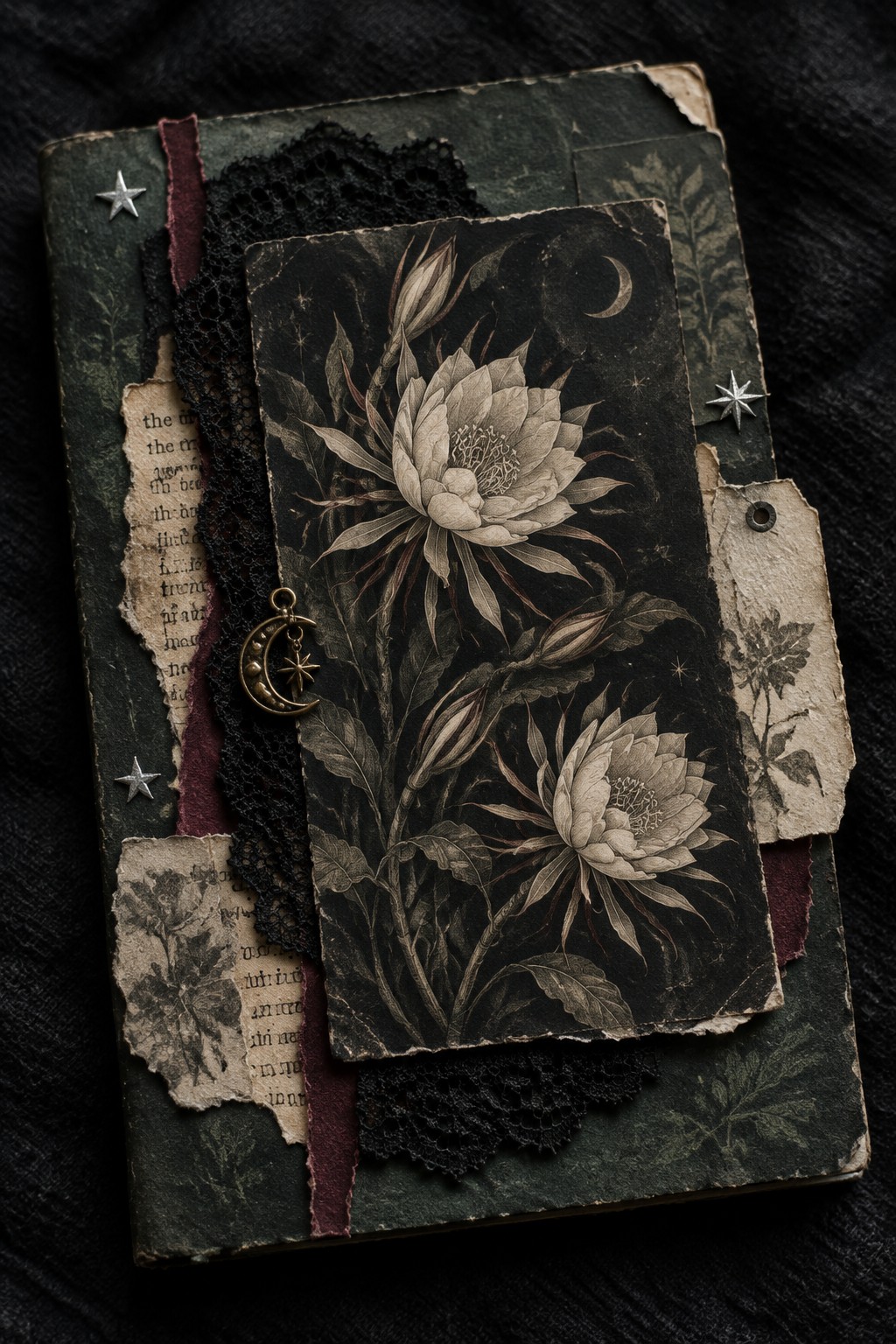
A dark botanical journal cover pairs a large vintage-style flower illustration with torn book-page fragments, black lace, and burgundy fabric strips. The layered cover is anchored by pale floral artwork against charcoal paper, while small star decorations and a crescent-moon charm add a subtle celestial accent.
The central flower print can be swapped for another botanical illustration, such as a fern, seed head, or wildflower, while keeping the dark background and contrasting torn paper layers. For a simpler version, use one lace fragment, a narrow ribbon strip, and a single star or moon detail; a loose paper tag can add another layer without competing with the cover’s focal point.
Pink and Sage Rose Journal Spread

A vintage-inspired rose theme ties this open spread together, while the pink and sage pages keep each side distinct. On the left, three rose illustration cards overlap a paper doily against a softly patterned background; on the right, a floral paper pocket holds botanical tags, with lace trim adding another layer of texture.
The arrangement is easy to adapt with printed flower cutouts, patterned paper scraps, and a doily or lace fragment. You could change the roses to another botanical subject, then tuck matching tags into a pocket made from a folded paper scrap; a simpler version could use one illustration on the left and just two tags on the right.
Vegetable and Sunflower Journal Cover

A vintage-style botanical cover pairs printed illustrations of radishes, peas, blue flowers, and sunflowers with a lace band and a small blank label. The overlapping illustrated cards rise from a pocket-like front panel, while the worn kraft-colored notebook and visible binding add contrast to the patterned papers.
You could recreate the arrangement with a few botanical prints tucked behind a decorated paper panel, then use a strip of lace to hold the layers in place visually. Swap the vegetables and flowers for herbs, fruit, or seasonal plants, and leave the label blank for a later title or name.
Layered Botanical Collage Cover

A botanical collage cover pairs vintage-style plant illustrations with torn green and mustard paper, cream cardstock, and a translucent strip of script-printed paper. The large poppy print anchors the composition, while the cactus illustration and green leaf cutout balance it across the layered, slightly offset pieces.
You could recreate the arrangement with a flower print as the main focal point and smaller plant illustrations tucked around it, using scraps in two coordinating colors to tie the layers together. The translucent script paper adds texture without hiding the illustrations, and you could swap in other botanical prints, such as herbs or seed pods, to give the cover a different theme.
Botanical Tag Pocket With Lace

A layered botanical pocket page turns a stitched kraft-paper panel into a holder for several flower tags, each paired with a small plant illustration. The mix of pressed-flower-style embellishments, vintage-style grid paper, floral fabric strips, and a crocheted lace edge creates texture while keeping the tags as the focal point.
You could build a similar arrangement with a paper or fabric pocket and tags featuring different flower cutouts or printed specimens. Keep the tags in a coordinated palette, then swap the floral fabric for a narrow ribbon or patterned paper if you want a simpler finish.
Vintage Botanical Spread With a Map Pocket

A vintage-style botanical spread pairs a large printed grass illustration on the right with layered map paper and a kraft pocket on the left. A small botanical card and hanging plant tag peek from the pocket, while torn coastal images, script, stamps, and lace-like paper edges tie the two pages together.
You could recreate the arrangement with a large plant print as the focal point, then use map scraps and torn landscape images to frame it without crowding the page. A kraft pocket gives small cards and tags a place to sit; swap in different botanical prints or map colors to shift the theme toward a local landscape, garden, or travel journal.
Pink Rose Botanical Tag

A tall, vintage-style tag pairs a large botanical rose illustration with marbled cream paper and a scalloped paper layer with pierced edges. A narrow floral fabric band crosses the middle, while a pearl-like embellishment and dusty pink ribbon add contrasting texture without competing with the flowers.
The tag format makes this arrangement easy to use as a journal insert or bookmark, and the layered papers give it enough presence to tuck into a pocket or display on a page. Try the same layout with a different printed flower, a strip of lace or patterned fabric, and ribbon in a coordinating color; a simpler version can skip the pearl and use just the illustration and band.
Autumn Leaf Journal Spread With a Specimen Pocket
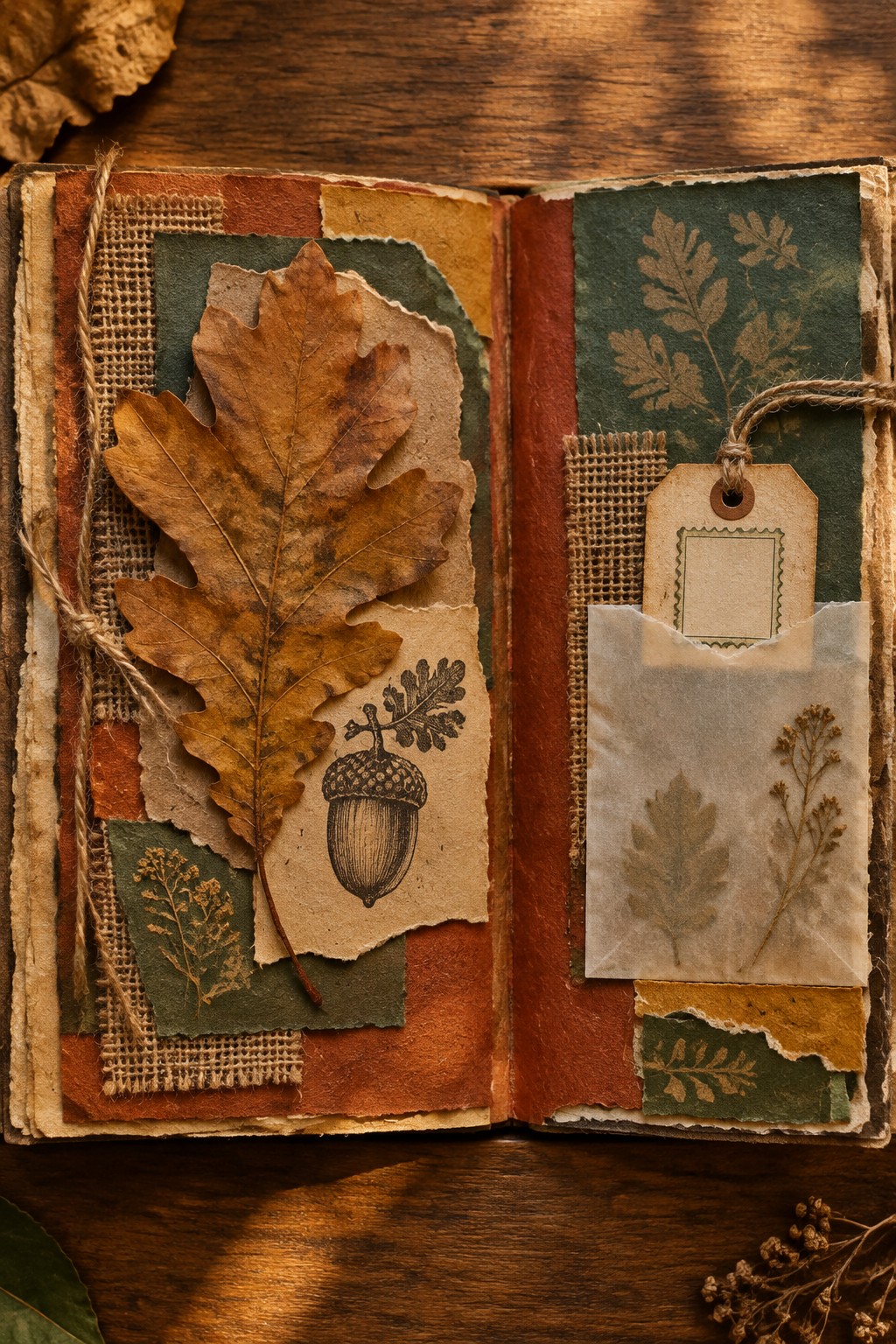
An autumn botanical spread combines a large dried-leaf-style cutout with torn, vintage-style papers and an acorn illustration on the left, while the right page balances the collage with a translucent pocket and tag. Rust, ochre, and deep green papers tie the pages together, and burlap-like panels and twine add contrasting texture.
The oversized leaf makes a strong focal point, so you could keep the rest of the collage simple with a few torn paper scraps and one small botanical print. Try a translucent paper pocket to hold a kraft tag, or switch the leaf and acorn for other seasonal plant illustrations while keeping the warm colors and twine details.
Lace-Trimmed Botanical Journal Cover
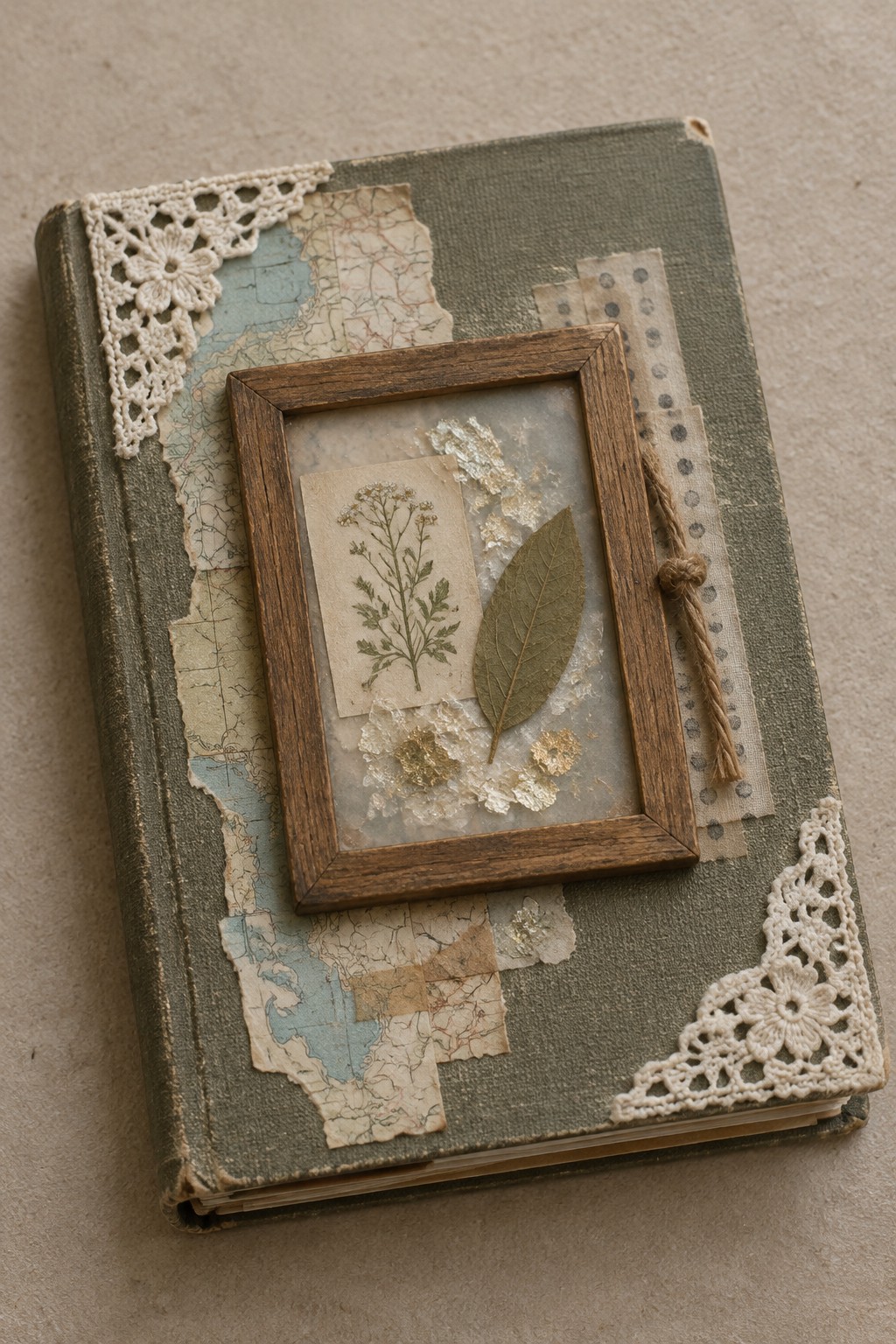
A vintage-inspired map collage turns this clothbound journal cover into a backdrop for a small framed botanical arrangement. The wooden frame draws attention to a printed plant illustration and a leaf cutout, while torn map pieces, lace corners, and a narrow patterned paper strip add contrasting textures in muted greens, creams, and browns.
For a similar cover, layer torn map-style paper over a fabric-textured notebook, then build a small focal point from a botanical print and a leaf-shaped cutout inside a miniature frame or paper border. Lace can be replaced with doilies or scalloped paper, and the plant image could be swapped for a fern, flower, or seed illustration; keeping the layers in a restrained, earthy palette helps the focal point stand out.
Sunflower and Vegetable Journal Cover

A bright botanical cover pairs a large sunflower illustration with leafy beet and pea-pod drawings, using the produce as a simple garden theme. The cream paper is framed with colorful patterned borders, while a small fabric pocket holds a round plant tag and a folded floral-paper flap adds dimension beside a blank label panel.
The illustrated vegetables give this cover a clear focal arrangement, so you could keep the same layout and substitute other garden prints, such as tomatoes, herbs, or carrots. For a simpler version, use one patterned border and a single pocket; to keep the layered look, add a small tag and folded paper panel without crowding the main illustrations.
Frequently Asked Questions
Start with one botanical illustration as the focal point, then build around it with simple layers. Try a pressed-flower specimen page, a garden-inspired journal entry, or a vintage seed-packet collage. Add a handwritten label, a date, and a few small details such as a paper scrap or leaf-shaped stamp. Keeping the page to a limited color palette helps it feel cohesive without needing advanced techniques.
Look in public-domain botanical books, vintage seed catalogs, old gardening magazines, and library collections. You can also use your own drawings, photographs, or scans of illustrations you have permission to reproduce. Before cutting up a book or printing an image, check its copyright status and any usage restrictions. For a personal journal, you can also make your own illustrations using leaves or flowers as references.
Give the illustration space and contrast. Mount it on a contrasting piece of paper, frame it with a simple border, or place it over a subtle background such as a faded ledger page. Keep busy patterns and bulky embellishments away from the main image. A small handwritten caption, specimen number, or botanical name can add interest without competing with the illustration.
Use fully dried, pressed plant material, since fresh or damp leaves can stain pages or encourage mold. Attach delicate pieces with small amounts of archival glue, narrow paper hinges, or photo corners. Another option is to place the plant inside a glassine pocket or fold-out flap so it can be viewed without being handled directly. Store the journal in a cool, dry place away from direct sunlight.
Choose a recurring element to carry through the pages, such as a consistent color palette, the same style of labels, or a recurring theme like garden seasons or plant specimens. You might use related papers and embellishments while varying the layout from spread to spread. This creates a collection that feels coordinated without making every page look the same.
