


I’m always drawn to botanical details, from delicate pressed flowers to little leaf sketches and seed-packet scraps.
They bring a natural feel to journal pages, and they’re easy to mix with everyday paper, handwritten notes, and simple collage layers.
I like trying different arrangements to see how a single specimen or floral motif can change the look of a page.
These 19 nature junk journal ideas offer plenty of approachable ways to play with botanical pieces and pressed-flower designs.
Pressed Botanical Journal Cover
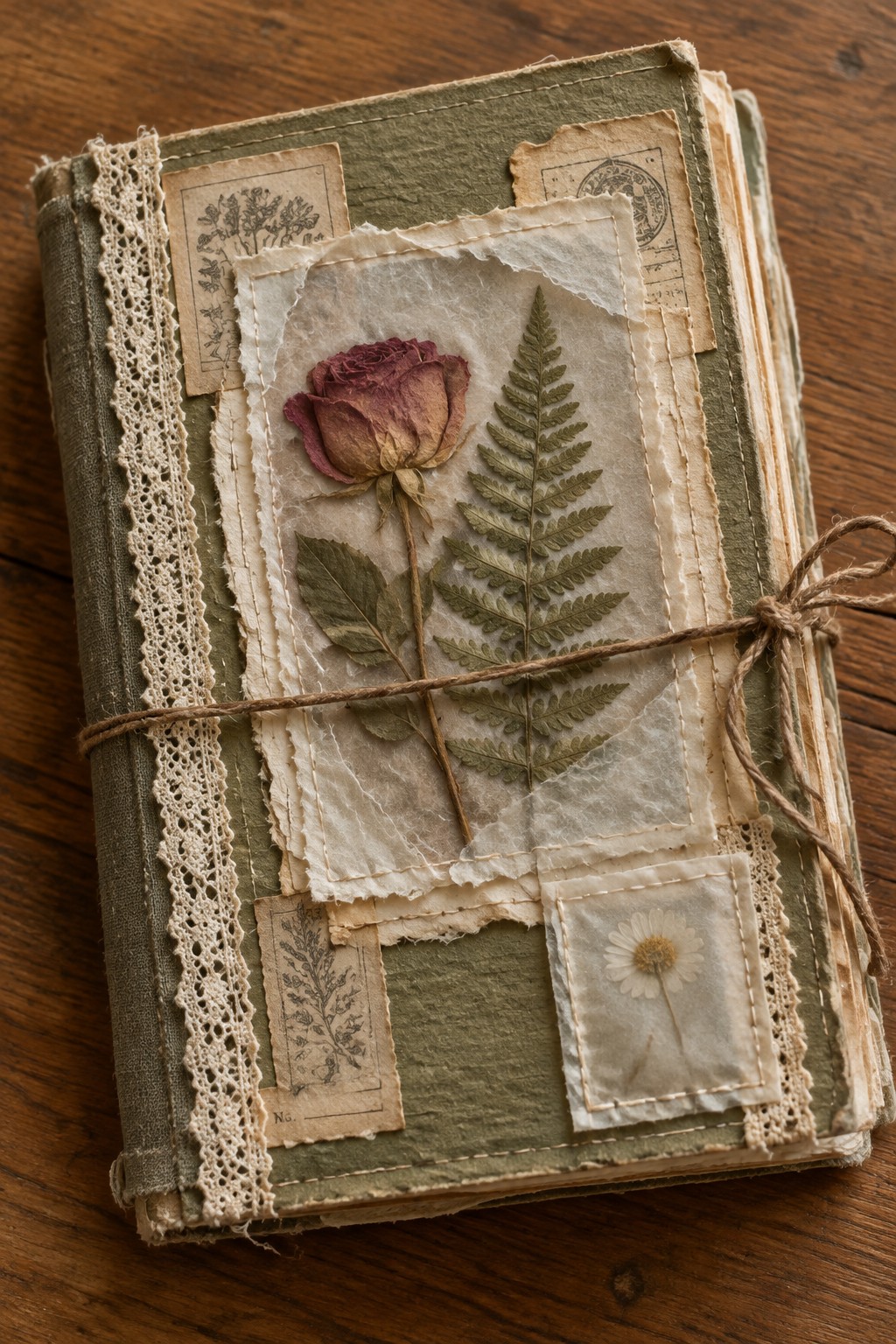
A layered botanical cover pairs a dried rose and fern specimen with torn translucent-looking paper, vintage-style plant prints, and a narrow strip of lace. The muted olive fabric, cream paper, and brown twine tie the textures together, while the large central panel gives the flower and fern a clear focal point.
You could recreate the arrangement with a favorite flower or leaf, a few botanical cutouts, and torn paper scraps in a coordinated palette. Keep the central specimen panel and lace trim as the main features, or simplify the cover by using one plant motif and a single printed label; twine can still bring the layered papers together visually.
Botanical Specimen Journal Spread With Tag Pocket

A vintage-style botanical spread pairs pressed-flower-style embellishments with map-print paper, torn cream layers, and handwritten-looking script. Yellow and white flowers anchor the left page, while a fern-printed paper pocket on the right holds three small botanical tags, tying the two sides together without making them identical.
The layered arrangement could be adapted with floral cutouts or pressed specimens you already have, using torn book pages or map-print scraps as a background. Keep the pocket and tags as the main feature on one page, then simplify the opposite page to a few coordinated flowers and a small label if you want a less crowded spread.
Pressed Magnolia Cover on Handmade Paper
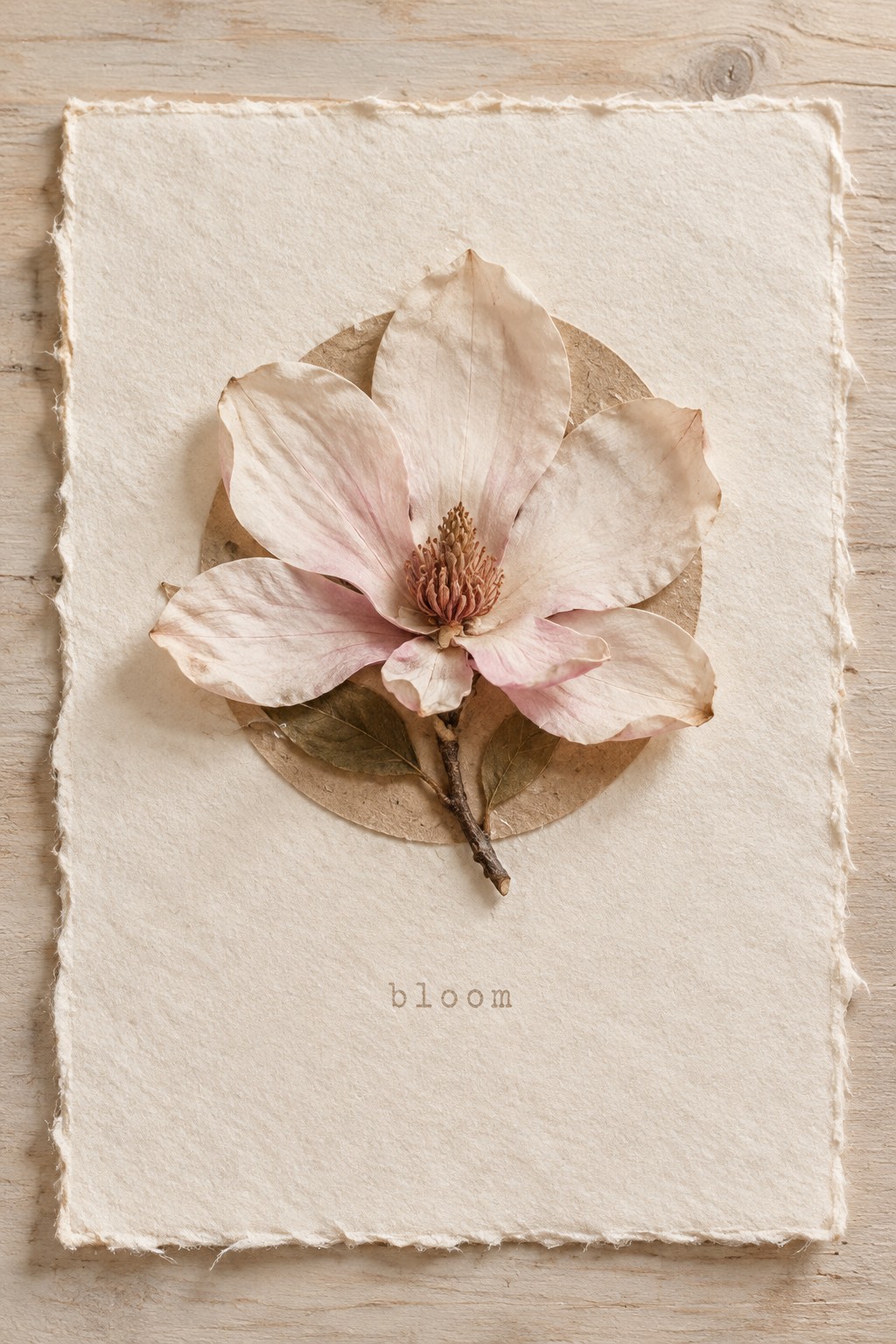
A single pressed-flower-style magnolia arrangement makes a striking cover focal point, set against a round brown paper layer on a large sheet of deckle-edged cream paper. The pale pink petals, dried-looking leaves, and small typewritten “bloom” detail keep the composition soft and restrained, while the overlapping botanical pieces add texture and depth.
For a similar cover, layer a large flower cutout with leaves over a circle of kraft or vintage-style paper, then leave plenty of open space around the arrangement. A magnolia can be swapped for another flower or leaf specimen, and the small word near the bottom could be changed to suit a seasonal journal or left off for a simpler look.
Layered Violet Botanical Journal Pages

A vintage-style botanical collage turns an open journal into a collection of overlapping plant-study papers, with a large violet illustration anchoring the layout. Torn script fragments, a small landscape print, lace, and a translucent-looking strip with violet motifs create varied textures, while the warm cream and muted green palette keeps the many layers cohesive.
You could build a similar composition around a different printed flower or leaf illustration, then gather torn book pages, scrapbook-paper scraps, and lace in related colors. Keep the main botanical print prominent and let smaller ephemera overlap its edges; for a simpler version, use fewer paper fragments and one small floral cutout instead of several competing details.
Botanical Pocket Cover With Specimen Inserts

A kraft-paper journal cover becomes a botanical pocket page, with a slanted patterned-paper pocket holding a plant-decorated tag, a map-style insert, and a translucent floral packet. The muted green prints and cream lace tie these layers together, while the dried-looking stems on the tag and blue floral embellishment provide distinct focal points.
You could recreate the arrangement with a kraft cover, a diagonal pocket made from patterned scrapbook paper, and a strip of lace along its edge. Tuck in a tag and map or book-page scraps, then switch the floral motifs to leaves or seasonal plant prints to suit the journal’s theme.
Vintage Botanical Specimen Journal Spread
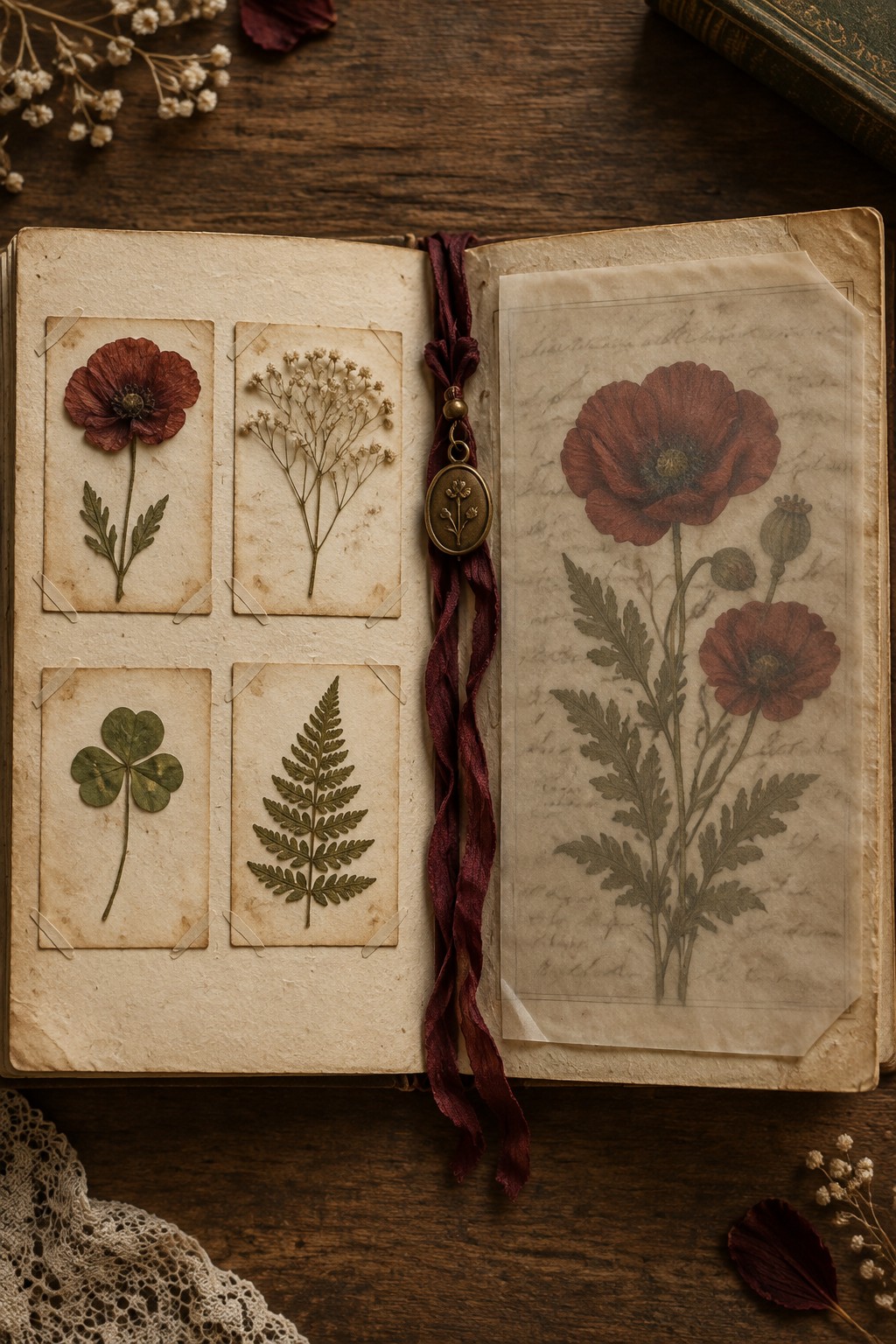
A botanical specimen spread pairs four small plant cards on the left with a larger poppy illustration tucked beneath a translucent sheet on the right. Cream, aged-looking paper, a burgundy ribbon binding, and a small brass-tone flower charm tie the pressed-flower-style motifs together without making both pages feel identical.
The small cards create a neat grid, while the larger illustration gives the right page a clear focal point. For a similar layout, combine botanical prints or cutouts with a pale vellum-style overlay, then swap in ferns, clover, or other plant motifs; a ribbon and small charm can add a finishing detail, or be left out for a simpler paper-focused spread.
Wildflower Collage Journal Page With Recipe Pocket

A loose bundle of daisy-like blooms, purple flowers, and yellow sprigs creates the focal point of this botanical journal page, set over vintage-style plant illustrations. Torn pastel paper, a floral fabric fragment, lace, and twine add contrasting textures, while a small lined recipe card tucked over the lower corner gives the layered collage a practical page detail.
You could recreate the arrangement with a printed herbarium page, a small bunch of dried flowers or floral cutouts, and scraps of patterned fabric or lace. Keep the flower bundle as the main feature, then tuck a recipe card or plain journaling tag beneath the paper layers; for a simpler version, use fewer blooms and let one botanical print carry the design.
Eucalyptus Journal Cover With a Botanical Corner
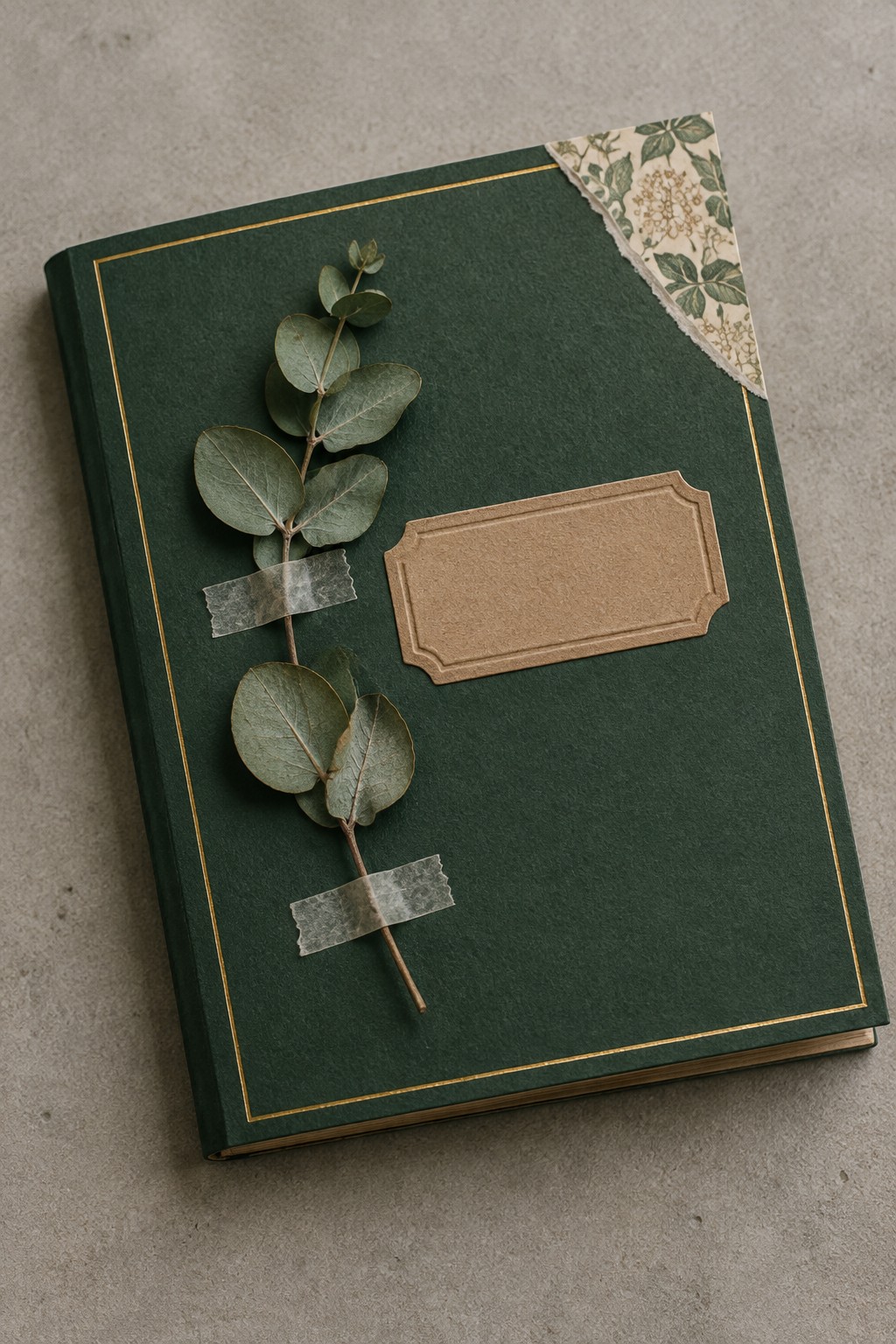
A dark green journal cover becomes a simple botanical composition with eucalyptus leaves arranged vertically beside a blank kraft-paper label. A fine gold border frames the cover, while a cream floral paper corner and two translucent tape strips add contrasting pattern and texture without crowding the focal point.
You could recreate the arrangement with a leafy cutout or pressed specimen-style embellishment, using tape to echo the visible mounting details. Keep the deep green and kraft tones for a similar look, or swap in another botanical print and matching paper corner to shift the theme toward a different plant or season.
Golden Botanical Specimen Collage Page
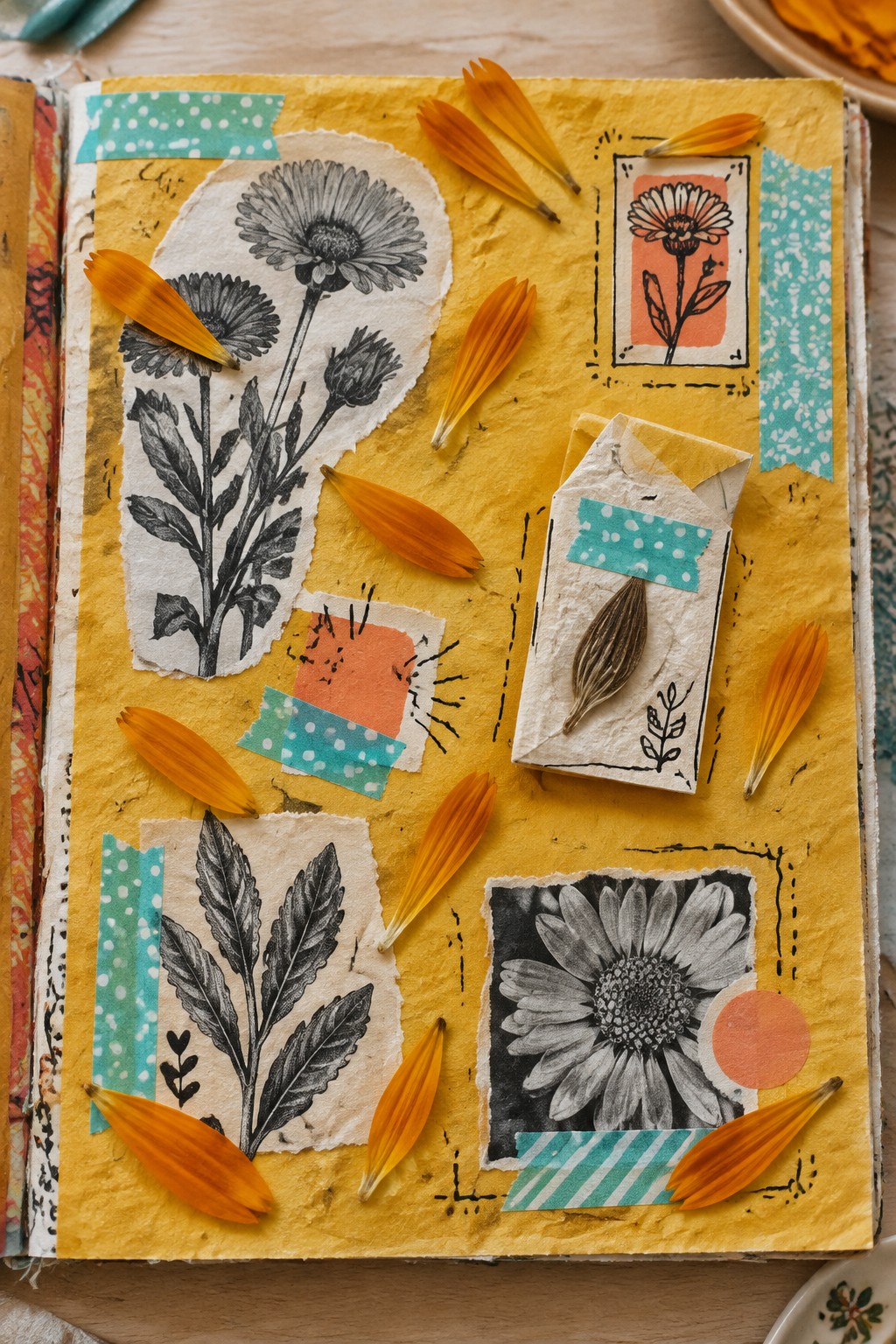
A golden, textured journal page brings together black-and-white botanical prints, small floral sketches, and loose orange petal embellishments in an irregular collage. Torn paper edges, teal polka-dot tape, and a folded paper pocket near the center-right add contrasting layers, while the flower images create clear focal points across the page.
The layout is easy to adapt with plant illustrations or leaf prints from different seasons, using a warm paper background and a single contrasting tape color to tie the pieces together. You could keep the pocket as a place for a small tag, or simplify the collage by choosing one large botanical print and a few petal-shaped cutouts from paper scraps.
Accordion Botanical Specimen Journal
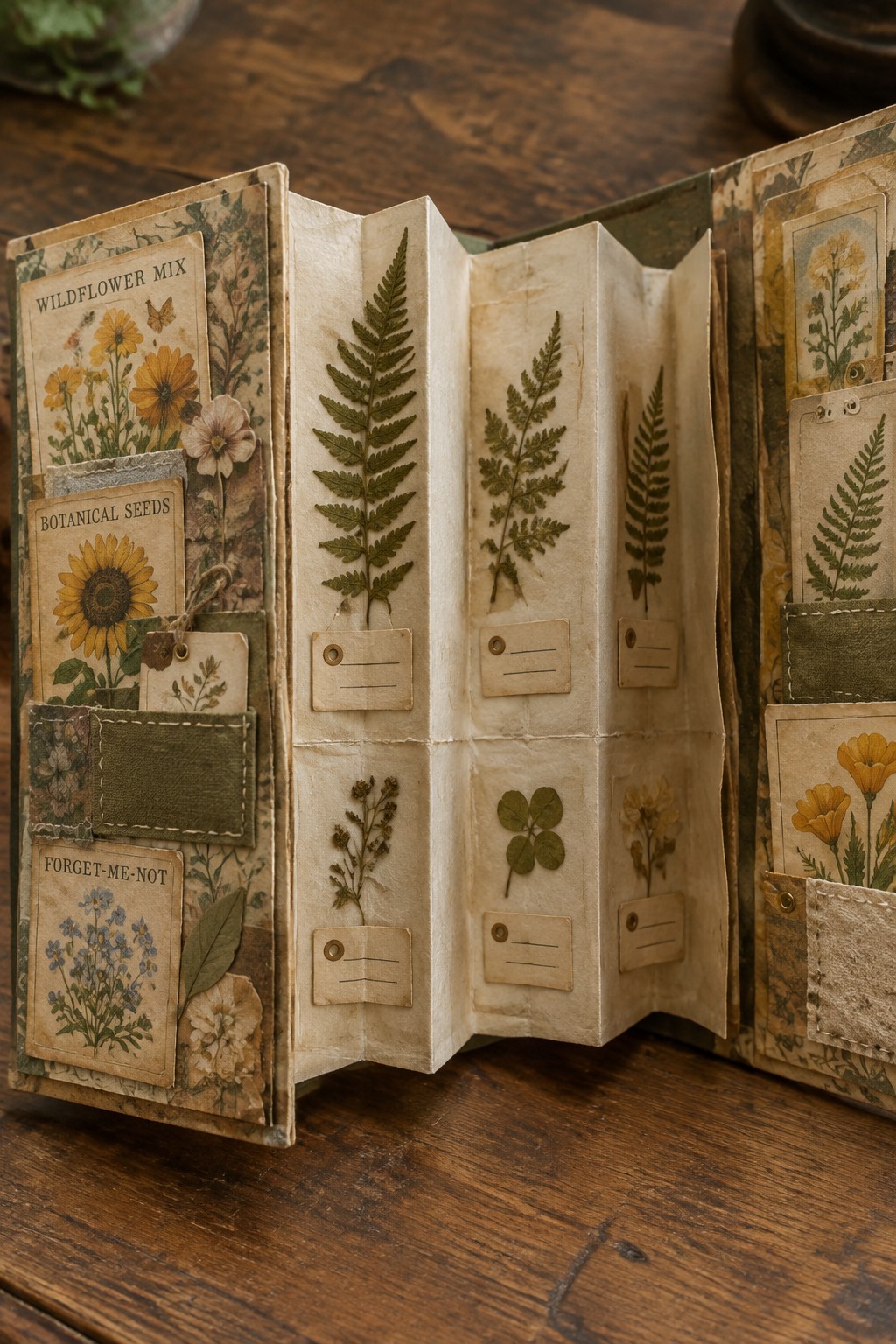
An accordion-fold botanical journal turns a series of narrow panels into a display for pressed fern fronds and other small plant specimens. Cream paper contrasts with the darker leaves, while specimen labels and layered floral seed-card illustrations on the outer panels bring the pages together in a vintage-inspired palette.
The folding format gives each specimen its own space, so you could adapt it with pressed leaves, small botanical prints, or paper cutouts paired with simple label tags. Use seed-packet illustrations or patterned scrapbook paper on the covers, and keep the inside panels plain if you want the plants to remain the focus.
Dark Botanical Journal Cover With Dried Roses

A dark botanical cover pairs two dried-looking purple rose embellishments with torn vintage-style paper, a floral print, black lace, and scattered petals. The roses form the main focal point, while the overlapping papers and lace create a richly textured collage against the nearly black book cover; a crescent moon and round botanical medallion add small metallic accents.
The layered arrangement can be adapted with a favorite flower cutout or a printed botanical illustration as the centerpiece, then balanced with torn script paper and a strip of lace or dark fabric. For a simpler version, use one rose and fewer paper layers; for a different seasonal theme, swap the purple petals for autumn leaves or pale spring flowers while keeping the dark cover as a backdrop.
Coastal Map Journal Cover With Botanical Specimens
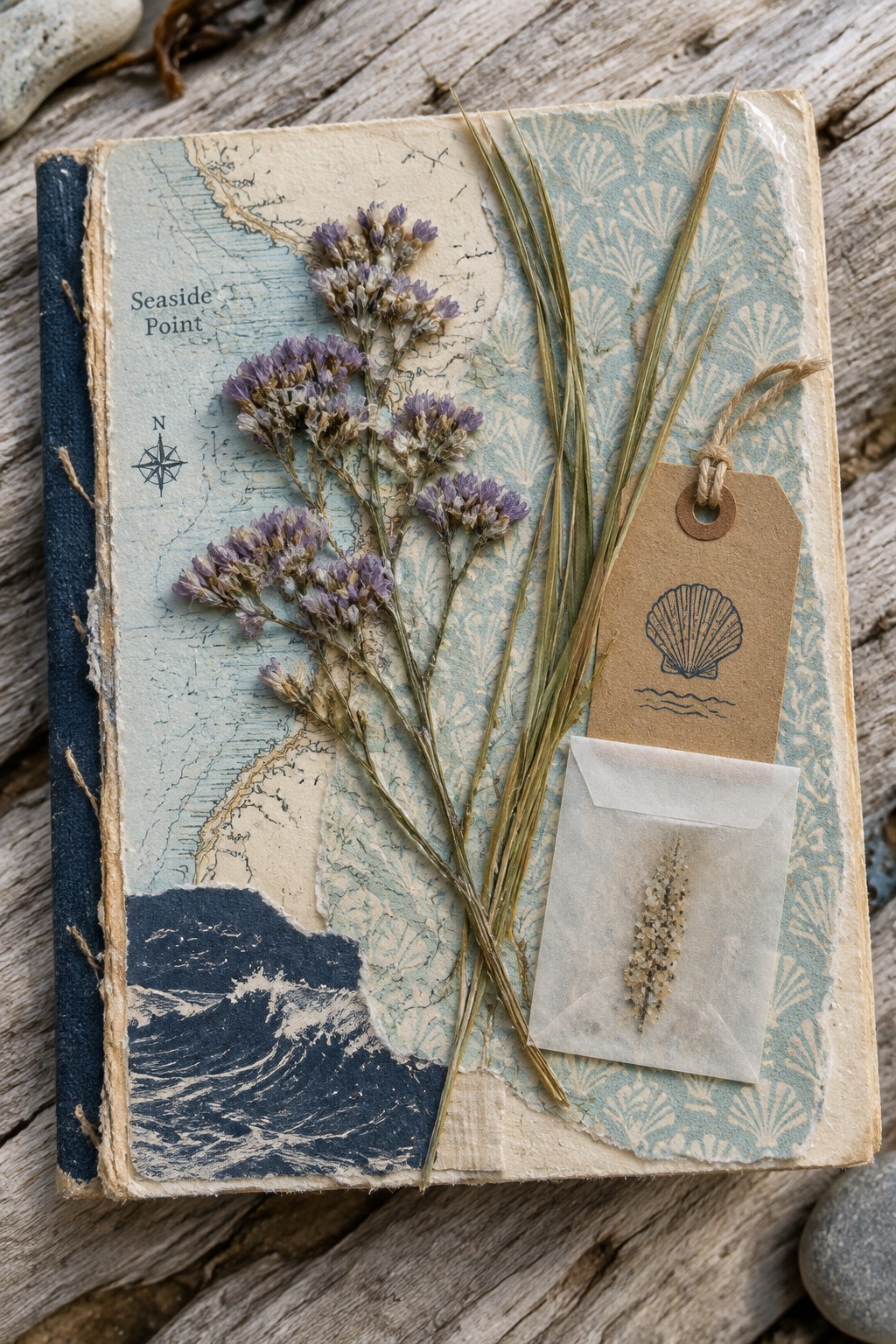
A coastal, vintage-style map anchors this journal cover, layered with torn aqua patterned paper and a dark wave illustration near the bottom. Dried-looking purple flower sprigs and long grasses cross the cover as the focal point, while a kraft tag with a shell drawing and a translucent specimen envelope add smaller paper details.
The mix of map paper, botanical elements, and seaside ephemera gives the cover a clear theme without making every layer match. For a similar arrangement, pair a map or travel-print scrap with pressed flowers or floral cutouts, then add a kraft tag and a small envelope for a tucked-in specimen; changing the map and shell details to forest or garden prints would shift the theme easily.
Numbered Botanical Specimen Journal Page
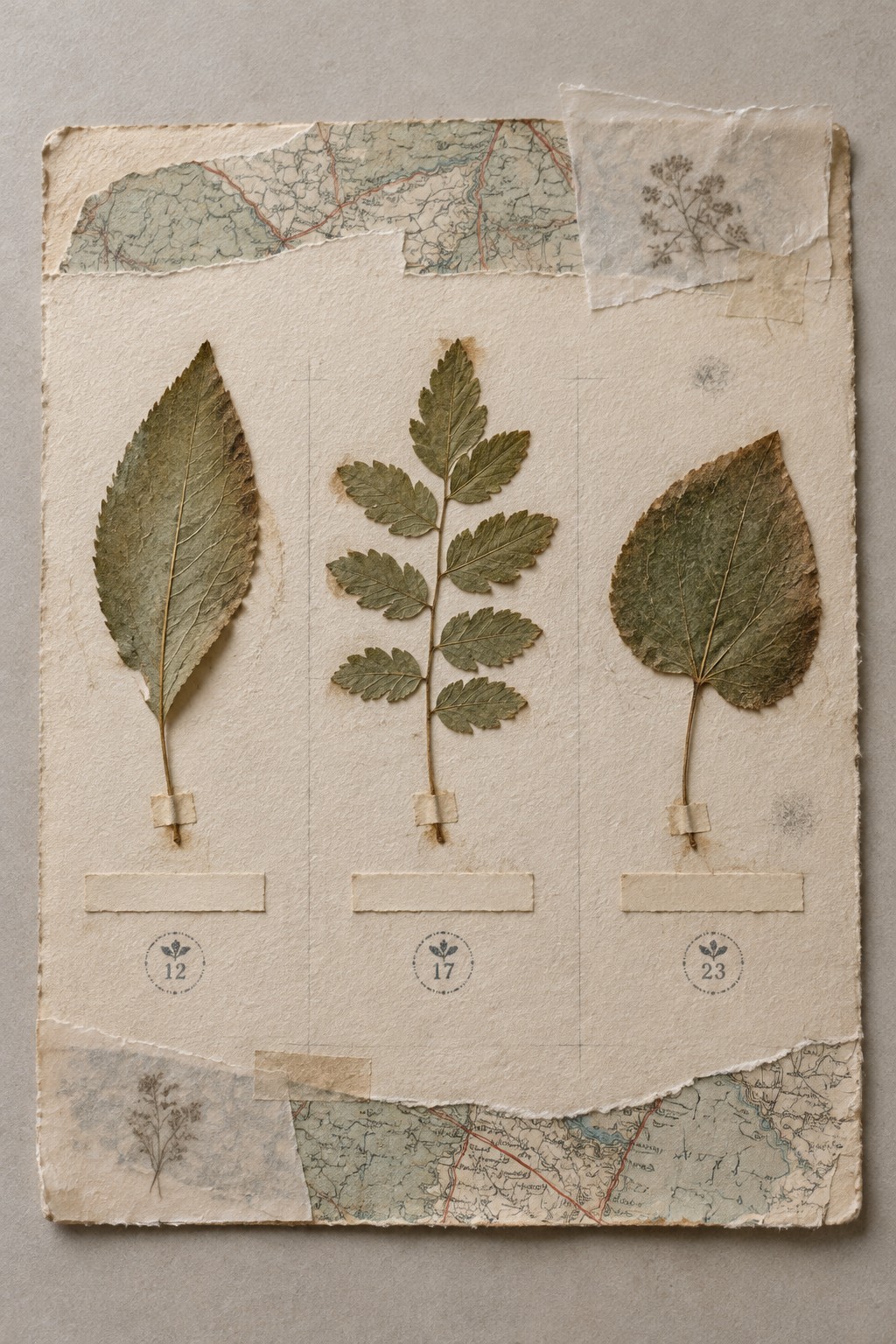
A numbered specimen page pairs three pressed-leaf-style cutouts with torn map paper and translucent botanical prints for a field-notebook look. The upright arrangement, fine divider lines, and small number stamps give each leaf its own space, while the cream paper keeps the muted green and map details from feeling crowded.
You could recreate the layout with leaf cutouts or printed specimens, scraps of a vintage-style map, and small numbered labels on a textured sheet of paper. Keep the three-column arrangement for a tidy study-page effect, or replace the leaves with seasonal plants and adjust the map scraps to suit a travel or nature theme.
Lace and Floral Collage Journal Cover
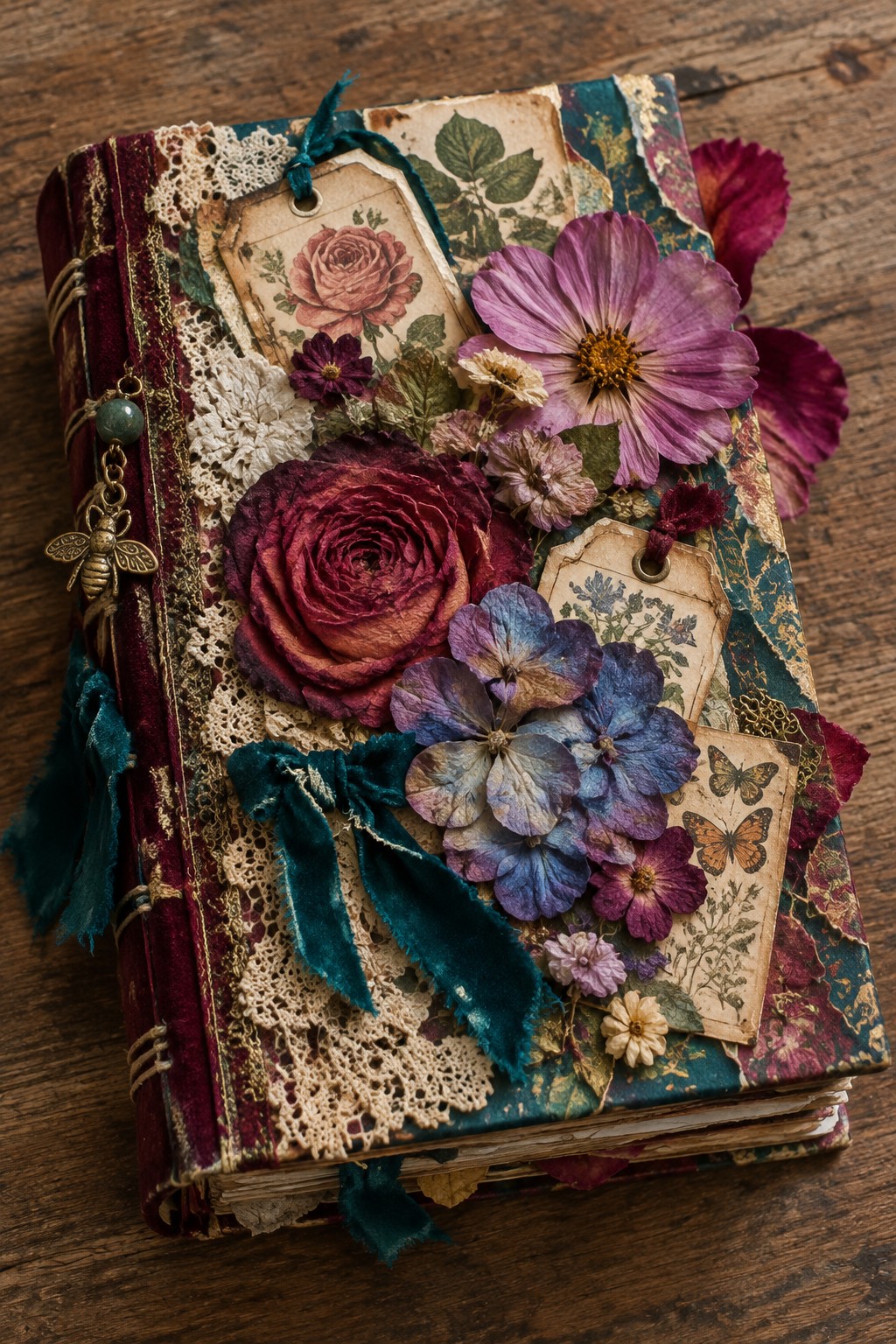
A richly layered journal cover combines vintage-style botanical paper and tags with lace, frayed teal fabric, and dimensional floral embellishments. A large purple flower and deep burgundy rose create the main focal points, while smaller blooms, butterfly ephemera, and visible binding details fill out the cover in a coordinated palette of teal, cream, and plum.
The arrangement suits a cover because the larger flowers anchor the busy collage, leaving the smaller tags and printed botanicals to add detail around them. For a simpler version, use one prominent floral cutout, a piece of lace, and a single tag; for a different theme, swap in leaf prints or seasonal flower illustrations and choose fabric scraps to match.
Twin Floral Wreath Journal Spread

Two complementary botanical pages make a coordinated spread, each centered on a wreath of pink floral cutouts and tiny white blossoms over a soft, irregular wash of color. Handmade-looking paper pockets, tall plant illustrations, floral-patterned tape, and twine-tied tags add layers and texture without competing with the wreaths.
You could recreate the layout with two different flower arrangements, keeping the repeated wreath shape and muted palette to connect the pages. The pockets and tags can hold extra botanical prints or notes, while scraps of patterned paper and a few plant illustrations are enough to simplify the composition.
Botanical Specimen Tags With Fabric Mushrooms
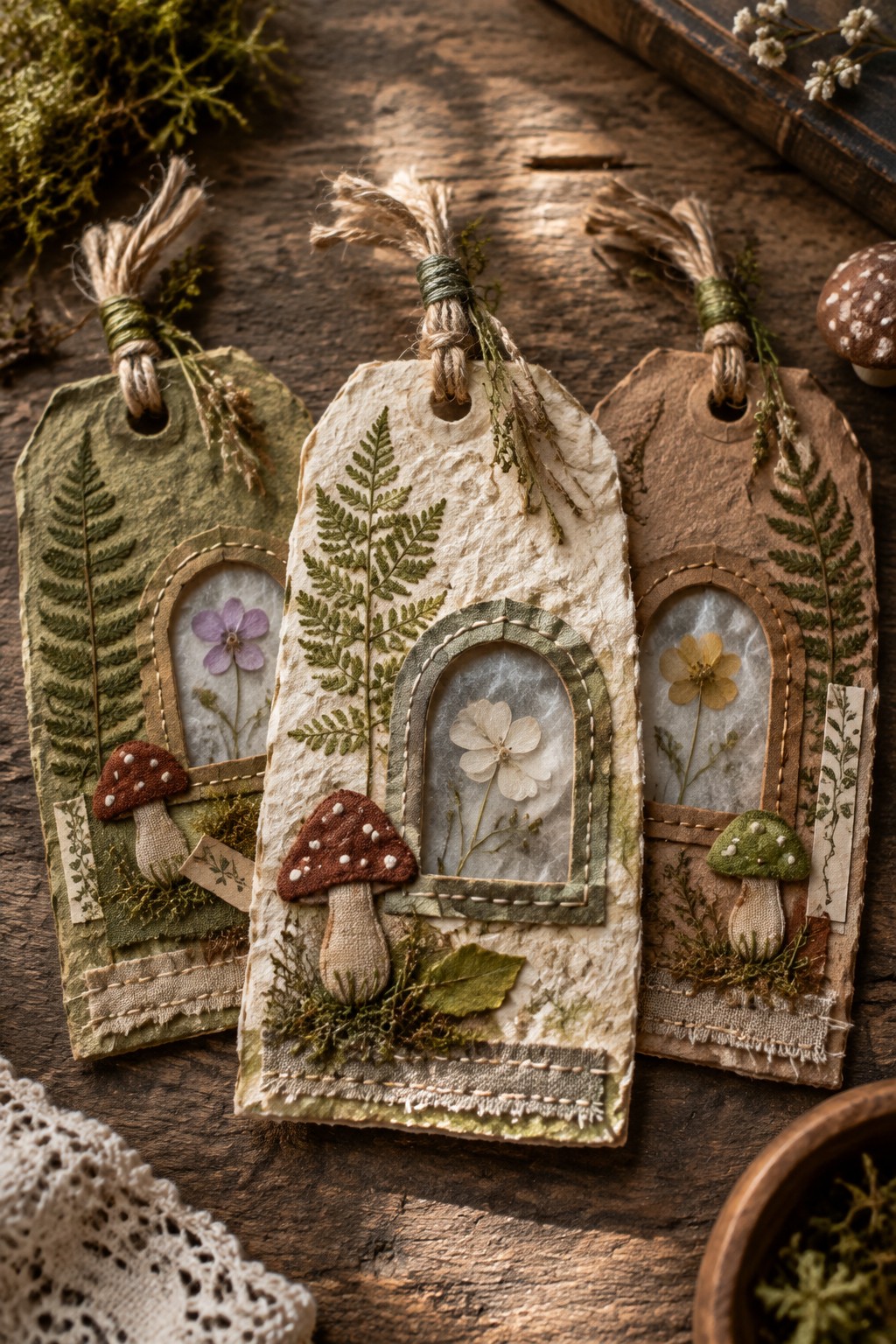
These layered botanical tags turn pressed-flower motifs into small woodland collages, with fern details and flower embellishments arranged around arched window-like panels. Rough-edged paper, stitched-looking borders, fabric mushroom shapes, and twine ties give each tag a mix of soft and earthy textures.
You could build a similar set from kraft or handmade-style paper, fern cutouts, floral paper pieces, and fabric scraps, keeping the arched panels as the shared feature. Change the flowers and mushrooms for seasonal leaves, berries, or other nature motifs, or make a simpler version with one fern and a single fabric accent on each tag.
Lavender Specimen Journal Cover
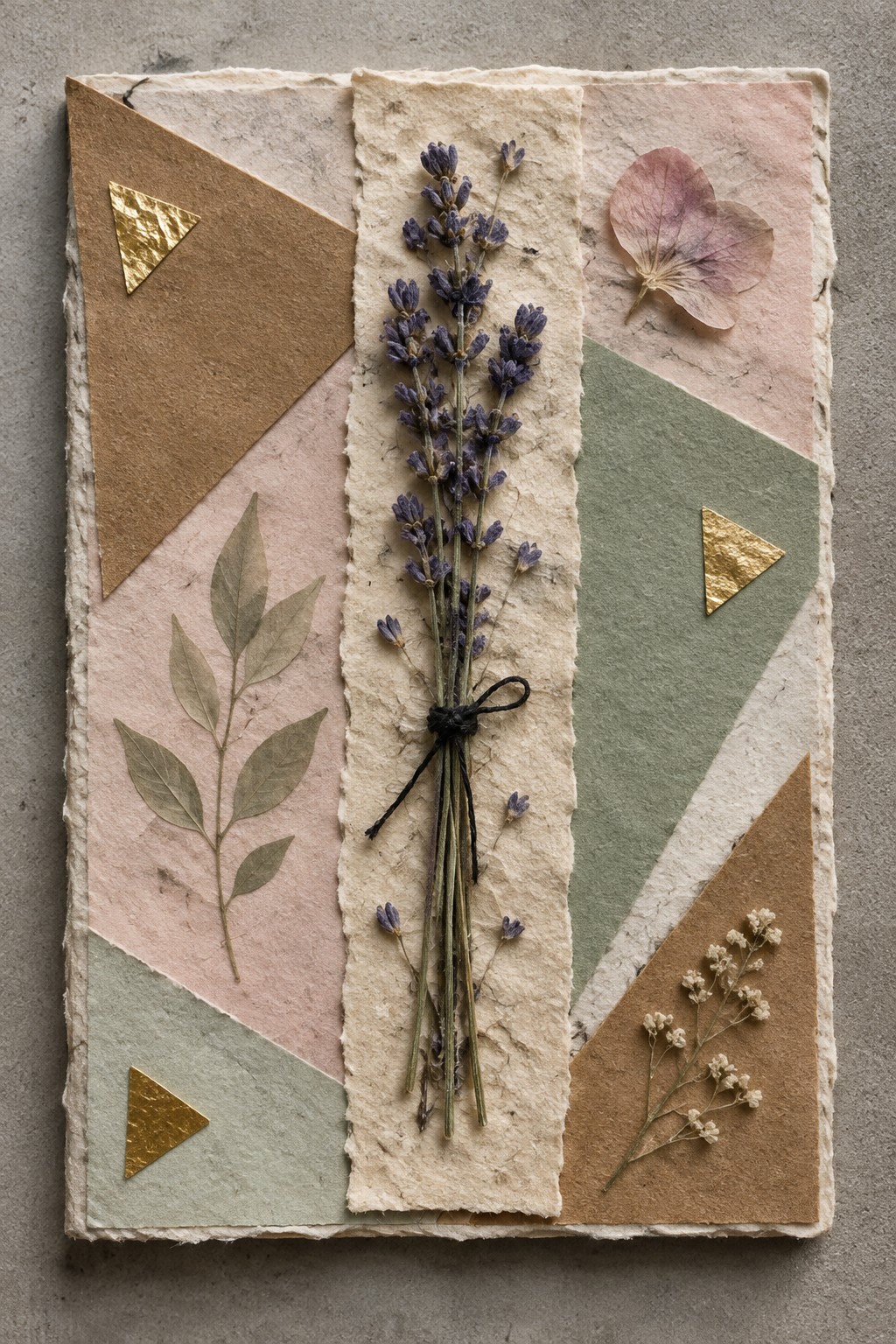
A handmade-paper cover brings together a tied bundle of dried lavender, a pressed leaf sprig, and a delicate pink botanical specimen. Torn cream paper runs down the center as a textured band, while overlapping blush, sage, and kraft-colored paper shapes create a geometric background accented with small gold triangles.
You could recreate the arrangement with a narrow strip of deckle-edged paper over a patchwork of muted scrapbook-paper scraps, then choose one botanical element as the main focal point. Keep the lavender bundle for a dimensional detail, or substitute a single dried stem or botanical cutout for a flatter cover that is easier to close.
Vintage Wildflower Journal Spread With Layered Pockets

A vintage-style botanical spread pairs blue cornflower illustrations with sunflower prints, loose floral cutouts, and worn-looking paper layers. A cream journaling card and overlapping kraft-paper pockets add structure, while the blue and golden-yellow flowers create a clear focal point across the open pages.
The layered arrangement can be adapted with printed flower cards and torn paper scraps, then simplified to one floral print and a single pocket if you prefer a less busy page. Use the pocket for a journaling card or small tag, and swap the cornflowers and sunflowers for seasonal plant illustrations to shift the theme without changing the layout.
Oval Botanical Specimen Journal Cover
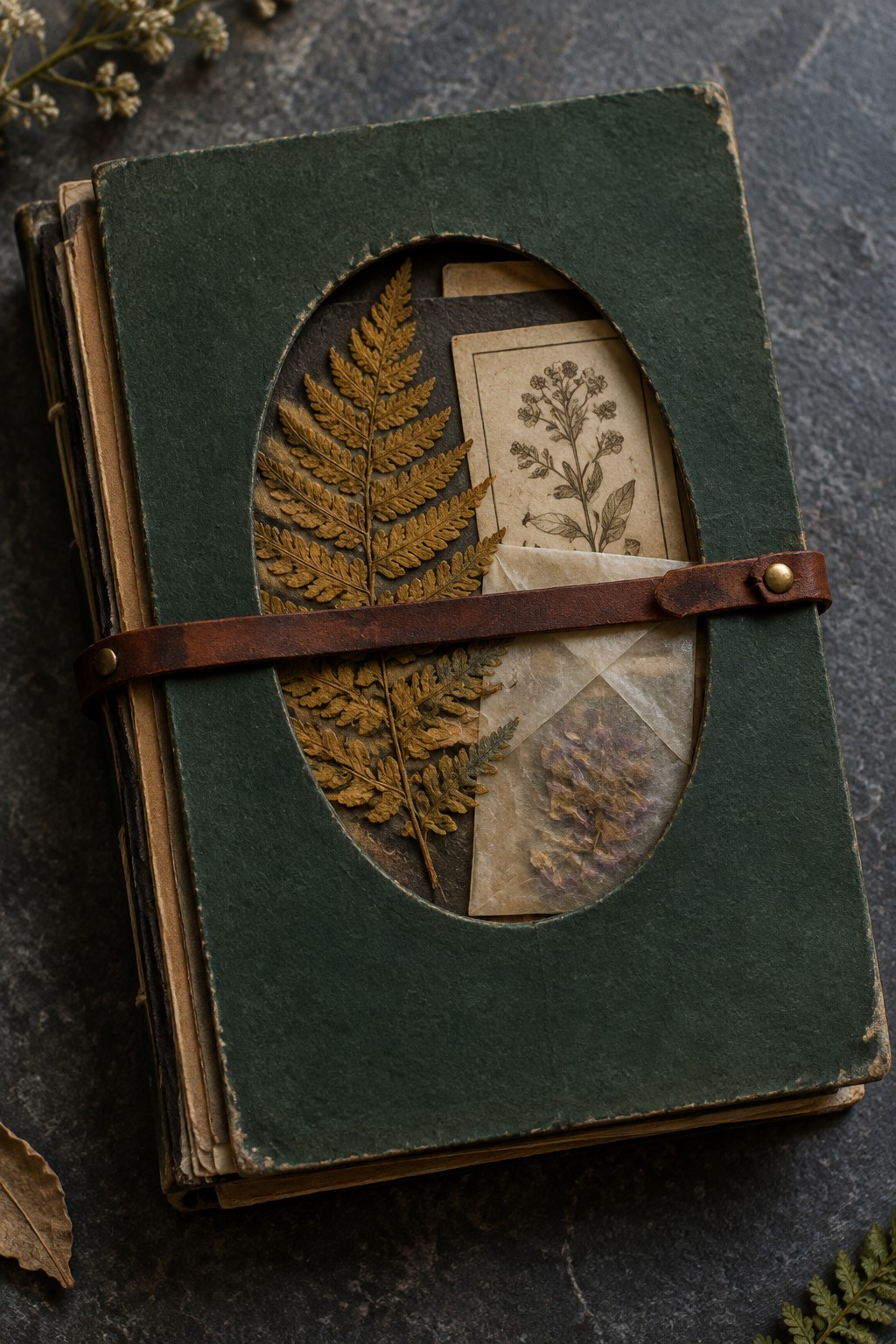
An oval window turns this green journal cover into a frame for a layered botanical arrangement, with a pressed fern-style leaf beside a vintage-style plant illustration and a small translucent paper insert. The worn green cover, dark backing, and rust-brown leather strap create a strong contrast with the muted specimen papers while keeping the cover’s focal point contained.
You could recreate the layout with a cover that has a window or a cutout, then arrange a leaf, a printed botanical illustration, and a small paper scrap behind it. Try changing the focal specimens to match a season or theme, such as autumn leaves or wildflowers, and use a simple strap or ribbon across the cover to echo the original design without adding too many layers.
Frequently Asked Questions
Pressed flowers, leaves, ferns, grasses, and seed pods are all lovely choices. Flat, delicate specimens are easiest to attach and store. Choose flowers with thin petals, such as pansies or cosmos, and leaves with interesting shapes or veins. You can also use botanical illustrations, copies of plant photographs, or images cut from old books if you want the look of real specimens without adding fragile material.
Choose dry, healthy flowers and leaves, then place them between sheets of absorbent paper, such as blotting paper or plain printer paper. Put the paper inside a heavy book or flower press, making sure the specimens lie flat and do not overlap. Leave them for one to three weeks, changing damp paper if needed. Make sure each specimen is completely dry before using it so it is less likely to discolor or mold.
Handle pressed specimens gently, ideally with tweezers. Attach them with a small amount of acid-free glue, a narrow strip of archival tape, or a paper hinge that lets the flower stay mostly untouched. For especially delicate or meaningful specimens, place them in a pocket, glassine envelope, or small clear sleeve instead of gluing them directly to the page. This also makes them easier to remove or reposition.
Try a pressed-flower pocket, a leaf-print collage, a seed-packet-inspired page, or a botanical specimen card labeled with the plant’s name and collection date. You can also make a seasonal garden log, a flower-shaped tag, a page of hand-drawn plant studies, or a foldout showing a specimen alongside notes about where you found it. Combining specimens with book pages, handwritten labels, and scraps of patterned paper helps create a layered junk-journal look.
Store the journal away from direct sunlight, heat, and moisture, which can fade colors and damage paper. Use acid-free paper and adhesives when possible, and avoid adding fresh or damp plant material. If a specimen is especially fragile, protect it in a pocket or sleeve. For long-term preservation, scan or photograph your finished pages so you have a record even if natural materials change over time.
