


I’m always saving little paper scraps, tags, and cutouts that might find a place in my junk journal.
Hidden tuck spots make a page more fun to explore, with pockets and flaps that can hold notes, photos, or extra bits of paper.
I’ve gathered 16 interactive ideas that show how these details can work with all kinds of papers and layouts.
They’re approachable ways to add a little surprise while experimenting with the materials you already have.
Autumn Pocket Page With a Layered Paper Flap
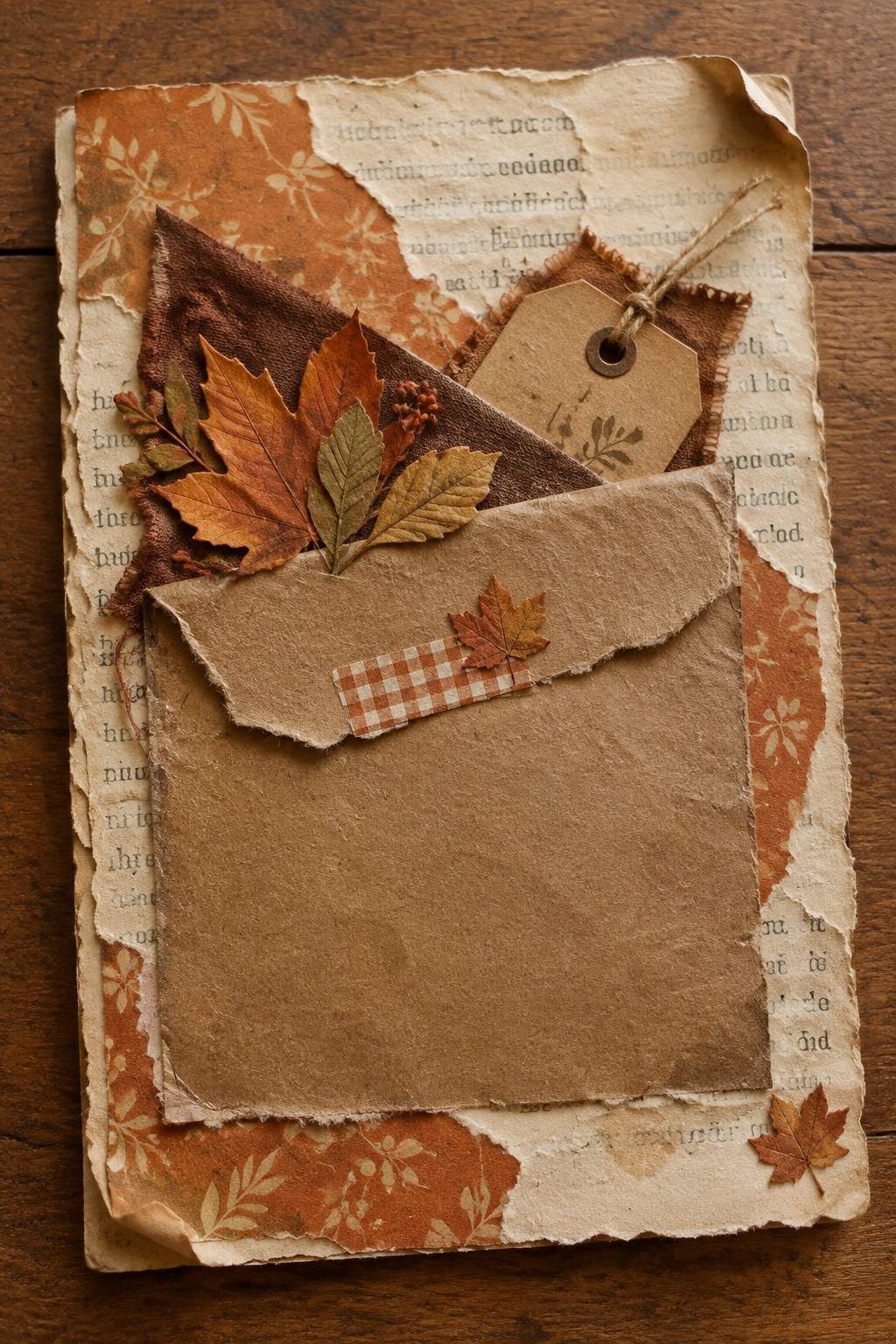
A layered autumn pocket page combines torn vintage-style book paper, orange botanical scrapbook paper, and rough-edged kraft paper in a warm, muted palette. The large kraft pocket and its overlapping flap create the main focal point, while leaf cutouts, a small gingham strip, and a twine-tied tag add texture and smaller details around it.
The pocket-and-flap arrangement gives you a useful place to tuck a note, journaling card, or tag, while keeping the front visually layered. For a similar look, pair a kraft paper pocket with a contrasting patterned flap and a few seasonal leaf cutouts; swap the orange print and gingham for other scraps to suit a different theme.
Rose-Themed Journal Spread With a Hidden Pocket
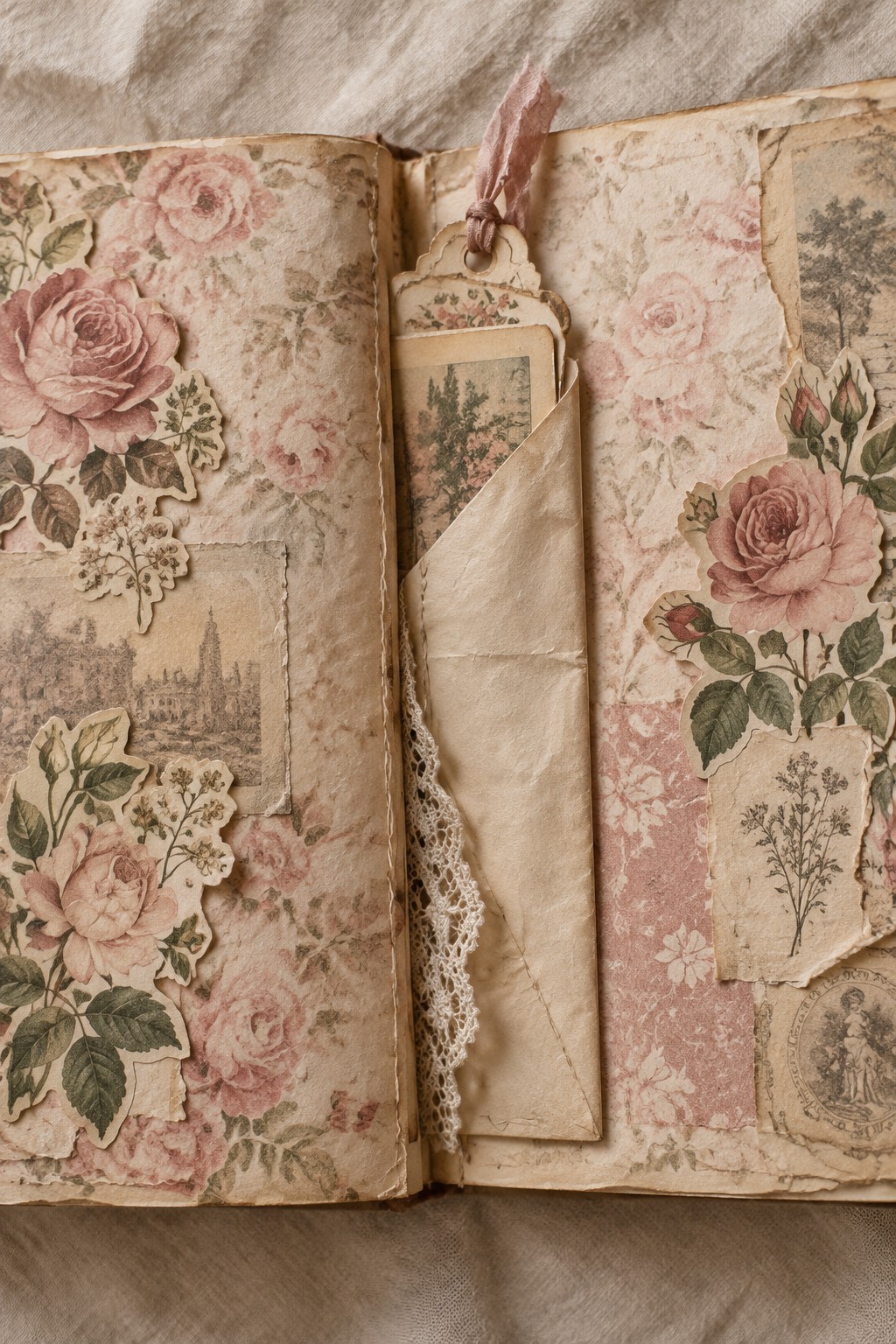
A vintage-style floral spread gets its interactive detail from a tall folded-paper pocket near the binding, holding a layered tag with a pink ribbon. Rose-patterned backgrounds, botanical cutouts, lace, and muted sepia paper give the two pages a coordinated look, while the tag and angled pocket add depth to the collage.
You could build a similar arrangement with floral scrapbook paper, a folded pocket made from plain kraft or cream paper, and a tag decorated with a small printed botanical image. Keep the pocket and insert simple, or vary the theme with different flower cutouts and ribbon colors; extra tags or notes can be tucked inside without crowding the layered page edges.
Coastal Travel Journal Cover
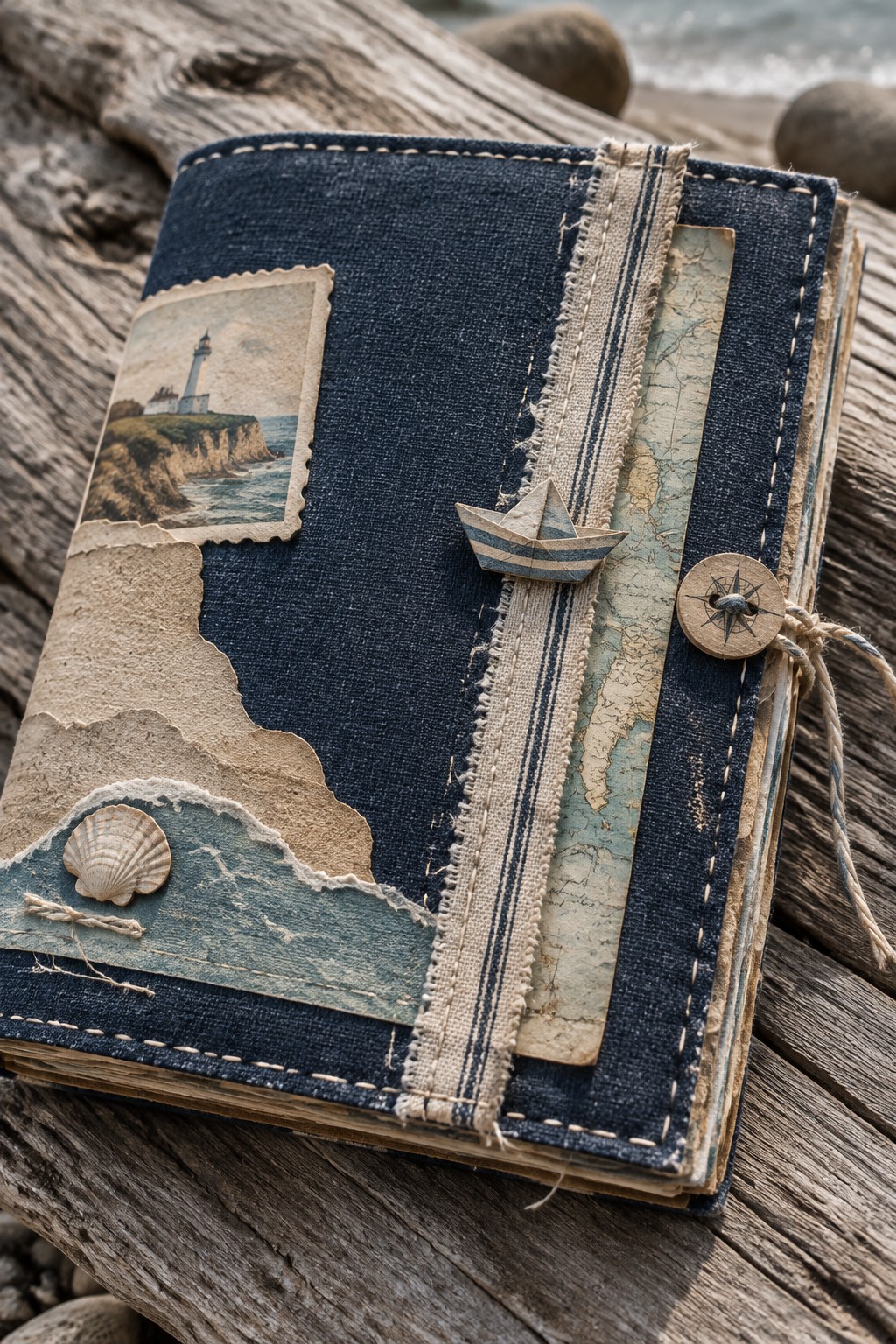
A navy fabric cover turns a coastal travel journal into a layered collage, with a lighthouse illustration and torn shoreline papers as the main focal point. A narrow map strip, frayed cream trim, stitched edging, and small boat and compass embellishments bring together paper, fabric, and twine in a restrained blue-and-sand palette.
You could recreate the arrangement with a lighthouse or seaside print, scraps of map paper, and a few lengths of textured fabric trim. Keep the large image and shoreline layers on one side, then use a slim map strip and a small paper boat to balance the open navy space; a shell cutout or travel tag could shift the theme toward a specific beach trip.
Botanical Tag Pockets With Lace

A botanical pocket-page idea pairs a muted green patterned background with a vertical row of small pockets, each holding a cream tag decorated with a plant illustration. Lace bands sit across the tags and pocket fronts, while torn floral paper and dimensional flower cutouts add texture; a translucent vellum flap on the facing page softens the botanical prints beneath it.
The repeated tag-and-pocket arrangement gives each insert a clear place while keeping the page cohesive, so you could adapt it with different printed flowers, leaves, or seasonal illustrations. Try green scrapbook paper with lace and cream tags for a similar palette, or simplify the design to one pocket and a single illustrated tag if you have fewer scraps; the vellum layer could also be replaced with tracing paper or left out.
Gothic Victorian Journal Cover With a Hidden Tuck Spot

A dark Victorian-inspired cover combines burgundy floral paper, black lace, torn book-page fragments, and an ornate portrait cutout. The pointed, door-like layered frame is the standout feature: it opens onto a small tucked-in paper piece, turning the cover collage into a discreet place to hold an insert.
You could recreate the arrangement with dark cardstock, floral scrapbook paper, lace, and a vintage-style portrait, then make the pointed frame from layered paper scraps. Keep the frame as the main feature and use a simple tag or folded note inside; for a different theme, swap the portrait and burgundy roses for botanical prints or celestial ephemera.
Floral Tag Pocket Journal Cover
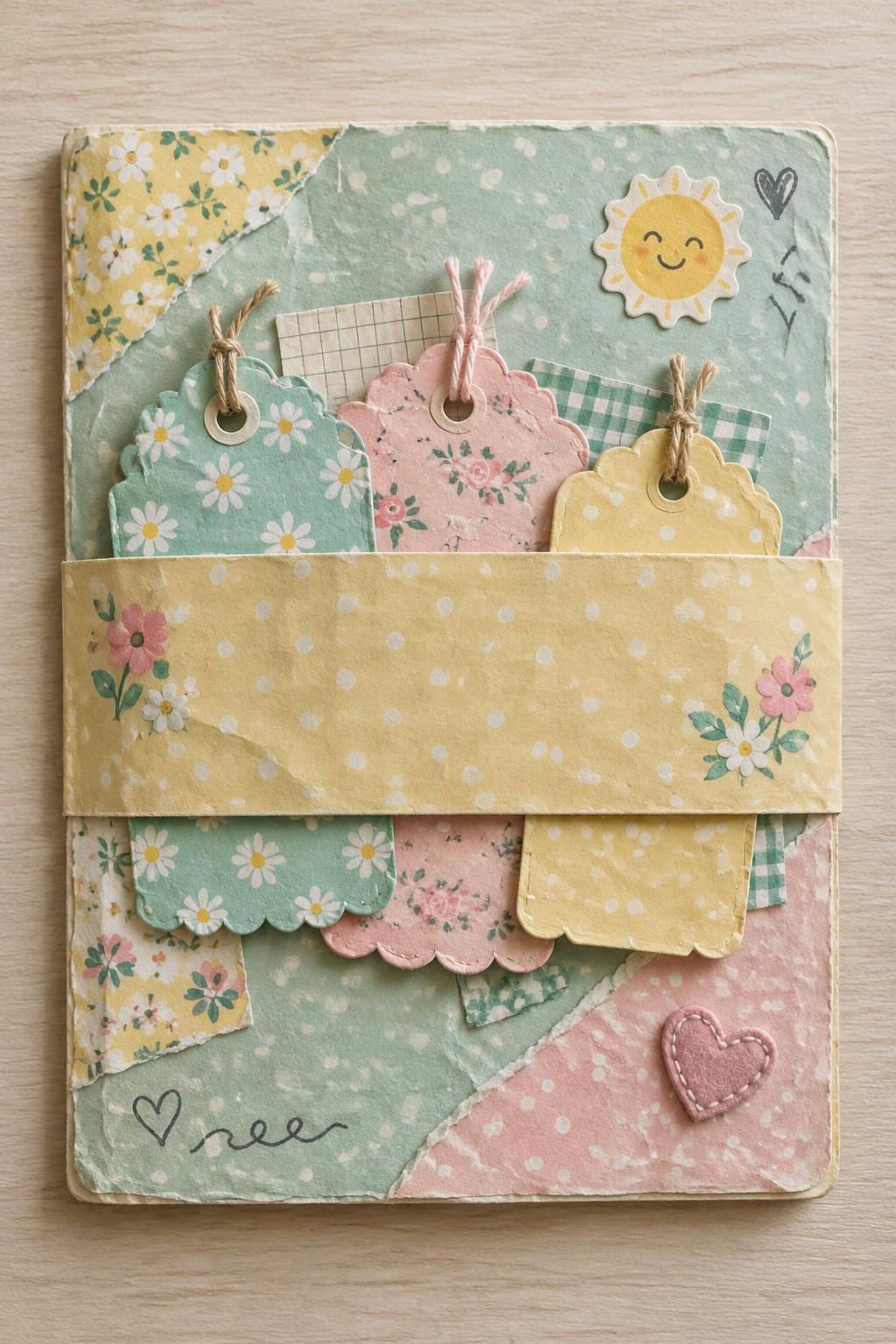
A mint-green journal cover becomes an interactive display with a wide yellow paper pocket holding three scalloped floral tags, each finished with a twine or ribbon loop. Torn floral paper, gingham scraps, a smiling sun cutout, and a stitched-look heart layer over the softly patterned background, while the coordinated mint, pink, and yellow palette keeps the busy composition balanced.
The broad pocket makes this design useful for storing tags that can be pulled out for notes, journaling, or small memories. Recreate the arrangement with patterned paper scraps and a simple folded pocket, then vary the tag shapes or swap the sun and heart for seasonal cutouts; using fewer background pieces is an easy way to simplify the layered cover without losing its colorful focal point.
Lighthouse Map Journal Spread
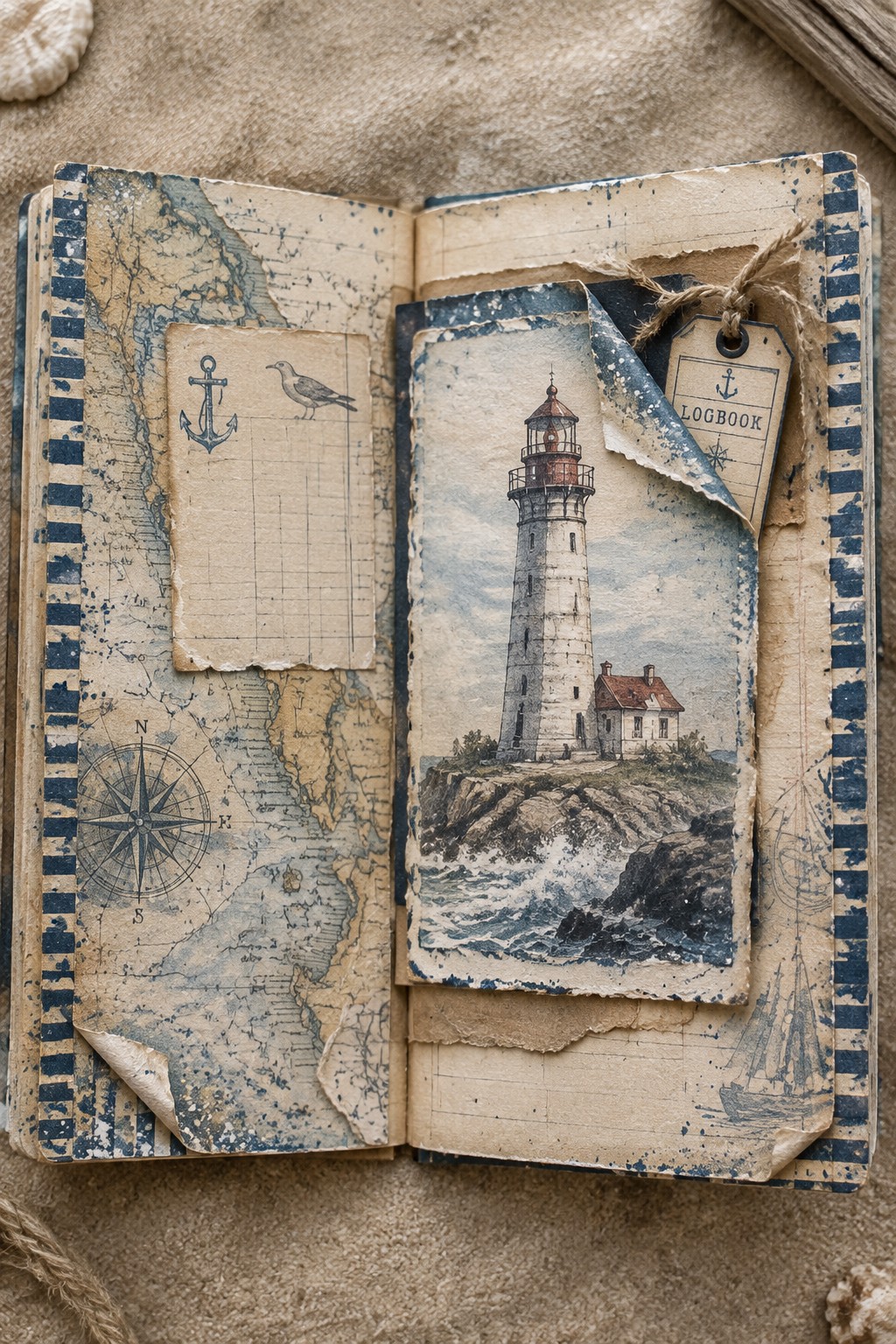
A nautical double-page spread combines vintage-style map paper, compass details, and a large lighthouse illustration layered over torn, aged-looking sheets. A small anchor-and-seabird card sits on the left, while a rope-tied “Logbook” tag peeks from behind the lighthouse insert, giving the arrangement the feel of a travel journal with tucked-away ephemera.
The overlapping lighthouse card and tag make a useful starting point for a hidden tuck spot: place a small pocket behind a focal illustration to hold notes, ticket stubs, or another tag. Try printed maps, grid paper, and navy-edged scraps for a similar coastal palette, or swap the lighthouse for a ship, shell, or mountain illustration to change the destination theme.
Layered Mountain Photo Pocket Page

A mountain lake photograph anchors this travel-themed journal page, set within a gray paper frame and layered over torn teal paper. A botanical card peeks out from behind the layers, while teal photo corners, patterned paper scraps, and a small paper clip bring in varied textures and muted color without distracting from the landscape.
The layered arrangement could hold a travel photo, postcard, or map cutout, with a paper pocket behind the frame for a small tag or note. Try pairing a favorite landscape print with gray and teal scraps, or swap in warm-toned papers and a woodland illustration for an autumn travel theme.
Enchanted Forest Tri-Fold Journal Spread

A moonlit castle scene anchors this detailed tri-fold spread, with cream side panels opening around a central forest illustration. Layered botanical cutouts, spotted mushroom illustrations, and small woodland animals frame the scene, while patterned inset pockets on both sides hold illustrated cards and ribbon markers.
The three-panel arrangement gives each section a clear role: the center carries the main scene, and the side pockets provide space for smaller images or journaling cards. To make a simpler version, use one printed forest illustration in the middle and repeat just a few leaf or mushroom cutouts around it; swap the castle and moon for a different focal scene to create a garden, seaside, or seasonal spread.
Coastal Postcard Pocket Journal Cover

A stitched paper pocket turns this journal cover into a small coastal keepsake holder, with a lighthouse shoreline illustration across the front and a tied shell tag peeking over the edge. A map and overlapping seaside picture cards rise from the pocket, adding varied layers of faded blue, sandy cream, and vintage-style paper.
You could build a similar cover around a printed landscape, then use a paper scrap with a torn edge for the pocket front. Tuck in a few postcard-sized prints or a map fragment, and swap the lighthouse and shell details for other travel ephemera to suit a different destination.
Vintage Circus Ephemera Collage Page

A vintage circus theme brings together ticket stubs, postage stamps, patterned scraps, and printed carnival illustrations in a dense layered collage. The Ferris wheel is the main focal point, while smaller circus scenes, a clown portrait, a carousel horse, and overlapping paper tags build visual interest across the page.
The mix of red, teal, mustard, and cream papers gives the many layers a sense of cohesion, so you could recreate the look with circus-themed prints and ticket-shaped scraps from your stash. For a simpler version, choose one large carnival illustration and frame it with a few torn paper strips and a tag pocket; for a more interactive page, tuck a removable journaling card behind one of the visible paper layers.
Botanical Notebook Cover With Tucked Tags

A muted botanical theme ties these journal covers together, with a green stitched notebook cover and a large printed wildflower illustration as the main focal point. Behind it, a dark cover holds two long paper tags with botanical prints, partly tucked into a pale paper band for a layered cover-and-insert arrangement.
The cover-and-tag combination gives you a way to pair a bold floral print with smaller botanical details without crowding the page. Try a vintage-style plant illustration on a scrap-paper cover, then tuck a couple of coordinating tags into a folded paper band; fern, herb, or seasonal leaf prints could replace the flowers while keeping the same earthy palette.
Retro Girl and Puppy Pocket Journal Cover

A bright, childlike cover pairs a vintage-style illustration of a girl with a puppy with a tucked-away pocket of decorative stickers. The illustration sits on layered pink and patterned paper over a turquoise floral panel, while a yellow dotted base and striped paper tab bring in extra color and texture.
You could build a similar cover around a favorite printed illustration, then layer it over contrasting scrapbook papers and add a small side pocket for stickers, labels, or journaling cards. Keep the playful look with a few simple motifs, such as flowers and hearts, or switch to a seasonal illustration and coordinate the pocket papers with its colors.
Steampunk Clockwork Journal Cover

A steampunk-inspired cover turns a layered paper collage into a mechanical-looking focal point, with a Roman-numeral clock ring and brass-toned gears set against distressed brown and tan panels. Curved cutaway sections reveal darker paper beneath, while a small illustrated tag and a rounded leather-look flap add contrasting shapes and a tuck-spot detail.
You could build a similar cover from kraft paper, patterned scraps, gear cutouts, and a printed clock face, keeping the gears concentrated along one side so the design stays readable. For a simpler version, use a single large clock ring with a few smaller gear embellishments; a folded paper flap or small pocket could hold a tag, map fragment, or other travel-themed ephemera.
Seashell Journal Page With a Translucent Fan

A coastal-inspired journal page pairs torn sea-green patterned paper with a large translucent shell-shaped fan as its focal point. Cream textured paper, a small shell illustration card, a dried floral sprig, and a dimensional shell embellishment create contrast through their different textures while keeping the palette muted and cohesive.
The shell-shaped piece could be recreated with translucent paper or a vellum-like material, layered over a botanical or seaside print so the pattern shows through. Keep the composition simple with a few torn paper fragments and one focal embellishment, or tuck a small journaling card partly beneath the fan-shaped layer for an extra place to write.
Accordion Pocket Journal With Mountain Inserts

A kraft-paper accordion journal pairs a simple elastic-bound cover with an open spread of upright pockets, each holding printed mountain scenes, botanical pieces, or small tags. Coordinated teal, cream, and muted gold scrapbook papers give the folded panels a unified look, while the varied pocket edges and protruding inserts add dimension.
You could adapt the layout with a few folded paper pockets and use leftover patterned scraps to decorate their fronts, keeping the colors consistent across the spread. Swap the mountain prints for seasonal illustrations, travel ephemera, or family photos, and vary the inserts between tags and small cards so each pocket has a different mix.
Frequently Asked Questions
A hidden tuck spot is a pocket, flap, slot, or fold built into a journal page to hold something small, such as a tag, note, photo, ticket, or journaling card. It’s “hidden” because it blends into the page design or sits behind another element. You can make one from a folded piece of paper, a paper bag, an envelope, a book page, or even a fabric scrap.
Start with simple designs that don’t require special tools:
– Corner pocket: Glue along two edges of a triangle-shaped paper piece to hold a tag. – Fold-over flap: Attach a small paper flap on one side so it opens to reveal a note or image. – Envelope tuck: Glue an envelope to a page, leaving the opening accessible. – Belly band: Secure a strip of paper across a page to slide cards underneath. – Layered pocket: Glue three sides of a paper panel to the page, leaving the top open.
These are easy to adapt to a journal’s theme and can be decorated with scraps you already have.
Use a small amount of glue or double-sided tape along the edges that need to be fixed, and leave the opening unglued. Lightweight materials such as book pages, scrapbook paper, and thin envelopes help prevent bulk. If you’re adding several tuck spots, spread them throughout the journal rather than stacking them on adjoining pages. Test the page with a few inserts before adding more layers.
Tuck spots are useful for storing both decorative and meaningful pieces. Try small journaling cards, photos, lists, quotes, pressed flowers, ticket stubs, postcards, recipe cards, or notes to yourself. Match the inserts to the journal’s theme, or use the pocket to collect items as you go. Keep fragile or valuable keepsakes in a protective sleeve rather than placing them directly in a paper pocket.
Use materials and colors that repeat elsewhere in the journal, such as matching patterned paper, vintage book pages, fabric, or washi tape. You can conceal a pocket beneath a collage layer, tuck it behind a larger image, or decorate its edge with the same embellishments used on the page. Make sure the opening is still easy to find and use. A small tab, label, or contrasting edge can provide a subtle hint without spoiling the surprise.
