

I’m drawn to gothic journal covers with their deep colors, ornate details, and little touches of mystery.
For this collection, I’m looking at ways to decorate the outside of a journal with layered paper, striking images, lace, and other interesting scraps.
You don’t need special supplies to get started, and a few carefully chosen pieces can give a cover plenty of character.
These 23 ideas offer lots of room to mix materials and make a dark, decorative look your own.
Ornate Cameo Journal Cover
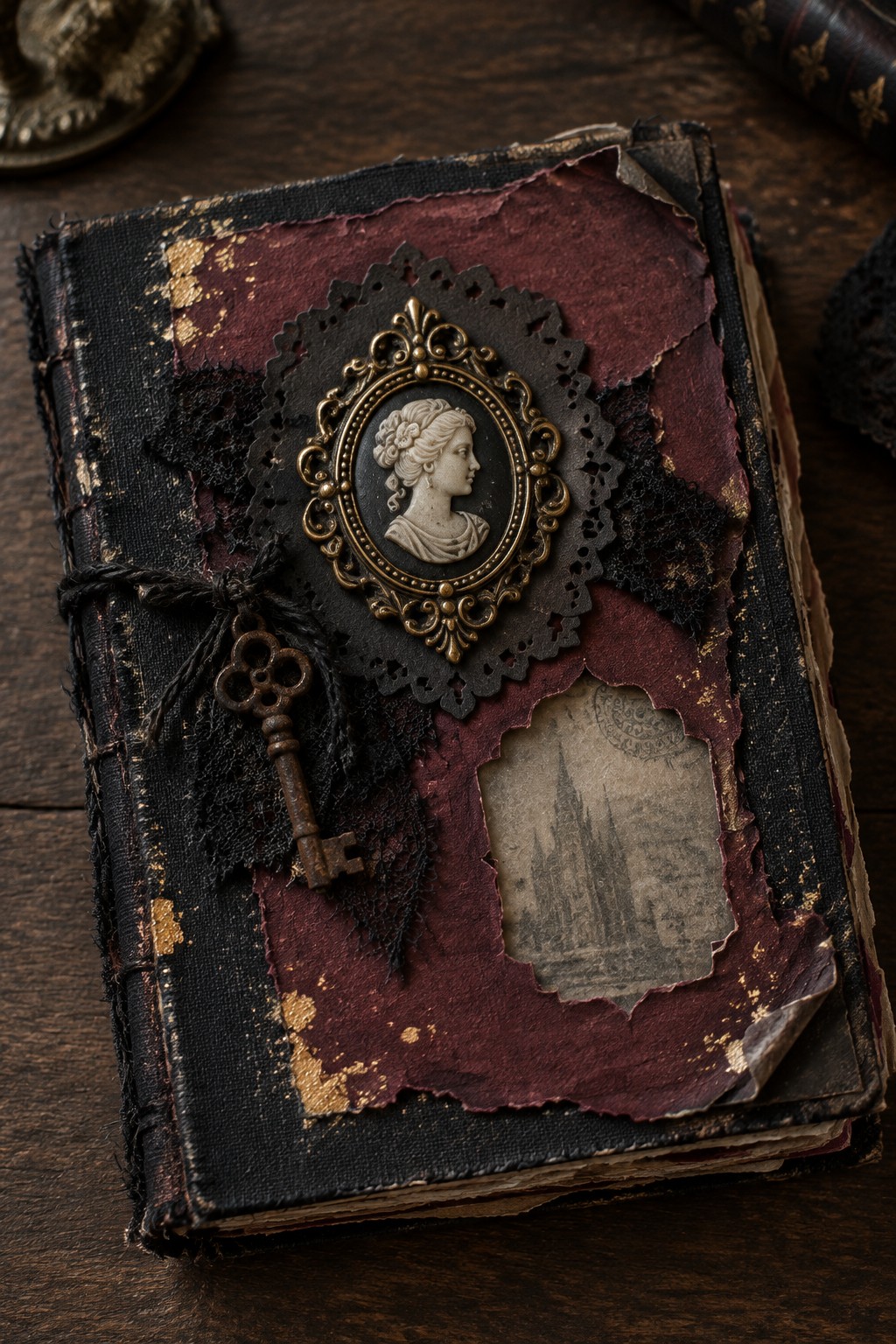
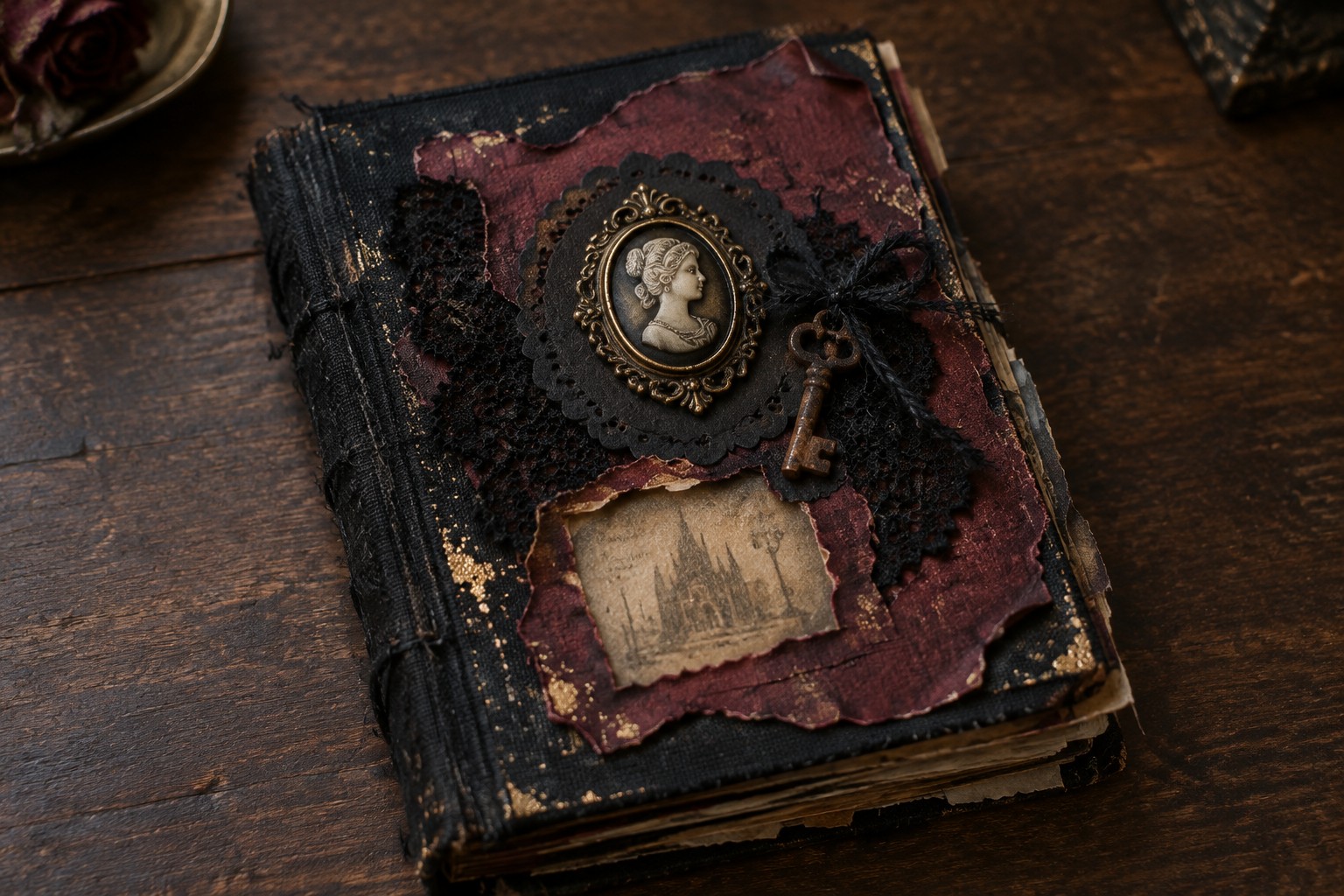
A distressed gothic cover layers a torn burgundy paper panel over a black, fabric-textured book cover, with an ornate cameo medallion as its focal point. Black lace-like paper, scattered gold accents, an old-fashioned key, and a faded portrait print add contrasting textures and vintage-inspired detail.
For a similar look, build around one central focal piece, such as a cameo-style cutout or miniature portrait, then frame it with dark paper scraps and a contrasting torn-paper layer. The key and gold details can be replaced with other small ephemera, while a simpler version could keep just the layered papers and central medallion.
Gothic Moth Journal Spread With a Tag Pocket

A dark, vintage-inspired spread pairs a charcoal page and layered torn papers with a patterned navy-and-burgundy page. A large moth illustration anchors the left side, while a pocket on the right holds three contrasting tags; gold-patterned paper strips and small dark botanical embellishments tie the pages together.
The layered papers make this layout adaptable to scraps of dark scrapbook paper and a printed insect, botanical, or celestial illustration. You could keep the moth as the focal point and change the tags to match another theme, or simplify the spread by using fewer patterned layers while keeping the pocket as a useful place for journaling cards.
Gothic Celestial Journal Cover
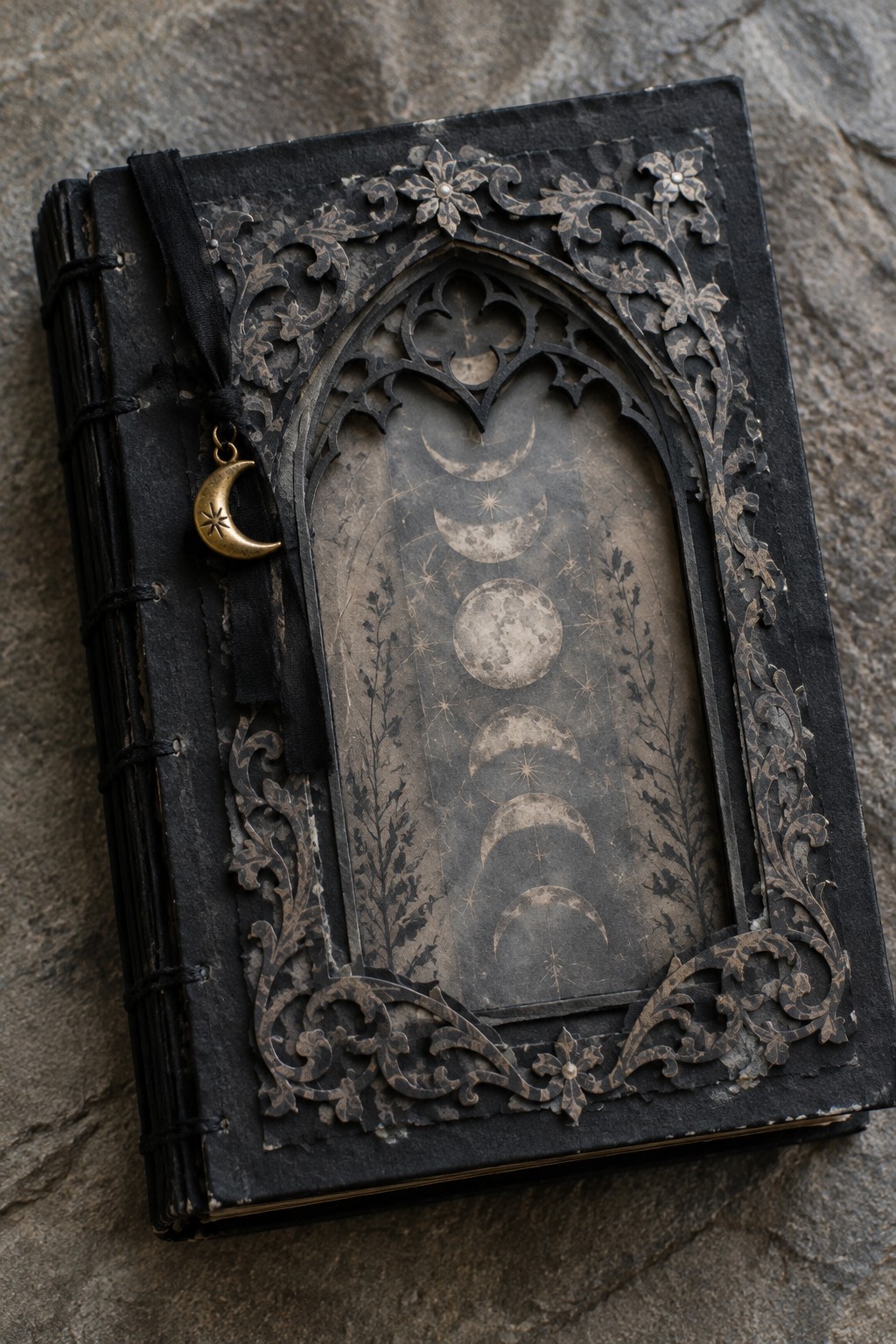
A layered black journal cover pairs an ornate, cutout-style frame with a central panel of printed moon phases and star details. The arched tracery, floral scrollwork, dark cover, and small brass-colored crescent charm give the cover a Gothic celestial theme, while the muted gray and taupe tones keep the many decorative layers cohesive.
For a similar look, build an arched frame from dark paper cutouts and place a moon-phase print or other celestial illustration beneath it. Floral scrapbook-paper details can simplify the elaborate border, and a ribbon with a small moon-shaped charm can echo the visible closure embellishment; swap in stars, botanical motifs, or another focal print to shift the theme.
Layered Gothic Rose Journal Cover
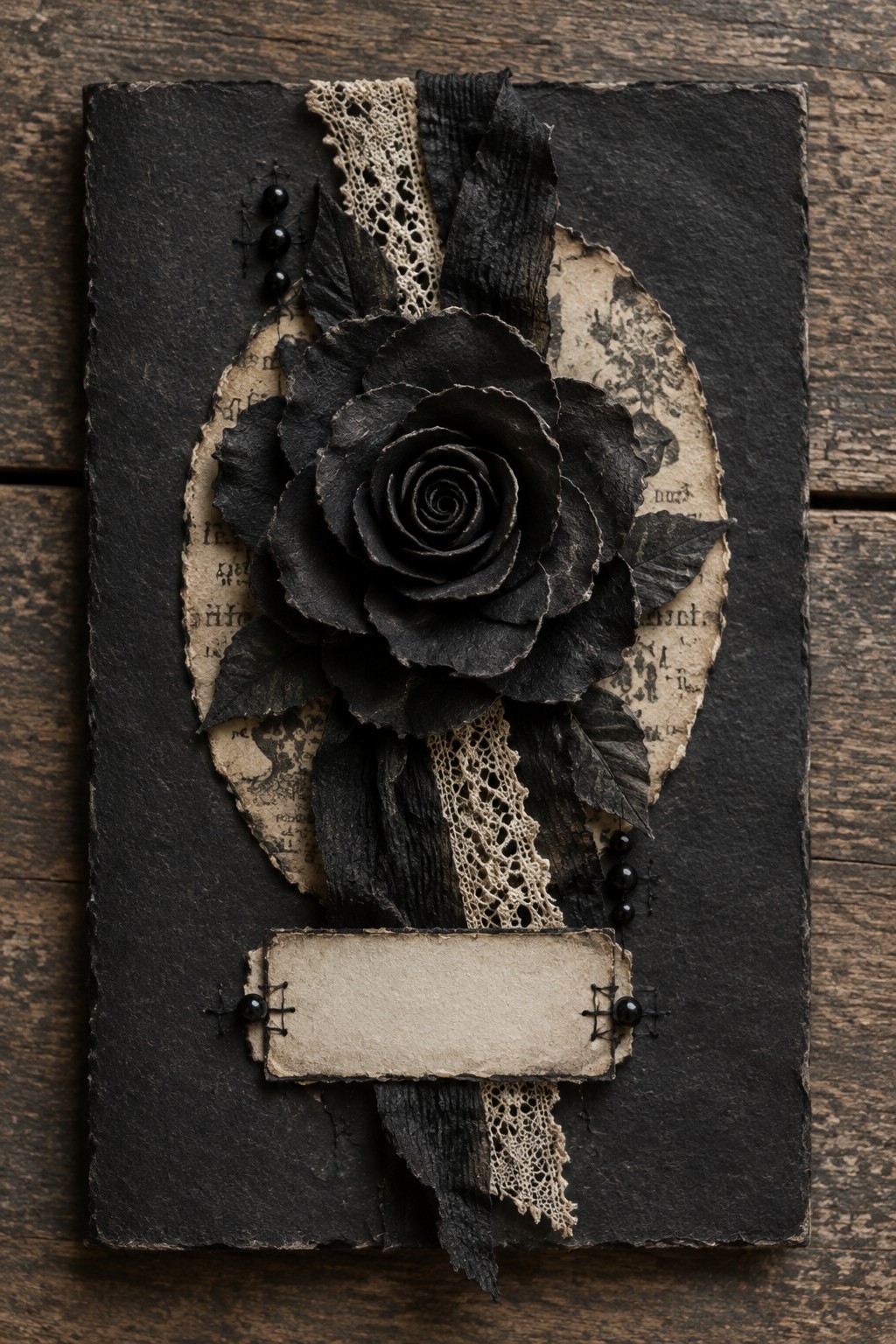
A dramatic gothic cover can be built around a dimensional black paper rose, layered over torn vintage-style text and dark paper leaves. Cream lace and a strip of black fabric create contrasting textures, while the pale blank label near the bottom gives the otherwise dense arrangement a clear place for a title or name.
The rose can be made the focal point of a similar cover using layered paper petals, with torn book-page scraps, lace, and fabric fragments arranged behind it. To simplify the design, use a single dark paper base, a floral cutout, and one strip of cream lace; for a different theme, switch the rose for a moth or botanical illustration and adjust the label to suit.
Gothic Botanical Specimen Spread

This open journal spread pairs vintage-style botanical prints with dark pressed-leaf-style cutouts and small black berry clusters for a gothic specimen-book look. The dried-paper tones, narrow black lace borders, and visible stitched binding tie the two pages together, while framed plant illustrations and blank labels give the varied arrangements a collected, archival feel.
You could recreate the layout with printed plant studies, dark leaf cutouts, and berry or seed illustrations, arranging a few larger specimens across the pages rather than filling every open space. Keep the labels blank for later notes, or add small paper tags; swapping in mushrooms, thorny branches, or autumn leaves would shift the theme while keeping the same moody palette.
Skull and Burgundy Paper Journal Tag

A coffin-shaped tag turns a gothic skull motif into a compact layered journal insert, with the pale skull cutout set against rough burgundy paper and a black base edged in gold-toned trim. A ribbon loop at the top and a small paper pocket near the bottom add texture and a place to tuck a label or other paper ephemera.
For a similar look, layer torn burgundy paper over a dark tag and use a skull illustration or another high-contrast gothic cutout as the focal point. The pocket can hold a small journaling card, while black ribbon, gold-colored edging, or a different dark accent can tie the pieces together; for a less elaborate version, keep the skull and pocket and leave off the trim.
Layered Victorian Cameo Journal Cover

A Victorian-inspired cover collage pairs a central cameo portrait in an ornate oval frame with torn burgundy, charcoal, and aged-paper layers. Small clock faces and brass-toned gears sit around the portrait, while script fragments, gold-toned details, and a narrow architectural cutout add texture and balance to the dense composition.
For a similar cover, build around one prominent portrait or other framed illustration, then arrange contrasting paper scraps behind it so the focal point stays clear. Printed clock faces and gear embellishments suit this timeworn look, but a simpler version could use just a cameo, two or three torn layers, and a small gold-toned accent.
Moon and Star Gothic Journal Cover

A pale, textured full moon takes center stage on this black journal cover, with a faint circular outline and small metallic-looking stars adding a restrained celestial motif. A plum floral band across the lower edge brings in a patterned fabric-like accent and breaks up the dark cover without competing with the moon.
You could build a similar cover around a large moon cutout or printed image, then keep the surrounding details sparse so the focal point stands out. Try pairing black cardstock or dark paper with a muted floral strip, and use star-shaped cutouts or small metallic embellishments; swapping the moon for a sun or planet would shift the theme while keeping the same simple layout.
Gothic Tarot Card Journal Pocket
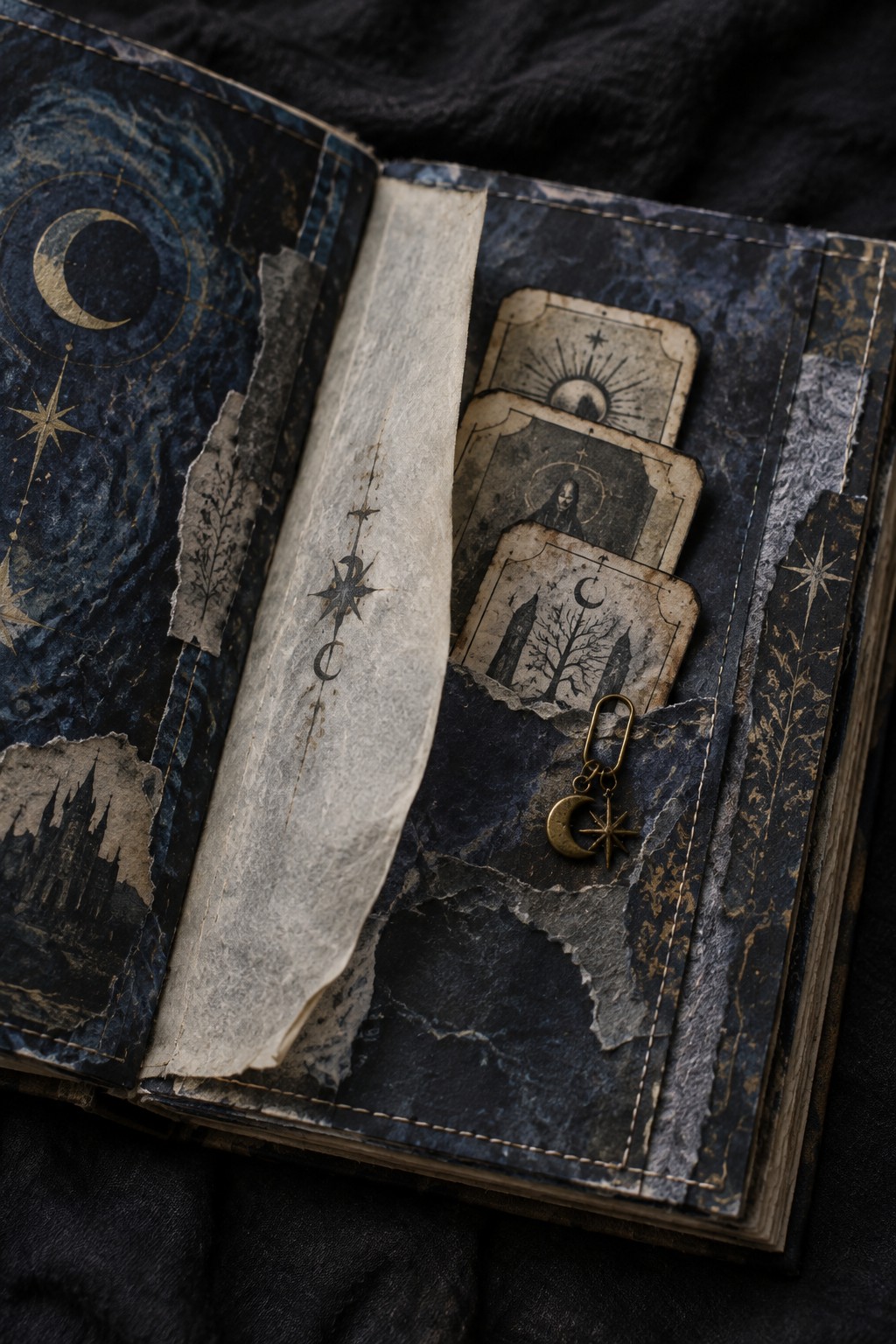
A dark celestial journal spread can double as a small ephemera pocket, with several tarot-style cards tucked beneath a curling cream paper flap. Navy marbled pages, torn gray paper, gold celestial motifs, and the brass crescent charm create contrast while keeping the layered cards as the focal point.
You could build a similar arrangement with a folded or loose paper flap and a few small printed cards, choosing sun, moon, botanical, or portrait illustrations to suit your theme. Keep the navy-and-cream palette for a moody look, or swap in deep green or burgundy patterned paper while saving a small metal charm or star detail as the finishing accent.
Stained Glass Gothic Journal Cover
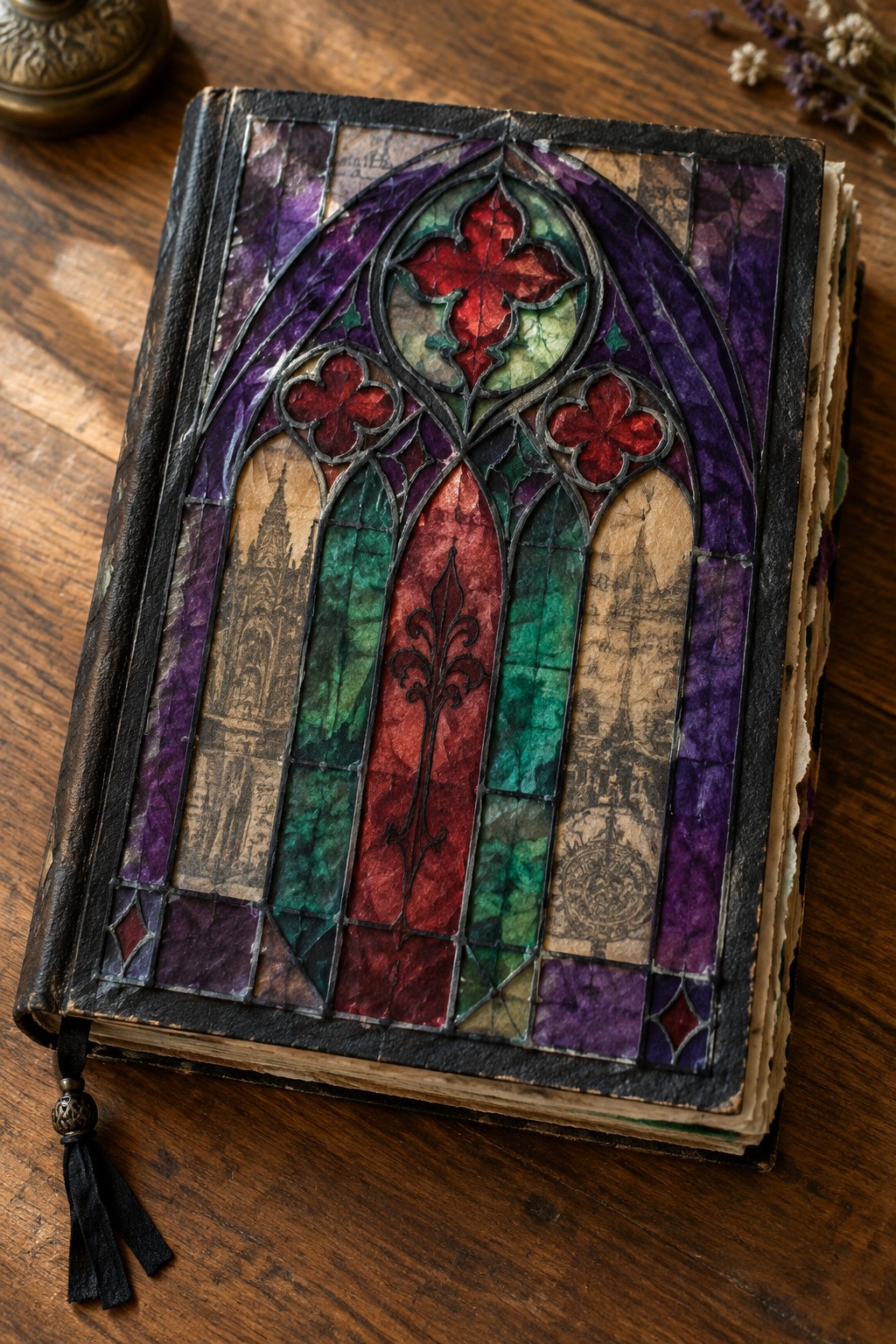
A Gothic cathedral-window design turns this journal cover into a bold arrangement of colored paper panels, with dark outlines framing purple arches, red quatrefoils, and a tall central red motif. Sepia-toned architectural prints fill the side panels, while the visible page edges and hanging black ribbon bookmark emphasize that this is a decorated, layered notebook cover.
The window layout is a useful way to organize scraps into a design that looks intricate without needing a full collage of unrelated pieces. Try combining dark paper strips with colored translucent-looking papers and small architectural prints, or simplify the pattern to one pointed arch and a single central emblem; the same structure could also frame a botanical or celestial theme.
Stitched Heart and Pressed-Style Petal Journal Cover

A Victorian-inspired collage turns a journal cover into a patchwork of torn script paper, dark floral prints, portrait cutouts, and botanical embellishments. The large burgundy heart, edged with visible dark stitches, anchors the layered arrangement, while small wax-seal-style medallions and muted sepia tones tie the pieces together.
You could build a similar cover around a stitched paper shape, such as a heart, star, or crescent, and frame it with vintage-style portraits and floral scraps. Keep the palette to cream, charcoal, and burgundy for the same moody look, or replace the portraits with old-fashioned illustrations to suit another theme.
Gothic Graveyard Journal Cover With Lace Pocket

A dark, book-style journal cover becomes a layered graveyard collage, with a moonlit cemetery print as the focal point and a raven tag tucked behind a diagonal black lace pocket. The charcoal cover, muted gray paper, aged-looking picture borders, and small brass bell give the design texture without crowding its limited palette.
You could build a similar cover around a printed graveyard or moon illustration, then tuck in a raven or tree tag alongside other gothic ephemera. A scrap of lace can form the angled pocket, while a small bell or ribbon provides a single contrasting detail; for a simpler version, use just the cemetery print and one tag.
Eclipse-Themed Gothic Journal Cover

A dark, textured cover becomes a celestial design with a large layered sun-and-moon focal point, a deep blue starry center, and gold star details around the edges. The black ribbon crossing the cover and tied beside a paper tag adds contrast to the cream-colored cutout, while the visible cord binding reinforces the handmade notebook style.
For a similar cover, pair dark scrapbook paper with cream celestial cutouts and small gold star embellishments, keeping the central eclipse as the main focus. A simple printed moon illustration could replace the layered design, or the celestial motif could be changed to a seasonal image while retaining the ribbon and tag as coordinating details.
Gothic Botanical Pocket Spread

A dark botanical double-page spread combines vintage-style flower illustrations with a row of folded paper pockets on the left page. The large moonlit flower print anchors the right side, while muted olive, charcoal, and ochre papers, torn edges, labeled envelopes, and a small glass vial create varied layers without pulling attention from the botanical theme.
You could recreate the layout with printed plant illustrations and paper scraps in a limited, earthy palette, then use small folded pockets to hold tags or additional cutouts. Keep one oversized flower print as the focal point and vary the smaller images, such as choosing herbs, mushrooms, or autumn leaves, to shift the theme without changing the overall arrangement.
Gothic Keyhole Journal Cover

A layered gothic cover centers on a tall pointed-arch keyhole that frames a misty castle illustration, with a small key tucked beside the opening. Torn map-like paper and dark botanical-patterned paper form a distressed border around the charcoal layers, balancing pale, gridded scraps with the moody central scene.
You could recreate the arched frame with overlapping dark paper cutouts and place a printed castle, church, or forest scene behind the opening. A vintage-style map or old ledger print can add contrast around the edges, while a small key-shaped cutout keeps the keyhole theme clear; for a simpler version, use one arch layer and a single torn-paper border.
Gothic Filmstrip Journal Cover

A dark, worn journal cover becomes a layered archive of vintage-style film imagery, torn script paper, and a small postcard-like slip with a postmark. The sepia filmstrip is the main focal point, while the narrow strip along the cover’s right edge and the brass-colored magnifying glass add contrasting lines and texture.
For a similar cover, layer a printed filmstrip or series of small photographs over dark scrapbook paper, then add a torn text fragment and a stamped-looking paper tag. A magnifying-glass charm or another small metal-look embellishment can provide a focal accent; for a simpler version, keep the filmstrip and tag and leave more of the dark cover exposed.
Gothic Tree and Woodland Door Journal Cover
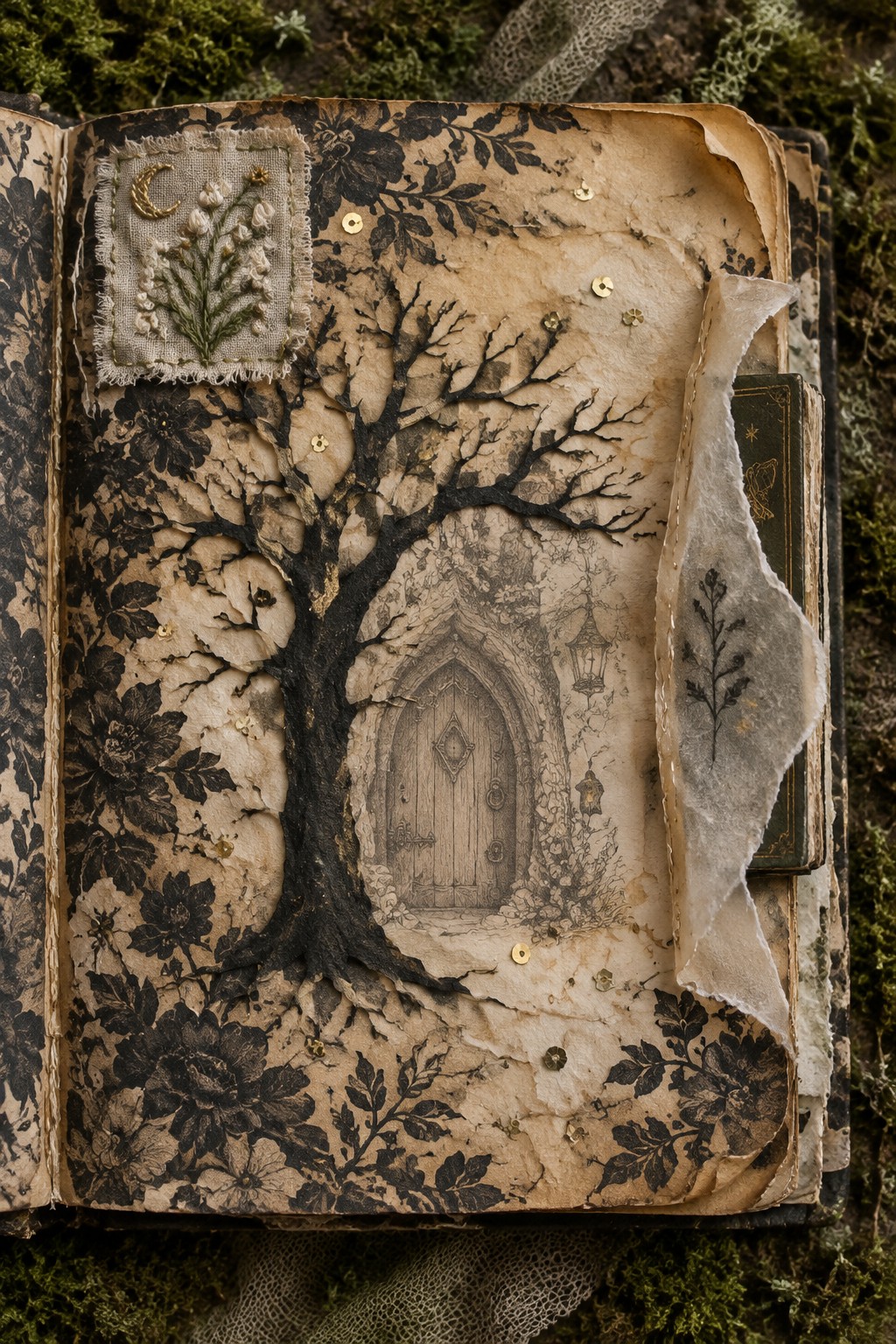
A layered woodland cover pairs a large black tree silhouette with a delicate, vintage-style illustration of an arched door nestled among branches. Dark floral-patterned paper frames the aged-looking cream sheet, while a fabric panel with embroidered-style flowers and a crescent moon adds a contrasting texture near the top; a loose fabric flap along the right edge makes the cover feel especially layered.
You could build a similar composition around a printed tree, doorway, or other small architectural illustration, using dark botanical scrapbook paper as a border and torn cream paper as the central ground. For a simpler version, keep the tree and door as the main elements and replace the fabric details with a small floral cutout or lace fragment; muted greens or deep burgundy could shift the woodland mood without changing the layout.
Gothic Natural History Specimen Journal Cover

A dark, specimen-book style cover brings together a feather, a small bone illustration, and botanical details on layered, worn-looking paper. The feather panel is the main focal point, while the stitched paper pocket, tucked tag, circular paper piece, and exposed binding cord give the cover a tactile, collected look.
You could build a similar arrangement on a charcoal cover using torn cream paper and vintage-style specimen prints, then add a stitched pocket to hold a tag or small note. Swap the feather for a leaf, insect, or other natural-history illustration, and keep the palette to muted browns and ivory so the different paper textures stand out.
Burgundy Velvet Heart Journal Cover
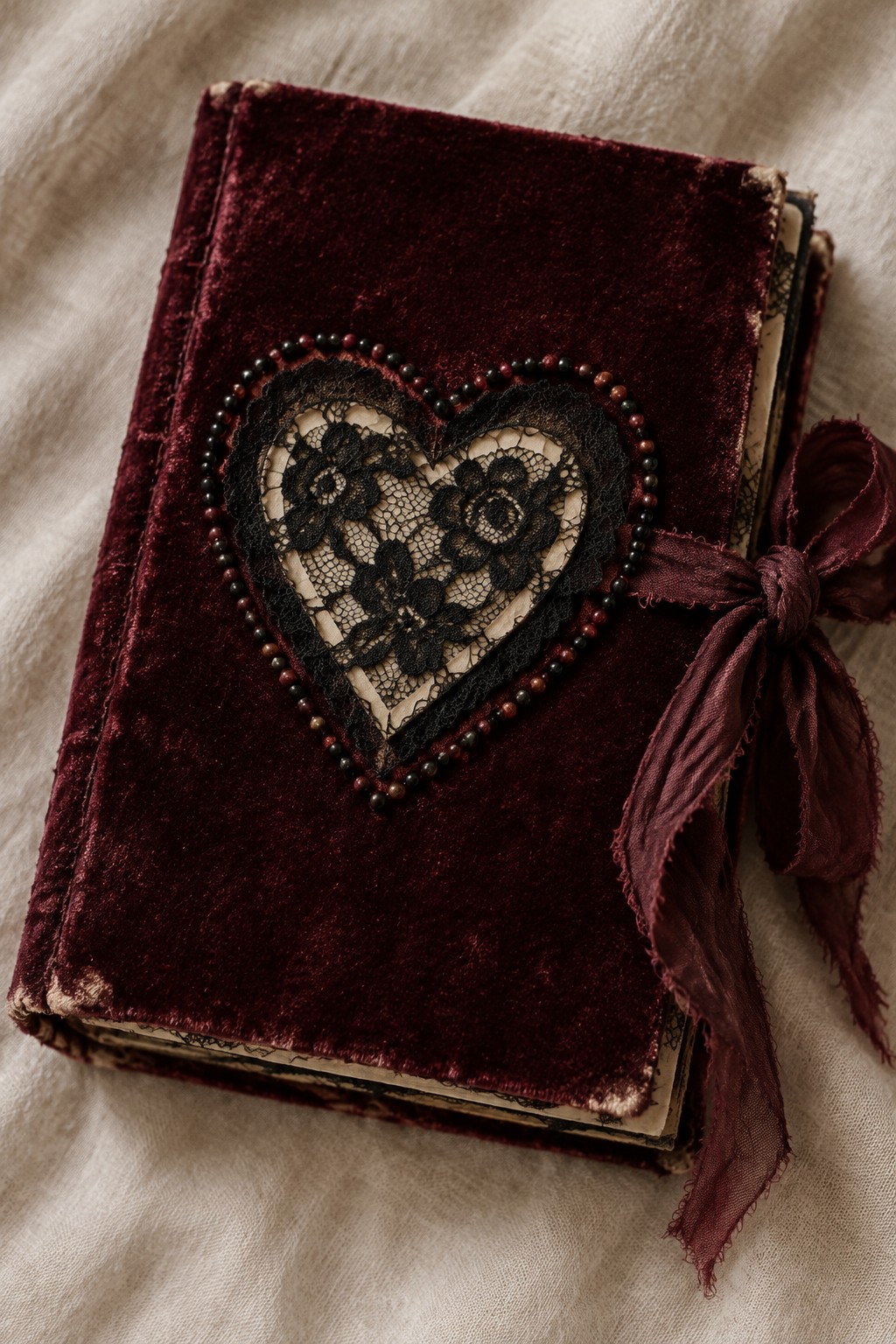
A burgundy velvet cover turns this handmade journal into a gothic keepsake, with a lace-filled heart outlined in dark beads as its main focal point. The layered black lace and pale backing contrast with the plush cover, while a frayed burgundy ribbon tied at the side adds another soft, tactile detail.
For a similar look, pair a dark fabric-covered notebook with a heart-shaped cutout backed by cream paper and trimmed with lace or small beads. If you want a simpler version, use a lace heart without the bead border, or replace the heart with a cameo or moth; a scrap of matching ribbon can tie the cover design together.
Gothic Raven and Wolf Journal Spread

A moonlit forest theme ties this layered double-page spread together, with a raven on the left and a howling wolf beneath a full moon on the right as the main focal points. Torn dark blue-black paper frames vintage-style script pages, while small celestial marks, botanical cutouts, and hanging kraft tags add contrast and texture without crowding the animal illustrations.
The torn-paper borders are the easiest part to adapt: layer dark scraps around pale printed pages, leaving irregular openings for animal, forest, or other gothic illustrations. Keep the raven and wolf arrangement, or substitute different creatures and change the moon phases, tags, and small motifs to suit your theme; fewer layers can create a simpler version while preserving the strong dark-and-light contrast.
Torn Paper Victorian Cameo Journal Cover

A distressed, vintage-style cover brings together dark floral paper, burgundy patterned paper, and irregular strips of torn cream paper. A small framed portrait acts as the focal point, while a coordinating paper tag with a burgundy ribbon peeks out from behind the notebook.
For a similar layered look, combine dark patterned scrapbook paper with scraps in one contrasting color, then let torn edges reveal the layers beneath. A framed portrait, botanical cutout, or other small illustration can take the place of the cameo, and a matching tag can add a coordinating detail without crowding the cover.
Celestial Tabbed Journal Cover

A celestial theme carries across this layered journal cover, where a vintage-style star chart on cream paper sits beside dark, irregular page tabs decorated with gold constellations. The navy tab’s small crescent moon is the clearest focal point, while the mix of chart lines, star patterns, and rough paper edges gives the cover visual depth.
For a similar arrangement, pair a pale map or astronomy print with black and navy scrapbook-paper tabs, then use gold star motifs to tie the layers together. A moon, planet, or different constellation could replace the crescent, and the tabs can be simplified to just one or two decorated edges if you want the celestial detail without as much layering.
Gothic Skeleton Hand Journal Spread

A layered black-paper spread pairs an ornate cutout frame on the left with a skeletal hand illustration as its focal point, while the right page has a folded triangular flap, lace-like trim, and a small botanical tag. The charcoal palette and rough paper edges tie the different textures together without making the two pages identical.
The framed illustration gives the left page a clear centerpiece, so you could adapt the layout with a different anatomy print, gothic portrait, or dark botanical image. On the right, use a folded paper layer to create a tucked-away spot for a tag, and swap in any small printed label or plant illustration that suits your theme.
Frequently Asked Questions
Gothic covers often combine dark colors, ornate details, and a sense of age or mystery. Try black, deep burgundy, forest green, or charcoal as a base, then layer in motifs such as arches, ravens, roses, moons, keys, antique frames, or botanical illustrations. Distressed paper, metallic accents, lace, and old-looking typography can add depth without making the cover feel overcrowded.
Start with a sturdy base, such as chipboard, thick cardstock, or recycled book covers. Useful decorative materials include patterned paper, fabric, lace, ribbon, washi tape, book pages, embossed paper, and printable images. For embellishments, consider metal charms, paper flowers, vintage buttons, faux wax seals, and small frames. Layering inexpensive or reclaimed materials can give the cover an intricate, antique look.
Choose one main focal point, such as a framed portrait, a large raven image, or an ornate arch. Build around it with a few supporting details, keeping some areas simple so the design has room to breathe. Limit your palette to two or three main colors, and repeat a small number of motifs, such as roses and keys, to make the layers feel cohesive.
A simple beginner design is to cover the journal in dark paper, add a torn strip of vintage-style book page, and place one central image inside a decorative paper frame. You could also use black lace over a colored background, add a ribbon closure, or decorate the cover with a stamped moon and a few metallic accents. These projects need only basic supplies and can be customized as your skills grow.
Let glue, paint, and other wet finishes dry completely before using the journal. To protect paper elements from scuffs, apply a suitable clear sealant in a thin test layer, especially if the cover includes inkjet prints or delicate materials. Keep raised embellishments away from the spine and edges where they may catch, and store the journal flat or in a protective sleeve if it will be carried often.
