
Ever found yourself staring at your car’s coolant reservoir, wondering if you should add coolant with the engine running or off? You’re not alone. This common dilemma can leave many drivers scratching their heads, especially when it comes to keeping their vehicle in top shape.
Key Takeaways
- Coolant’s Vital Role: Coolant is essential for regulating engine temperature, preventing overheating, and protecting engine components from damage and corrosion.
- Engine Off vs. On: Adding coolant with the engine off is generally safer, reducing the risk of burns and pressure-related hazards, while adding it with the engine on helps ensure immediate circulation.
- Types of Coolant: Familiarize yourself with different coolant types, such as Ethylene Glycol, Propylene Glycol, and Hybrid Organic Acid Technology (HOAT), to choose the right one for your vehicle.
- Regular Checks Essential: Consistently check coolant levels, ensuring they are between the recommended marks, and inspect for any leaks to maintain optimal engine performance.
- Best Practices for Addition: Always turn off the engine and wait until it cools before adding coolant, and use a funnel for a spill-free process while wearing protective gear.
Understanding Coolant Importance
Coolant plays a crucial role in your vehicle’s performance. It regulates engine temperature, prevents overheating, and protects engine components from corrosion and wear.
Without adequate coolant, engines can overheat, leading to significant damage. This damage might manifest as warped engine blocks or blown head gaskets. Both issues can result in costly repairs.
Maintaining the right coolant level enhances efficiency, ensuring optimal engine operation even in extreme temperatures. Your car’s manual typically specifies the recommended coolant type and level.
Types of Coolant
Coolant comes in various types. Here are some common ones:
- Ethylene Glycol: Widely used, this type provides protection against freezing and boiling.
- Propylene Glycol: Safer for the environment, this option keeps engines cool and minimizes toxicity.
- Hybrid Organic Acid Technology (HOAT): Combining organic and inorganic additives, this type means longer-lasting protection.
Checking Coolant Levels
Regular checks help maintain proper coolant levels. Follow these steps:
- Wait Until Cool: Always allow your engine to cool before checking. Never open the radiator cap while it’s hot.
- Locate the Reservoir: Find your coolant reservoir, typically a transparent tank near the radiator.
- Check the Level: Ensure coolant fills to the recommended mark (usually labeled “Full” or “Low”).
- Inspect for Leaks: Look for any signs of leaks under the vehicle.
When to Add Coolant
Add coolant when levels drop below the recommended mark. Make sure to:
- Use the Right Type: Match the coolant type to your vehicle’s requirements.
- Combine With Water: In emergencies, mix coolant with distilled water to maintain optimal performance.
Understanding coolant’s role empowers you to keep your vehicle running smoothly, ensuring on-the-road safety and reliability.
When Adding Coolant Should The Car Be On Or Off?
Knowing whether to add coolant with the engine on or off is crucial for maintaining your vehicle’s health. Different scenarios present advantages and disadvantages.
Recommended Products

Allows color matching of caps for dedicated adapters.

Precision Compatibility: This radiator expansion tank cap (Part Number: 13502353) is designed to fit a wide range of vehicles. It replaces part numbers 13502509, 68249136AA, 13598760, 316702182, 13393368. Always verify your old part number before purchasing to ensure a perfect match.

Direct replacement - this engine coolant reservoir cap directly replaces a cracked or lost original cap
Pros Of Adding Coolant With The Car On
- Circulation: The coolant flows through the engine, promoting immediate circulation. This can help you gauge whether the system is low.
- Quick Check: You can observe temperature readings on the dashboard. If you’re close to the maximum limit, adding coolant can help prevent overheating.
- Internal Awareness: The engine fan may engage, promoting additional cooling within the engine bay, which can be beneficial during the process.
Cons Of Adding Coolant With The Car On
- Pressure Risks: The system remains pressurized when the engine is running, increasing the risk of hot coolant spraying out if you open the reservoir cap.
- Burn Risks: Hot engine components can cause burns. Adding coolant carelessly could lead to accidental contact with boiling coolant.
- Evaporation Issues: Adding coolant to a hot engine means it may evaporate quickly, causing potential waste and inconsistency in fluid levels.
Pros Of Adding Coolant With The Car Off
- Safety: The engine cools down, reducing risks of burns or injuries from hot components or steam.
- Accurate Levels: You can check coolant levels more effectively without the system pressurized. This helps in determining the exact amount needed.
- Reduced Evaporation: The cooler temperature allows for better absorption, minimizing any loss of fluid due to evaporation.
- Delayed Circulation: The coolant won’t circulate until the engine restarts, meaning immediate temperature regulation isn’t addressed.
- Missed Temperature Readings: Without the engine running, you can’t monitor the coolant or engine temperature in real time.
- Potential Overfilling: You might inadvertently add more coolant than needed, leading to issues like overflow once the engine starts and the system pressurizes.
Best Practices For Adding Coolant
Adding coolant correctly ensures your engine runs smoothly and prevents overheating. Follow these best practices to maintain optimal performance.
Recommended Products
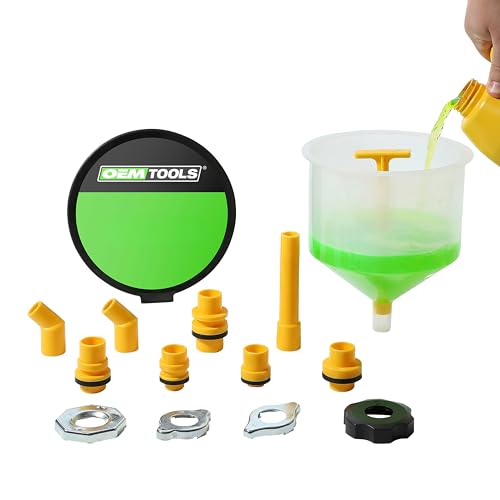
Prevents Spills: The no spill coolant funnel kit prevents spills and eliminates air bubbles during radiator refills, making it suitable for a clean, hassle-free coolant flush job

2026 UPGRADE - Enhanced Compatibility: Added 2 new vehicle-specific threaded caps (Ford & VW/Audi) for expanded fitment compatibility, with 0 price increase
Safety Precautions
- Turn Off the Engine: Always start by turning off your engine. This reduces the risk of hot components causing burns.
- Wait for the Engine to Cool: Allow the engine to cool down for at least 30 minutes. This prevents sudden pressure release and offers a safer environment.
- Wear Protective Gear: Use gloves and safety goggles. These protect against potential splashes from coolant.
- Use a Funnel: A funnel directs coolant into the reservoir without spills, making the process cleaner and easier.
- Ethylene Glycol: Commonly used, this type provides excellent heat transfer and is widely available. Always check the label for proper dilution ratios.
- Propylene Glycol: This option is less toxic and often used in vehicles sensitive to chemicals. It features similar performance benefits as Ethylene Glycol.
- Hybrid Organic Acid Technology (HOAT): Combining organic acids and traditional inhibitors, HOAT offers reliable protection against corrosion and is suitable for many modern vehicles.
Always refer to your owner’s manual for specific coolant recommendations for your vehicle. Following manufacturer guidelines ensures optimal performance and longevity of your engine components.
Conclusion
Knowing when to add coolant is essential for keeping your car running smoothly. While it might be tempting to add coolant with the engine on for immediate circulation, the risks can outweigh the benefits. Turning off the engine and letting it cool down is the safer option.
This way you can avoid burns and prevent pressurized coolant from spraying out. Always remember to wear protective gear and consult your owner’s manual for the right type of coolant. Following these guidelines will help you maintain your vehicle’s performance and keep it safe on the road. So the next time you’re checking your coolant levels, you’ll feel confident in your approach.
Frequently Asked Questions
Should I add coolant with the engine running or turned off?
Adding coolant is generally safer with the engine turned off. With the engine off, you reduce the risk of burns from hot parts and avoid coolant spraying due to pressure. However, adding coolant with the engine running can ensure immediate circulation and provide a real-time temperature check.
What happens if I add coolant when the engine is hot?
Adding coolant to a hot engine can be dangerous. The pressurized system may cause hot coolant to spray out, potentially leading to burns. It’s best to let the engine cool down for at least 30 minutes before adding coolant.
What types of coolant are there?
The main types of coolant are Ethylene Glycol, Propylene Glycol, and Hybrid Organic Acid Technology (HOAT). Each type has different properties and protection levels, so it’s essential to choose the right one for your vehicle as specified in the owner’s manual.
How do I check my coolant levels safely?
To check coolant levels safely, turn off the engine and wait for it to cool down. After at least 30 minutes, open the hood and locate the coolant reservoir. Ensure the vehicle is on level ground, and read the markings on the reservoir to determine if you need to add more coolant.
What are the risks of low coolant levels?
Low coolant levels can lead to engine overheating, which may cause severe damage like warped engine blocks or blown head gaskets. Keeping your coolant level adequate is crucial for protecting engine components and ensuring vehicle performance.
How can I add coolant safely?
To add coolant safely, first turn off the engine and wait for it to cool down. Wear protective gear and use a funnel to avoid spills. Check the coolant reservoir for the correct type and slowly add coolant until it reaches the recommended level, avoiding overfilling.
