


I’m always drawn to vintage-inspired papers, old illustrations, and little scraps that can find a new home on a journal page.
These layouts pair those layered details with pockets and hidden tags, so there’s a fun surprise tucked into the design.
I enjoy seeing how a few bits of paper can come together in different ways, especially when a page is both pretty and useful.
Here are 18 ideas to browse for inspiration, with plenty of room to try your own papers, colors, and arrangements.
Botanical Pocket Page With Layered Tags
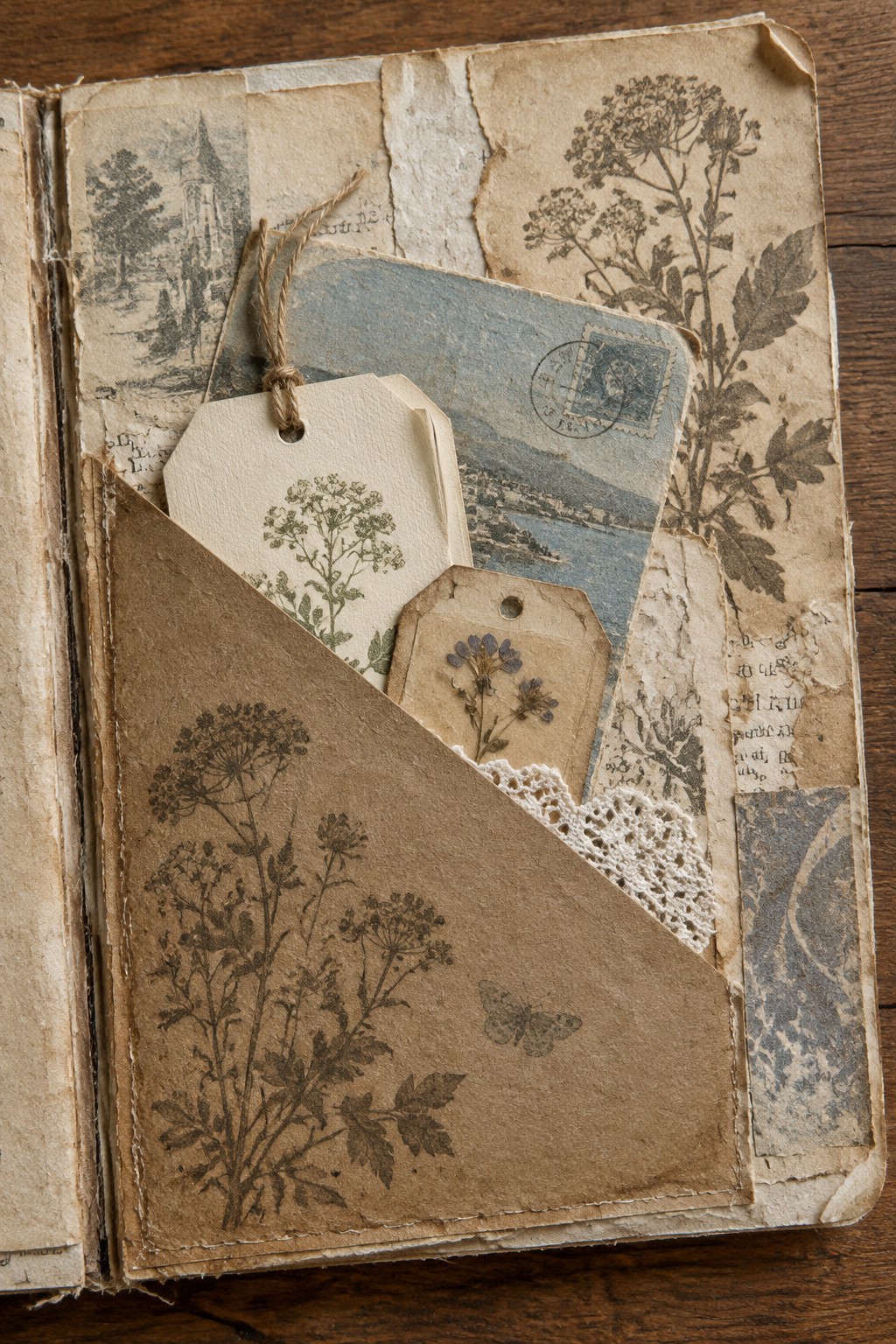
A botanical pocket page brings together vintage-style plant prints, torn paper, and travel-inspired ephemera in a layered layout. The large kraft pocket anchors the composition, while a blue illustrated card and two floral tags peek above its diagonal edge; cream paper and lace add lighter textures against the warm brown background.
You could recreate the arrangement with a kraft paper pocket, a few botanical cutouts, and mismatched tags made from cardstock or paper scraps. Swap the plant prints for leaves, mushrooms, or seasonal flowers, and tuck in a postcard or journaling card to change the theme while keeping the useful layered pocket structure.
Vintage Travel Journal Spread With Pockets

A vintage-style travel spread pairs a large kraft-paper pocket on the left with a layered collage of maps, tickets, and a coastal photograph on the right. A map tag peeking from the stitched-looking pocket is the main focal point, while the clipped-on stamp, torn map fragments, and muted blue and sepia papers give the two pages a coordinated, collected look.
You could build a similar layout around a destination that matters to you, using a map print, a travel photo, and ticket-shaped scraps or other ephemera. Keep the left pocket roomy enough for a tag, then arrange smaller pieces on the opposite page; changing the map and photo can shift the theme to a favorite city, road trip, or imagined journey.
Victorian Portrait Journal Cover With Layered Paper

A vintage-inspired cover turns a fabric-bound journal into a layered keepsake, with an oval portrait as the focal point. Cream floral paper, burgundy strips, a lace hanging, and a small metal-toned accent create contrast against the textured brown cover, while a decorated inner flap holds tags and paper scraps.
For a similar arrangement, pair a portrait print or another central image with oval frames cut from contrasting patterned papers. Tuck floral tags and folded paper pieces into the inside flap, using a coordinated burgundy-and-cream palette or switching to colors that suit a family photo, travel theme, or seasonal illustration.
Layered Botanical Page With a Hidden Tag
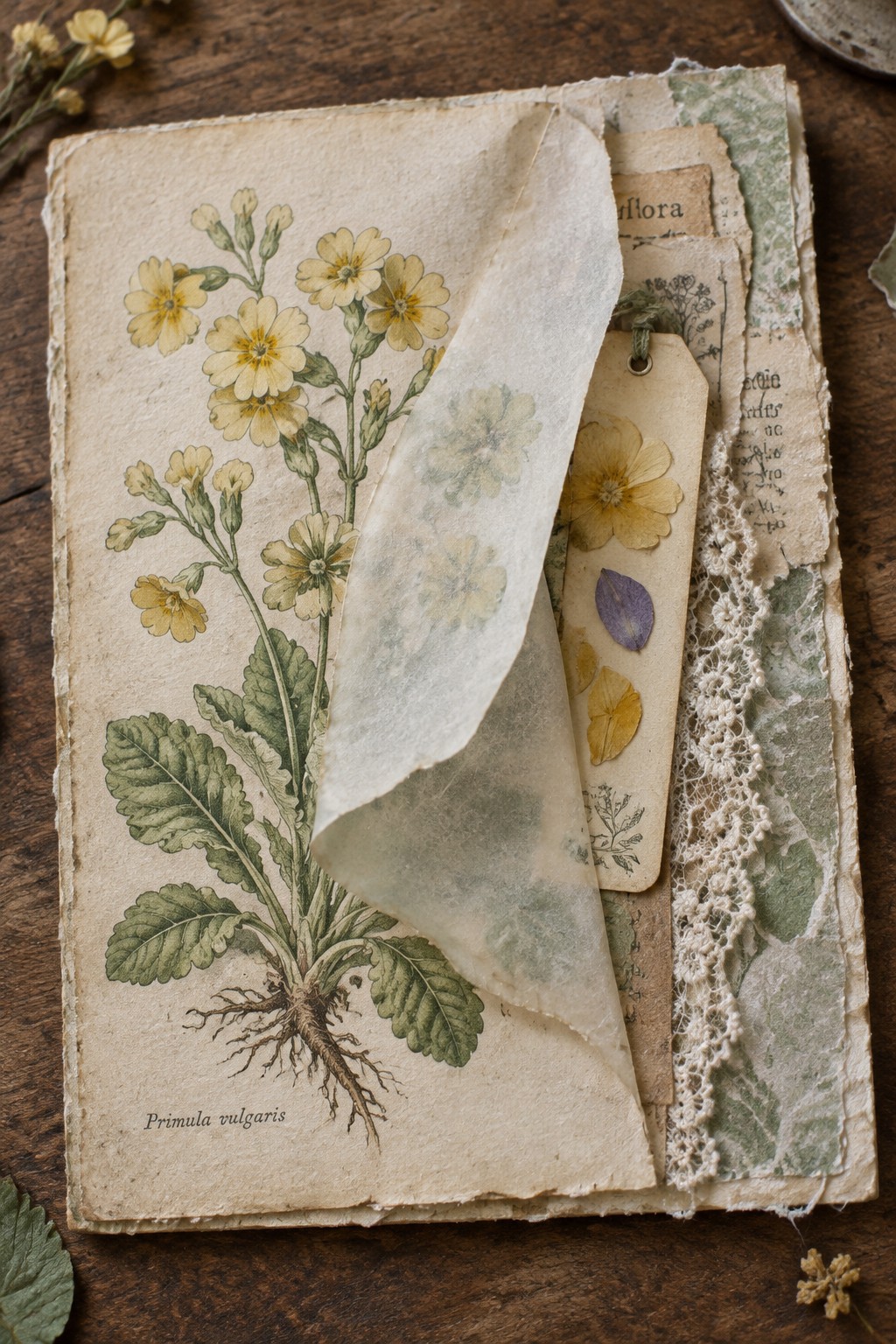
A vintage-style botanical layout pairs a large primrose illustration with a translucent folded sheet that partially covers it, creating a layered page with a peek-through effect. Behind the page, torn floral papers, lace, and a tag decorated with flower cutouts add contrasting textures and give the arrangement the look of a small stack of botanical ephemera.
The primrose print can serve as the focal point, while tracing paper or another translucent sheet gives the page an extra layer without hiding the illustration completely. Tuck a decorated tag among coordinating paper scraps for a similar layered arrangement, or swap the primrose for another plant print and use different floral cutouts to suit your journal’s theme.
Vintage Floral Page With Tethered Tags

A vintage-inspired ledger page becomes an interactive tag arrangement, with two large floral paper tags layered over faded grid lines and handwritten-looking marks. Their soft pink patterned paper, botanical cutouts, and small metal eyelets stand out against the aged cream page, while the visible thread linking the upper tag to the lower one gives the layout its distinctive structure.
For a similar page, pair ledger-style paper with two coordinating tags, then use thread through their eyelets to keep the layered arrangement connected. Try different floral cutouts or switch to leaves, birds, or seasonal prints; if you want a simpler version, use one decorated tag and a single botanical accent.
Lace Pocket With Botanical Tags
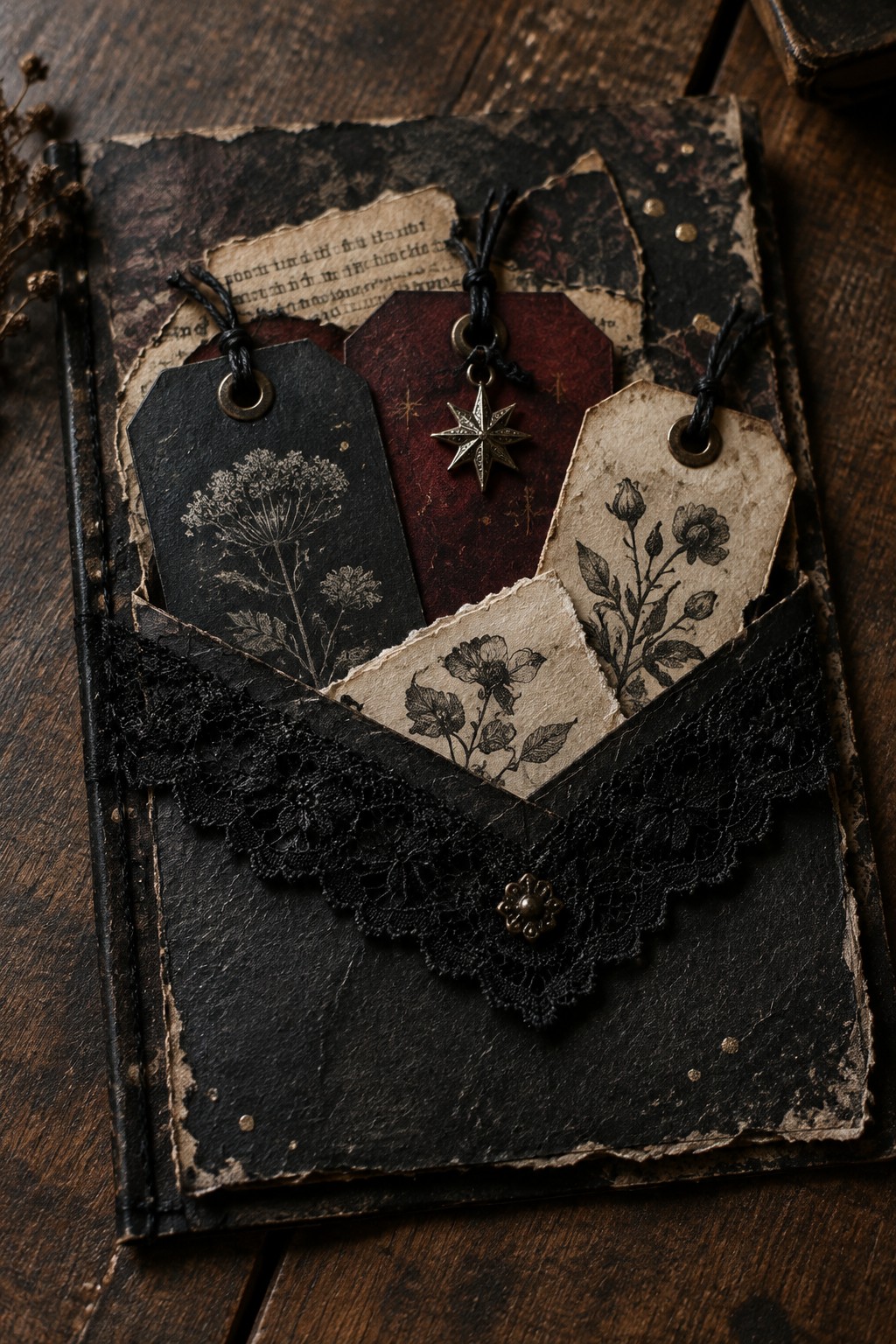
A dark, distressed journal cover becomes a storage spot for three dangling tags, pairing vintage-style botanical prints with black lace and a small metal star charm. The cream torn-paper fragments soften the black and burgundy tags, while their overlapping arrangement keeps the layered pocket easy to read.
You could adapt the layout with a lace-trimmed paper pocket and tags cut from contrasting scraps, then choose botanical prints, handwritten-style paper, or other ephemera to suit your theme. Keep the star charm as a single focal detail, or replace it with a small button or another visible embellishment; the tags can also be swapped out whenever you want to refresh the cover.
Coastal Map Spread With Shell Pocket

A coastal-inspired double-page spread combines vintage-style map prints, a compass motif, and a lighthouse illustration in a muted palette of blue, cream, and kraft brown. A stitched-looking kraft pocket on the left holds a map tag, while the right page layers a translucent pocket with small shell embellishments over torn map paper.
The map layers and paper pockets make this layout useful for keeping small notes or travel ephemera together without hiding the coastal theme. Try kraft paper and map-print scraps for the base, then use a folded paper pocket on one side and a small vellum-style pocket on the other; shells can be replaced with beach-themed cutouts or keepsakes from another travel theme.
Vintage Ephemera Collage With Botanical Tags
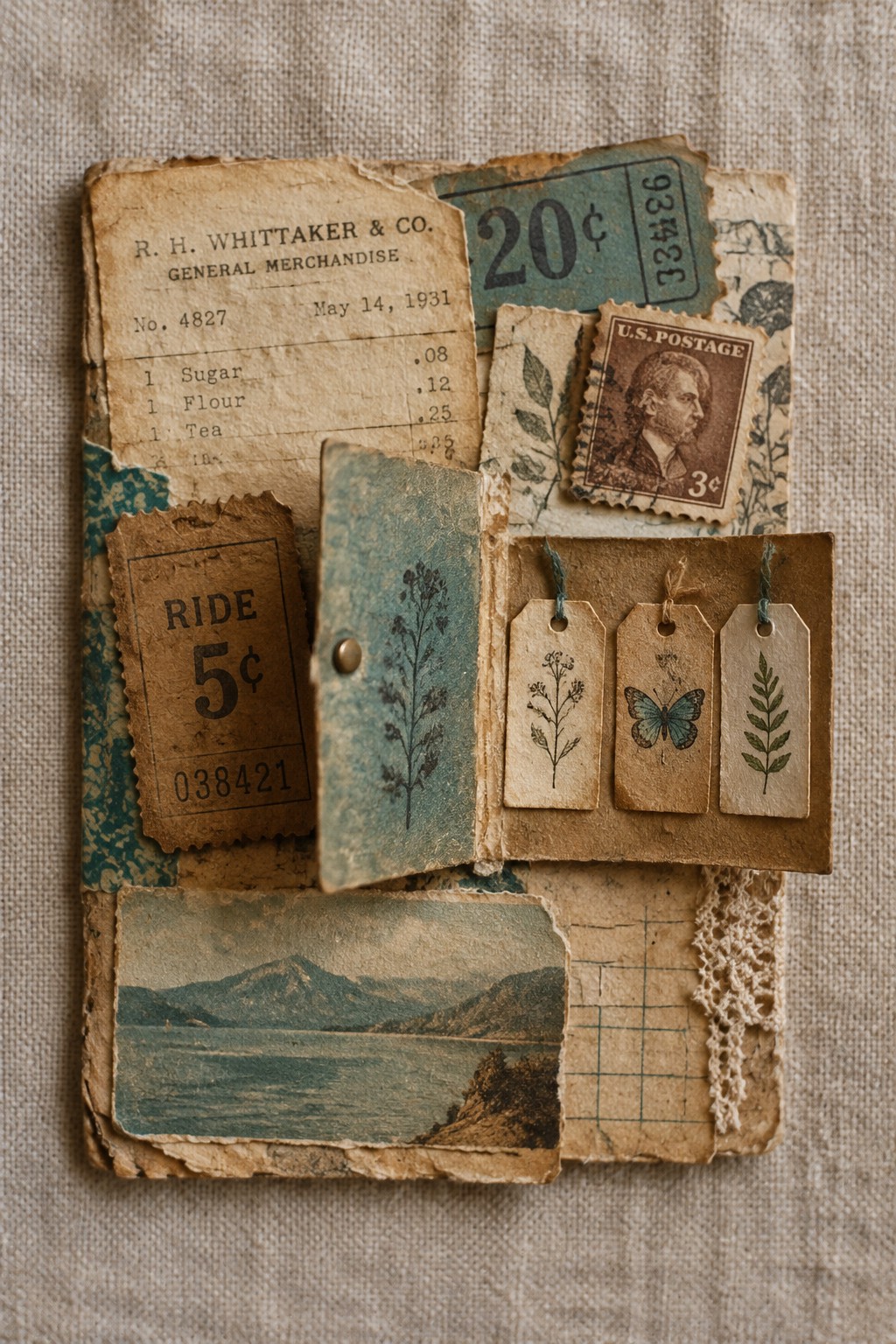
A layered vintage-style collage brings together a grocery receipt, ticket and postage-stamp ephemera, a small landscape print, and botanical tag designs in a muted palette of teal, tan, and brown. The open paper booklet at the center adds a dimensional focal point, while the three hanging tags sit over a brown panel and lace and torn paper edges soften the layered arrangement.
The mix of printed ephemera and tag shapes makes this a useful way to combine small paper scraps without needing one large illustration. Try a receipt or ticket as a background layer, then use a folded paper piece as the focal point and add a few tags with plant or insect prints; a simpler version could keep just the booklet and two tags in a coordinated color palette.
Vintage Floral Spread With a Teacup Pocket
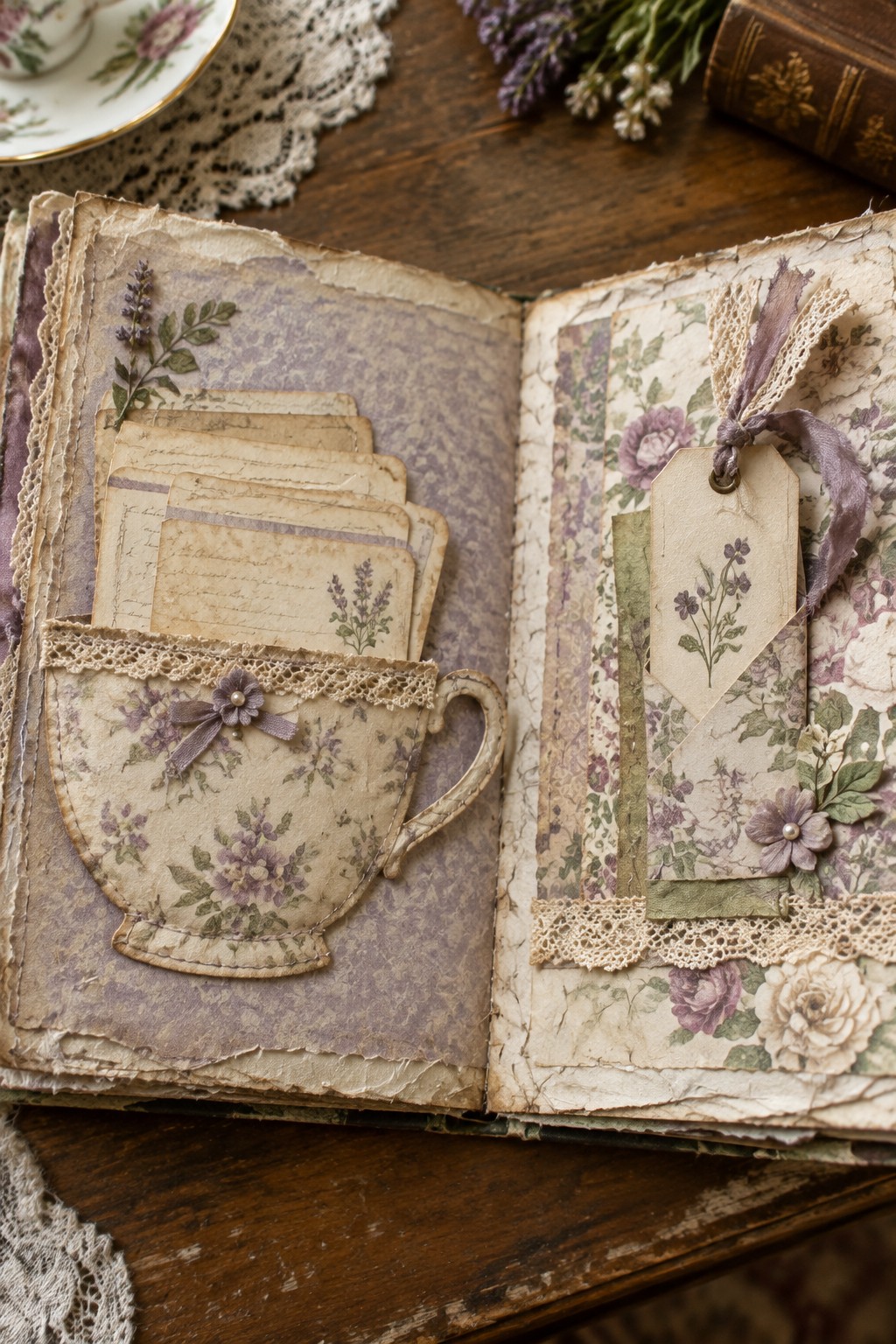
A vintage-inspired floral spread pairs a muted lavender paper background with a large teacup-shaped pocket on the left page and a layered floral panel on the right. Script-print inserts peek out of the cup, while lace trim, small flower embellishments, and a ribbon-tied botanical tag bring together the spread’s cream, mauve, and sage colors.
The teacup pocket gives ordinary paper scraps a distinctive place to hold journaling cards, and the coordinated tag on the opposite page helps tie the layout together. Try using floral scrapbook paper and lace with a pocket cut into another shape, such as a book or envelope, then tuck in script-print cards; a simpler version could use one tag and a narrow lace accent.
Vintage Botanical Journal Cover With Layered Ephemera
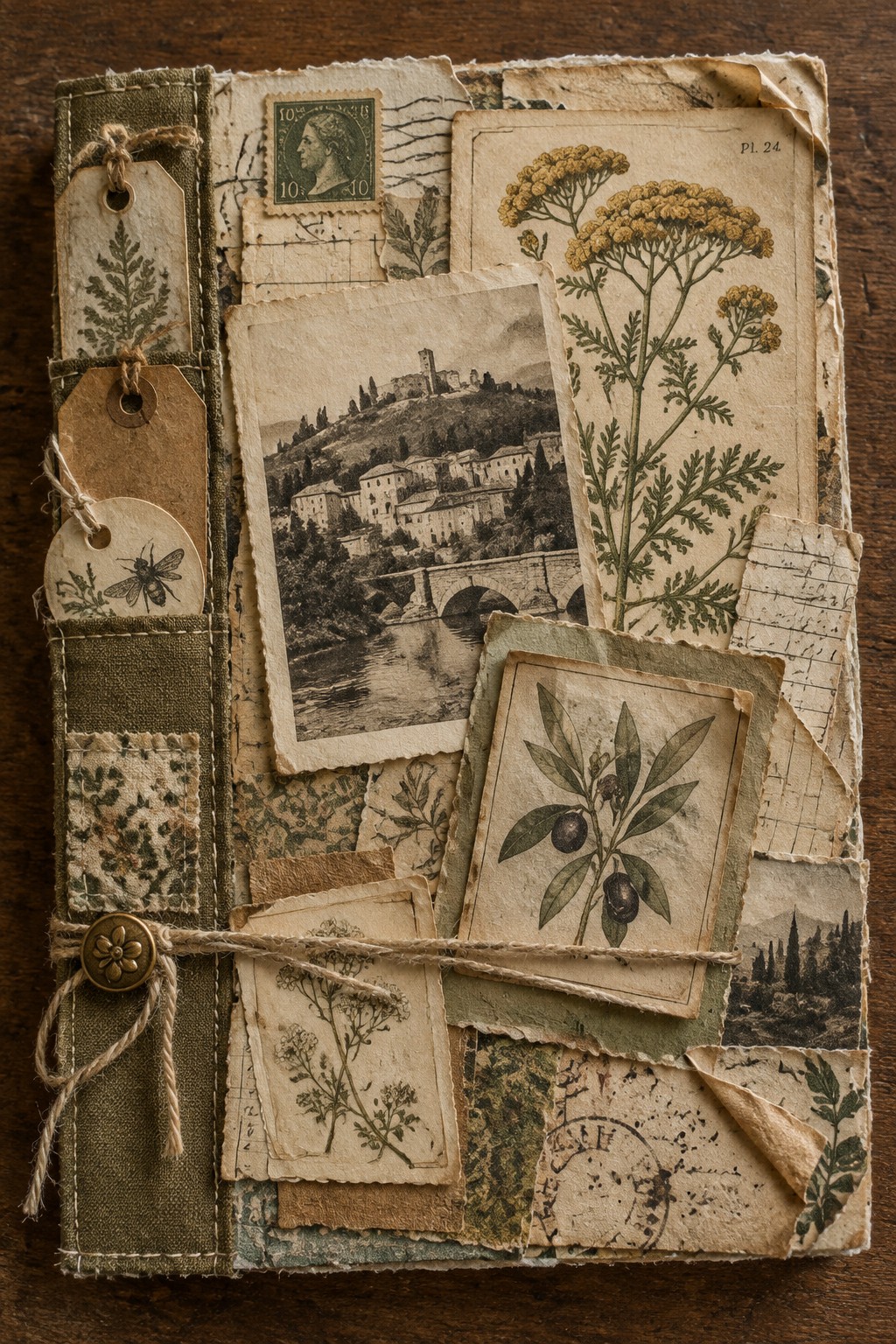
A fabric-bound journal cover becomes a dense vintage-style collage, with a black-and-white village photograph as the central focal point and botanical prints layered around it. Torn cream papers, a postage stamp, twine-tied tags, and overlapping plant illustrations create varied textures, while the muted greens and warm browns keep the busy arrangement cohesive.
The composition is easy to adapt using a favorite landscape photo, printed plant studies, and scraps of patterned or lined paper. For a simpler version, keep one large photograph and a single botanical print, then add a tag or two; for a more layered cover, tuck small paper pieces behind the main images and tie a tag to the binding with twine.
Lavender Tag Tucked Into a Vellum Pocket
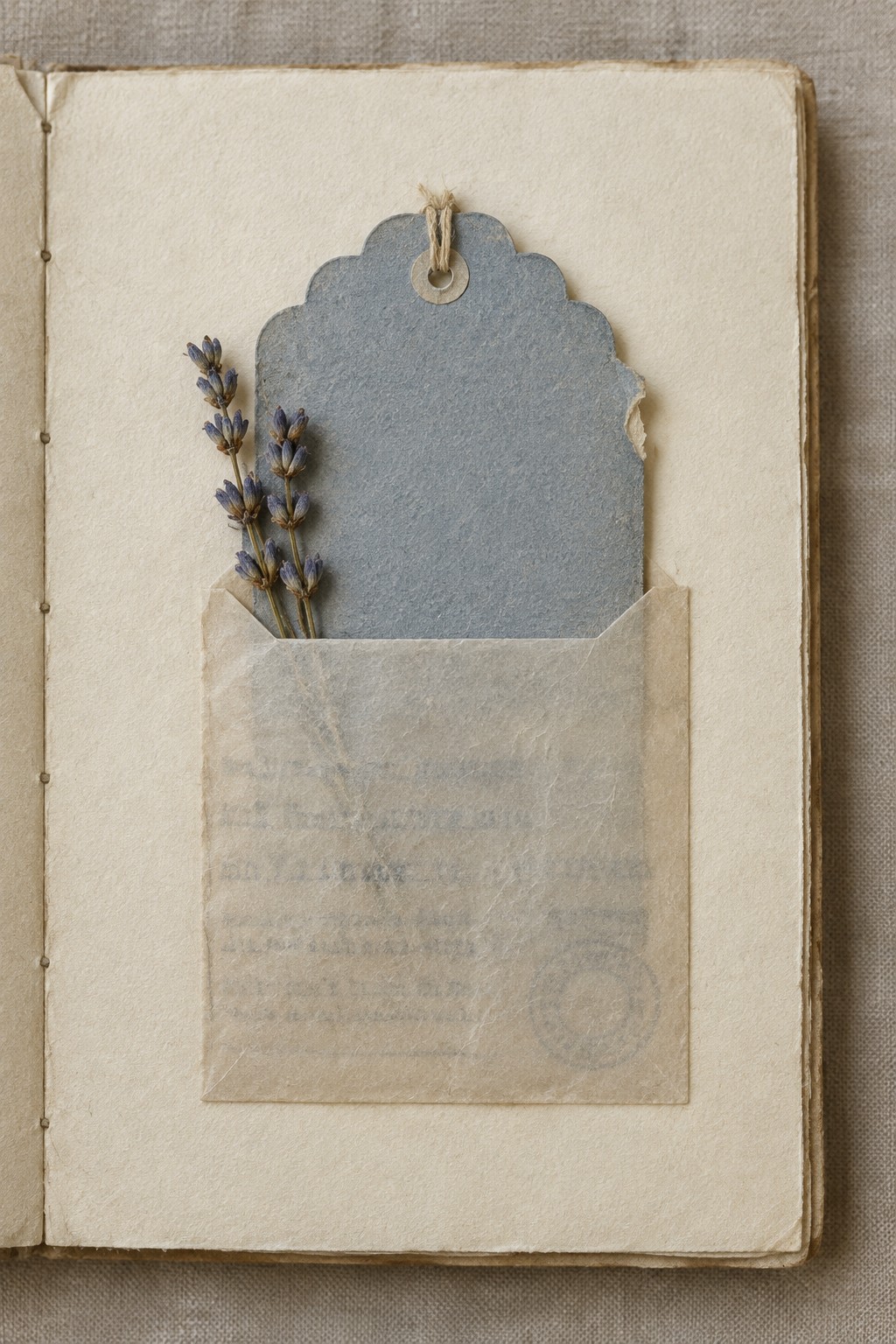
A scalloped blue-gray tag and a few lavender sprigs create a simple botanical pocket page with a vintage-inspired look. The translucent envelope-style pocket sits over a cream journal page, letting faint printed text show through while the tag’s rounded top and twine loop remain visible above it.
The layered arrangement is easy to adapt using a paper pocket or vellum envelope, a tag cut from colored cardstock, and a small floral cutout or sprig. Try swapping the lavender for another botanical motif, or change the tag color to suit a seasonal palette; the see-through pocket keeps the insert partly visible without crowding the page.
Vintage Map Pocket With Compass Details
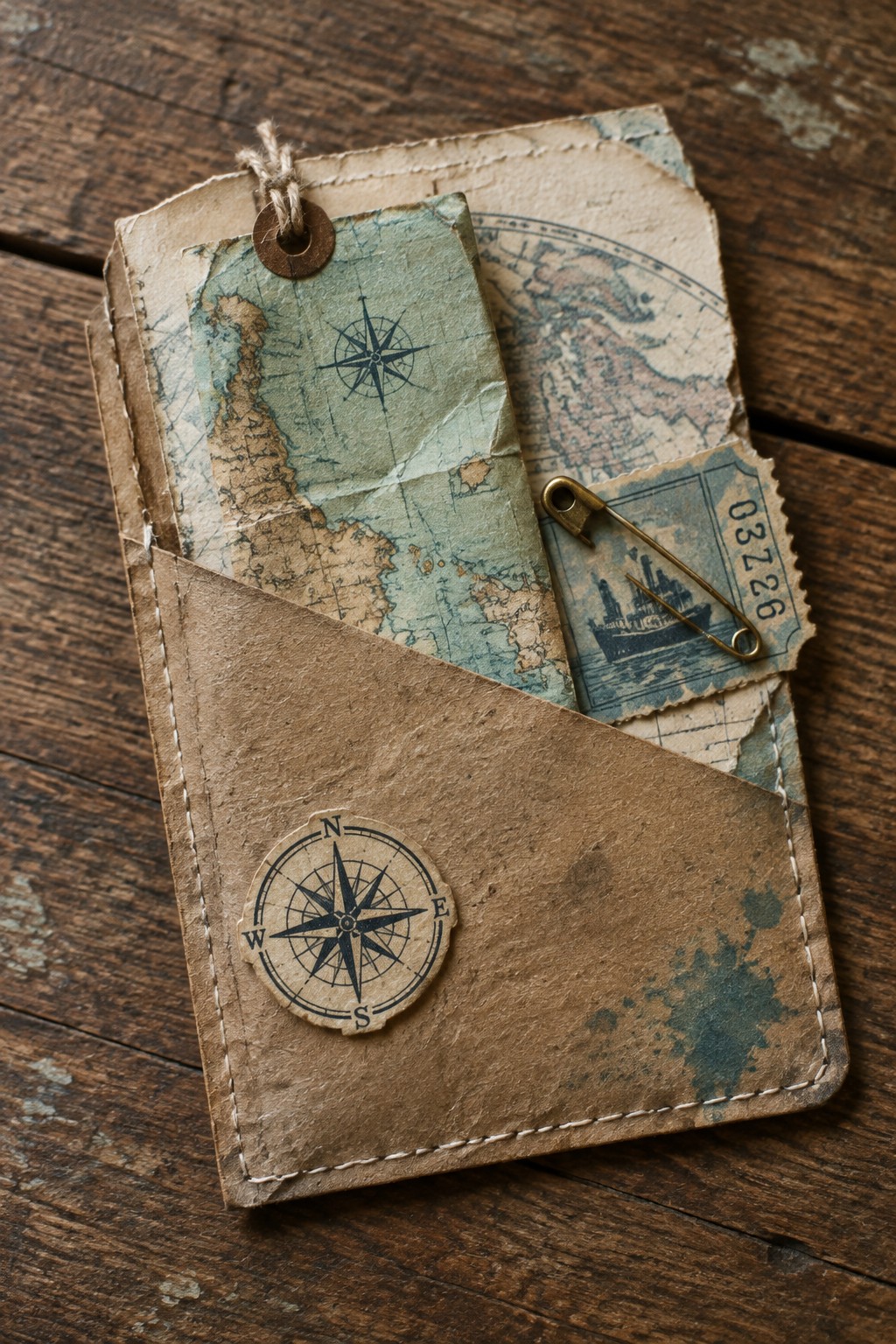
A travel-themed journal cover pairs a large kraft-paper pocket with layered vintage-style maps, a map tag, and a ticket-like paper fragment held by a safety pin. The overlapping blue-green map papers and compass motifs give the cover a clear navigation theme, while the pocket creates space for the tag to peek out.
The kraft pocket and map tag are useful elements to adapt with paper scraps and printed map designs, or with other travel ephemera such as postcards and ticket cutouts. Keep the compass as the focal point, or replace it with a small illustration that suits a different theme; a simple paper pocket can still make the cover feel layered without adding many decorations.
Vintage Rose Foldout With Lace-Tied Tags
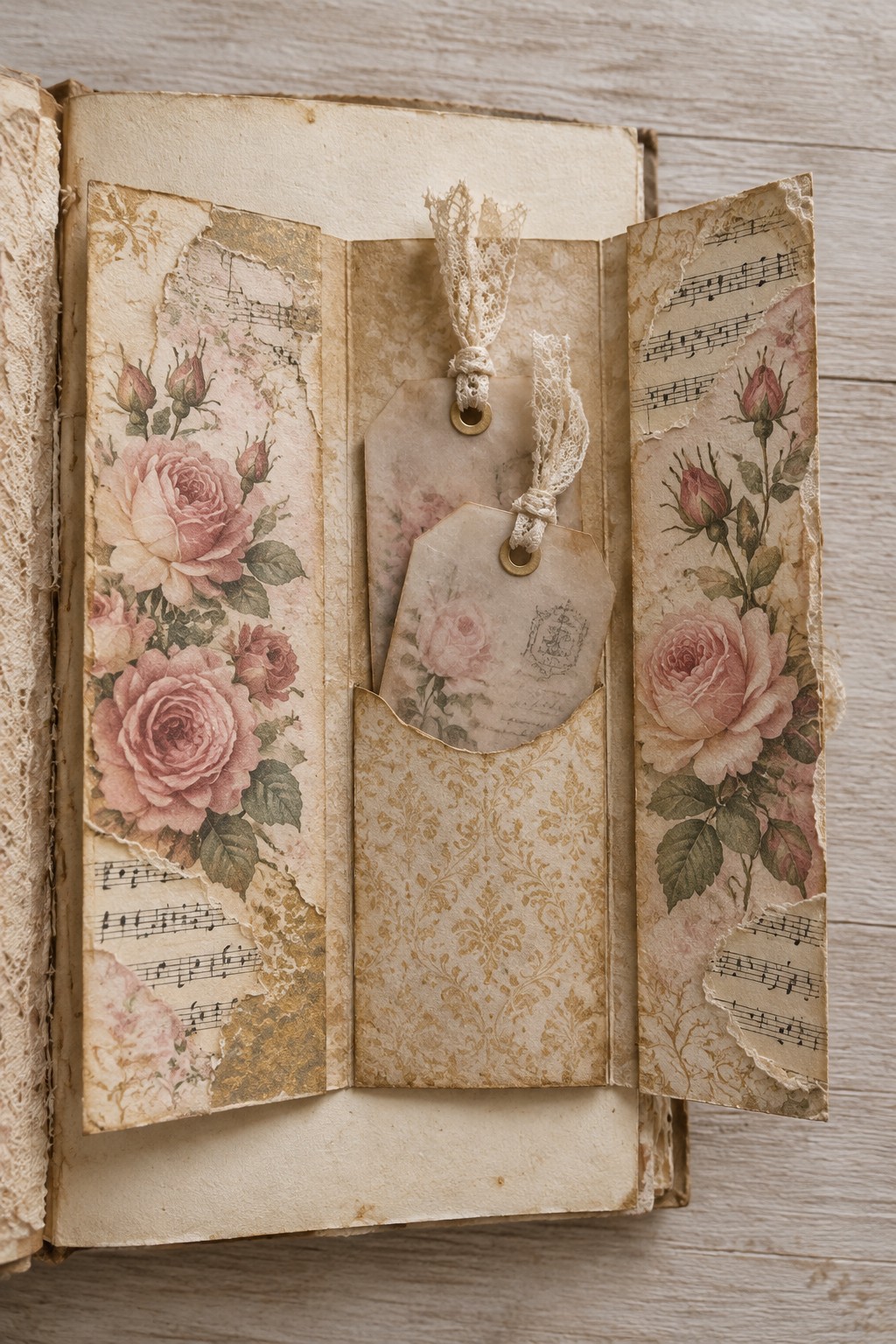
A vintage-style floral spread pairs rose-printed side panels with a patterned center pocket and two hanging paper tags. Torn music-print scraps, aged-looking paper, and lace ties bring together soft pinks, creams, and warm browns, while the folded panels frame the tags as the main focal point.
You could recreate the arrangement with floral scrapbook paper, music-print scraps, and a simple folded pocket, then tuck in tags decorated with coordinating cutouts. Lace can be swapped for ribbon or twine, and the rose theme could shift to other botanicals or a seasonal print while keeping the same foldout layout.
Botanical Journal Cover With a Vellum Pocket

A botanical cover gets extra depth from the layered plant prints and a translucent pocket stitched across the lower half. A small tag with dried-leaf-style cutouts sits inside the pocket, while the muted green spine and worn-looking cream papers keep the composition cohesive.
You could recreate the arrangement with vintage-style plant illustrations, a vellum or tracing-paper pocket, and a tag decorated with leaf cutouts. Try swapping in herb or wildflower prints, or use a different tag shape to suit your theme; the pocket also gives you a practical place to tuck a note or another small paper piece.
Storybook Pocket Page With Animal Tags

A worn, vintage-style journal page becomes a storybook pocket layout, with torn children’s illustrations and graph paper arranged around a central kraft pocket. Three illustrated tags showing a rabbit, a house, and a duck peek from the pocket, while a small cat cutout sits alongside it; the warm paper tones and green patterned strip along the binding tie the collage together.
For a similar arrangement, combine printed storybook images with graph paper and torn scraps, then use a kraft pocket to hold a small set of coordinated tags. Swap the animals and house for another theme, such as woodland creatures or garden scenes, and keep the pocket as the main interactive feature; fewer background scraps can simplify the busy collage while preserving its layered look.
Celestial Journal Cover With a Starry Pocket
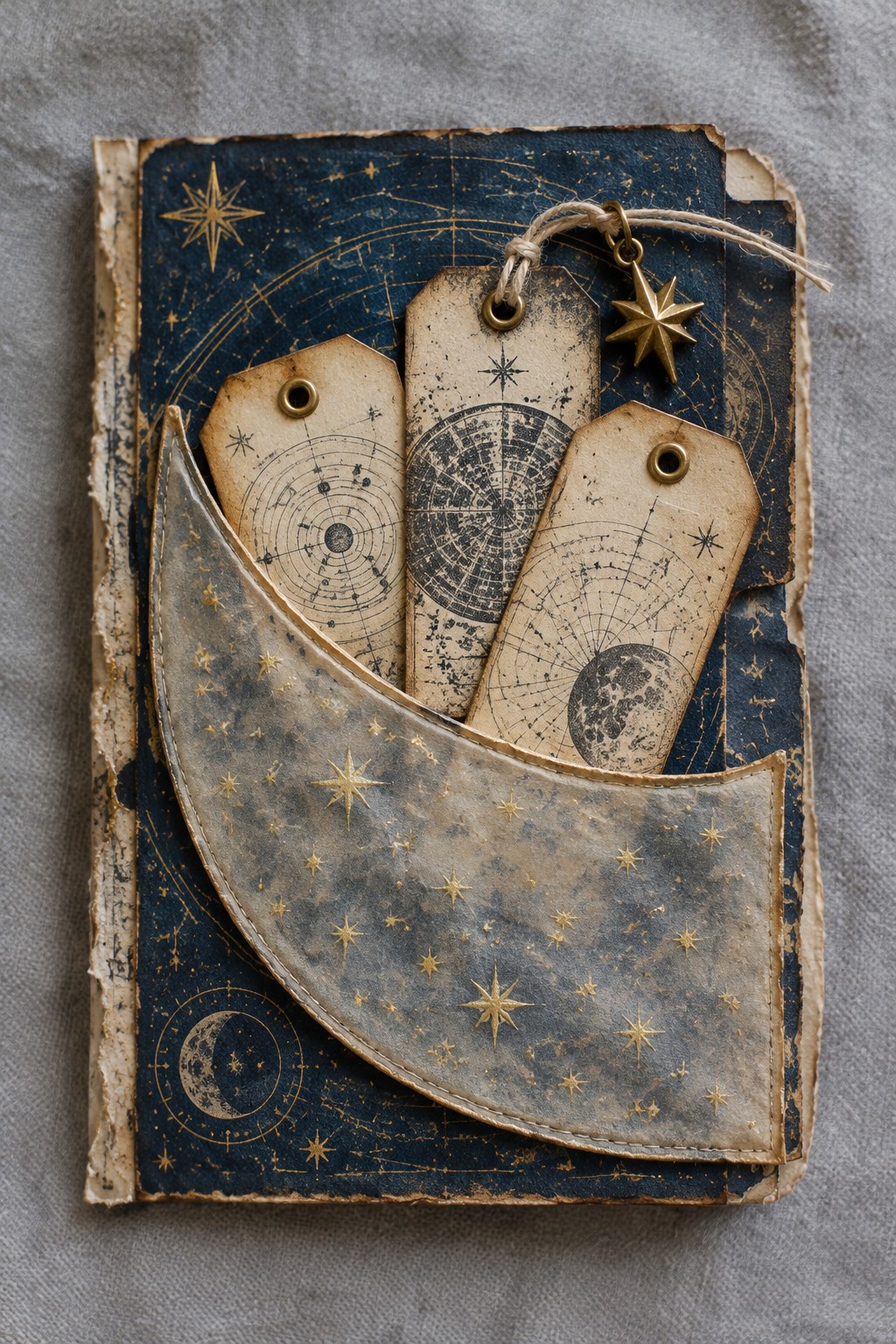
A deep navy, star-chart cover sets the theme for a layered celestial journal design, with three astronomy-printed tags tucked into a curved translucent pocket. The aged-look paper edges, gold star details, brass eyelets, and twine create contrast between the dark background and the pale inserts, while a dangling metal star provides a small focal accent.
You could recreate the arrangement with celestial scrapbook paper, cream tags, and a curved pocket cut from vellum or another translucent paper. Keep the three tags for a full, layered look, or use one or two with different moon or planet prints; changing the navy and gold palette to midnight purple or charcoal with silver details would shift the mood while keeping the same layout.
Vintage Recipe Pocket With Botanical Tags

A vintage-style recipe journal layout combines a deep green floral-patterned page, a botanical illustration card, and a large folded pocket printed with recipe text and a mixing-bowl drawing. Three twine-tied tags peek above the layered pages, while a spoon-shaped cutout tucked into the pocket adds another cooking-themed detail.
The pocket can hold recipe cards, notes, or extra tags, and the visible inserts make the arrangement useful as well as decorative. For a similar look, pair kraft or cream paper with a muted patterned background, then change the printed illustrations and tag designs to suit a different theme, such as gardening or tea.
Botanical Accordion Tags In a Vintage Journal

A row of stitched, botanical-style tags creates a compact foldout insert against the softly layered pages of a vintage-inspired journal. Their varied plant illustrations, dark metal-look eyelets, and muted green paper accents stand out against the cream and kraft tones, while a separate pocket holds another illustrated tag.
The linked tags make a useful way to display several small illustrations without spreading them across a full page. Try mixing floral and fern prints on kraft or tea-colored paper, then tuck a few extra tags into a pocket; changing the plant prints to seasonal leaves or garden herbs can shift the theme while keeping the same arrangement.
Frequently Asked Questions
You can start with a journal or loose pages, patterned or aged paper, scissors, adhesive, and a ruler. For interactive details, gather small envelopes, paper scraps, tags, tabs, and optional items such as lace, ribbon, stamps, or buttons. Use lightweight embellishments where pages need to turn easily, and choose archival-safe glue and paper if you want your journal to last.
Cut a piece of paper slightly wider than the tag, then fold narrow tabs along the sides and bottom. Glue the tabs to the page, leaving the top open. Before attaching the pocket, test the tag to make sure it slides in and out without catching. A semicircle cut into the pocket’s top edge can make the tag easier to reach.
Slide a tag into a side pocket, tuck it behind a hinged flap, or place it inside a small envelope attached to the page. You can also make a belly band by gluing a strip of paper or fabric at both ends, leaving the center open. Add a visible tab, ribbon loop, or label so readers can discover the hidden piece without pulling on delicate decorations.
Plan the layout before adding embellishments, and keep interactive pieces relatively flat. Use thin paper for pockets and tags, avoid stacking too many layers in one area, and spread bulky elements across different pages. Check how the journal closes as you work. If it becomes difficult to shut, remove or reposition some decorations.
Create a consistent look with a limited palette, such as cream, brown, muted green, and faded blue, then vary the layout structure. Try pockets on some pages, fold-outs or envelopes on others, and different tag shapes throughout. Mix printed ephemera, handwriting, lace, and aged paper, but leave some open space so each page feels intentional rather than crowded.
