

Have you ever been caught in a downpour only to discover your windshield washer fluid isn’t working? It’s frustrating when you need a clear view and your system lets you down. A leak in the washer fluid reservoir can turn a simple drive into a hassle, leaving you scrambling for a solution.
Key Takeaways
- Identify Leak Causes: Common reasons for windshield washer fluid leaks include a damaged reservoir, loose connections, worn tubing, and a faulty washer pump.
- Signs of Leaks: Puddles under your vehicle, low fluid warning lights, reduced spray pressure, and fluid stains on your car’s paint can indicate a leak in the washer fluid system.
- Essential Tools: Gather a socket set, wrench, screwdrivers, pliers, utility knife, and a basin or bucket to effectively diagnose and repair leaks.
- Repair Procedures: Inspect the entire washer system visually, locate the leak source, and either repair or replace damaged components as necessary.
- Regular Maintenance: Perform routine inspections every few months to catch early signs of wear and prevent future leaks in the washer fluid system.
- Use Quality Fluid: Opt for high-quality, pre-mixed washer fluid and avoid using water alone to prevent residue buildup and maintain system efficiency.
Understanding Windshield Washer Fluid Leaks
Windshield washer fluid leaks can disrupt your driving experience. Identifying the cause and symptoms is essential for effective repairs.
Common Causes of Leaks
- Damaged Reservoir: A cracked or punctured windshield washer reservoir often allows fluid to escape. Inspect the reservoir for visible damage.
- Loose Connections: Loose or disconnected hoses can create leaks. Check the connections between the reservoir and the washer jets for security.
- Worn Tubing: Old or frayed tubing can lead to leaks. Examine all tubing for signs of wear or deterioration and replace as needed.
- Faulty Washer Pump: A malfunctioning washer pump might leak fluid. Look for fluid pooling under the vehicle, which can indicate a pump issue.
- Fluid Puddles: Notice puddles beneath your vehicle. This often signals a significant leak in the system.
- Low Fluid Warning: If your dashboard’s low fluid indicator lights up, check the reservoir. A leak may prevent proper fluid levels.
- Reduced Spray Pressure: Weak spray from the washer jets might indicate a leak in the system, leading to insufficient fluid being delivered.
- Fluid Stains: Look for streaks or stains on your vehicle’s paint. These can be signs of washer fluid escaping and require immediate attention.
Tools and Materials Needed
To fix a windshield washer fluid leak, gather specific tools and materials. This ensures you tackle the issue effectively and efficiently.
Recommended Products

HIGH QUALITY MATERIAL: The windshield washer hose kit is made of high quality rubber, soft and elastic, strong and durable.

EASY INSTALLATION & REPLACEMENT: Replace damaged windshield washer hoses anytime — even traveling or in emergencies; connect the water pump and windshield nozzle easily to restore smooth water spray, no special tools needed

Windshield Washer Hose Repair Kit -- The washer hose kit is easy to replace and install. Windshield washer hose kits help you easily and quickly replace aging hoses and properly connect your car's water pump to the windshield nozzle to ensure smooth water spraying and glass cleaning. You can replace the new windshield wiper hose repair kit by yourself to save money for your loved automotive car.
Essential Tools
- Socket Set: Use a socket set to remove bolts securing the washer fluid reservoir or pump.
- Wrench: A wrench helps loosen tight connections and fittings in the system.
- Screwdrivers: Both flathead and Phillips screwdrivers assist in accessing various parts of the windshield washer system.
- Pliers: Use pliers to grip and manipulate small clamps or tubing.
- Utility Knife: A utility knife helps cut damaged tubing or hoses for replacement.
- Basin or Bucket: Keep a basin or bucket handy to collect any spilled fluid during the repair.
- Pre-Mixed Windshield Washer Fluid: Choose a high-quality, pre-mixed windshield washer fluid that works effectively in your climate. It usually contains detergents and antifreeze agents.
- Concentrated Fluid: If using concentrated washer fluid, follow the label instructions for proper dilution. This ensures optimized performance.
- Seasonal Blend: Opt for a seasonal blend in cold weather to prevent freezing and ensure adequate fluid flow during winter conditions.
Step-by-Step Guide to Fixing a Windshield Washer Fluid Leak
Follow these steps to diagnose and repair a windshield washer fluid leak effectively.
Recommended Products


State-of-the-art components
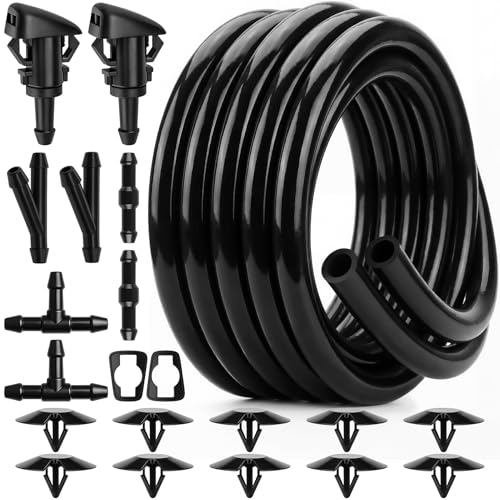
Durable Replacement Washer Hose Kit: Made of flexible rubber hose and tough plastic fan nozzles, resistant to cracking and corrosion, designed to replace aging or leaking windshield washer tubing and restore normal washer fluid flow.
Inspecting the System
Start with a visual inspection of the entire windshield washer system. Check for any visible signs of damage, such as cracks or holes in the reservoir, and any loose hoses. Pay attention to the fluid level in the reservoir. If it’s consistently low, there’s a leak somewhere. Ensure that the washer pump and its electrical connections are secure and functional. Using a flashlight can help you spot hidden issues.
Identifying the Source of the Leak
Once you’ve inspected the system, move on to pinpointing the source of the leak. Fill the reservoir with water and use a basin or bucket to catch any fluid that leaks out. Examine the hoses connecting the reservoir to the nozzle. If water drips from a hose, inspect for cracks or loose clamps. Inspect the washer nozzle too; blockages can cause poor spraying or leaks. If the washer pump is suspected, observe if it’s functioning properly when activated.
Repairing or Replacing Components
After identifying the source, decide whether to repair or replace damaged components. For small cracks in the reservoir, use a strong adhesive or epoxy to seal the leak. If hoses appear worn or cracked, replace them with new ones. Ensure that you choose hoses that match the size and length of the originals. For a faulty washer pump, replacement is often the best option. Disconnect the battery before working on electrical components. Follow manufacturer instructions for installation and make sure all connections are tight when reassembling.
By following these steps, you’ll ensure a properly functioning windshield washer fluid system. Regularly inspect the system to prevent future leaks and maintain safe driving conditions.
Maintenance Tips to Prevent Future Leaks
Preventing windshield washer fluid leaks involves regular maintenance and proper use. Follow these tips to keep your system functioning optimally.
Recommended Products

Stops The Spread of Chips and Cracks - Rain-X Windshield Repair Kit Helps You Minimize The Appearance And Stop The Spread Of Chips And Cracks In Your Windshield.

High Quality Material: The windshield washer hose kit is made of high quality rubber material, soft and flexible, strong and durable for long-term use. The front windshield nozzle is made of high quality plastic, which is tough, not easy to break, light weight and corrosion resistant, which can effectively extend the service life of the wiper blade.

[Universal Fit & Complete Kit]: This windshield washer hose kit includes a 3-meter (9.84ft) high-quality hose and 12 essential connectors. It is engineered to replace aging or damaged lines, restoring smooth water spray to your windshield for clear visibility.
Regular Inspection
Inspect your windshield washer system every few months. Look for cracks in the reservoir and wear on hoses. Check connections for security. Even small issues can lead to significant leaks over time.
Test the washer pump by activating it while observing fluid flow. If you notice a drop in performance or a puddle under your vehicle, address it right away. Regular checks can save time and money.
Proper Use of Washer Fluid
Use a high-quality washer fluid to avoid clogs. Avoid topping up with just water, as it can lead to residue buildup over time. Follow manufacturer recommendations for fluid type; some mixes work better in cold or hot weather conditions.
Don’t run the washer system for long periods without fluid. This action can strain the pump and create leaks. If you refill often, it might indicate a leak that needs attention. Only use the washer system as intended to maintain efficiency.
Conclusion
Taking care of a windshield washer fluid leak doesn’t have to be a hassle. By following the steps outlined and keeping up with regular maintenance you can keep your system running smoothly. It’s all about being proactive and addressing any issues before they escalate.
With a little effort you can ensure that your windshield stays clear and your driving experience remains safe. So the next time you notice a leak don’t hesitate to roll up your sleeves and tackle the problem head-on. Your car and your peace of mind will thank you.
Frequently Asked Questions
What causes windshield washer fluid leaks?
Windshield washer fluid leaks can be caused by cracked hoses, damaged pumps, or faulty connections. Regular wear and tear, temperature changes, and improper installation can also lead to leaks. Identifying these issues quickly can help prevent further problems.
How can I diagnose a leaking washer fluid system?
To diagnose a leaking washer fluid system, start with a visual inspection of hoses and connections for cracks or loose fittings. Check the fluid levels in the reservoir and look for any signs of fluid pooling. Conducting these checks can help pinpoint the source of the leak.
What are some maintenance tips for my windshield washer system?
To maintain your windshield washer system, regularly inspect hoses and connections for damage, test the pump’s functionality, use high-quality washer fluid, and avoid running the system without fluid. These practices will prolong the lifespan of your system and enhance performance.
How often should I check my windshield washer fluid?
It’s a good practice to check your windshield washer fluid at least once a month, especially before long trips or changes in weather. Regular checks ensure you always have enough fluid for clear visibility in adverse conditions.
