

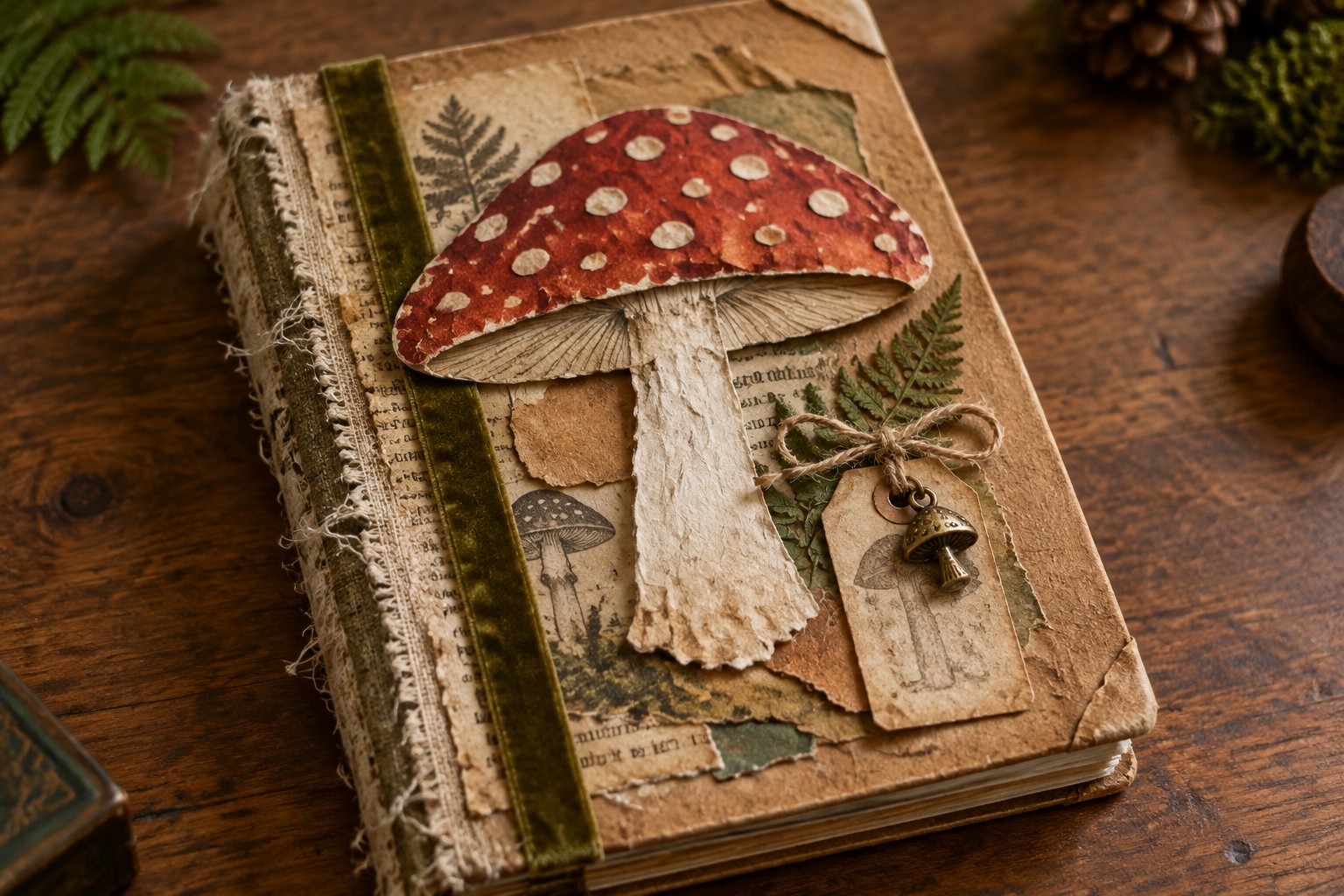
I always enjoy gathering fall-colored paper scraps, leaf prints, and little mushroom illustrations for my junk journal.
Woodland motifs pair so nicely with warm browns, russet reds, and soft greens, whether you’re making a layered page or decorating a journal cover.
These ideas offer plenty of ways to mix stickers, cutouts, and bits of paper without needing fancy supplies.
I hope you find a few layouts that inspire you to try something new with the scraps you have on hand.
Mushroom Illustration Journal Cover
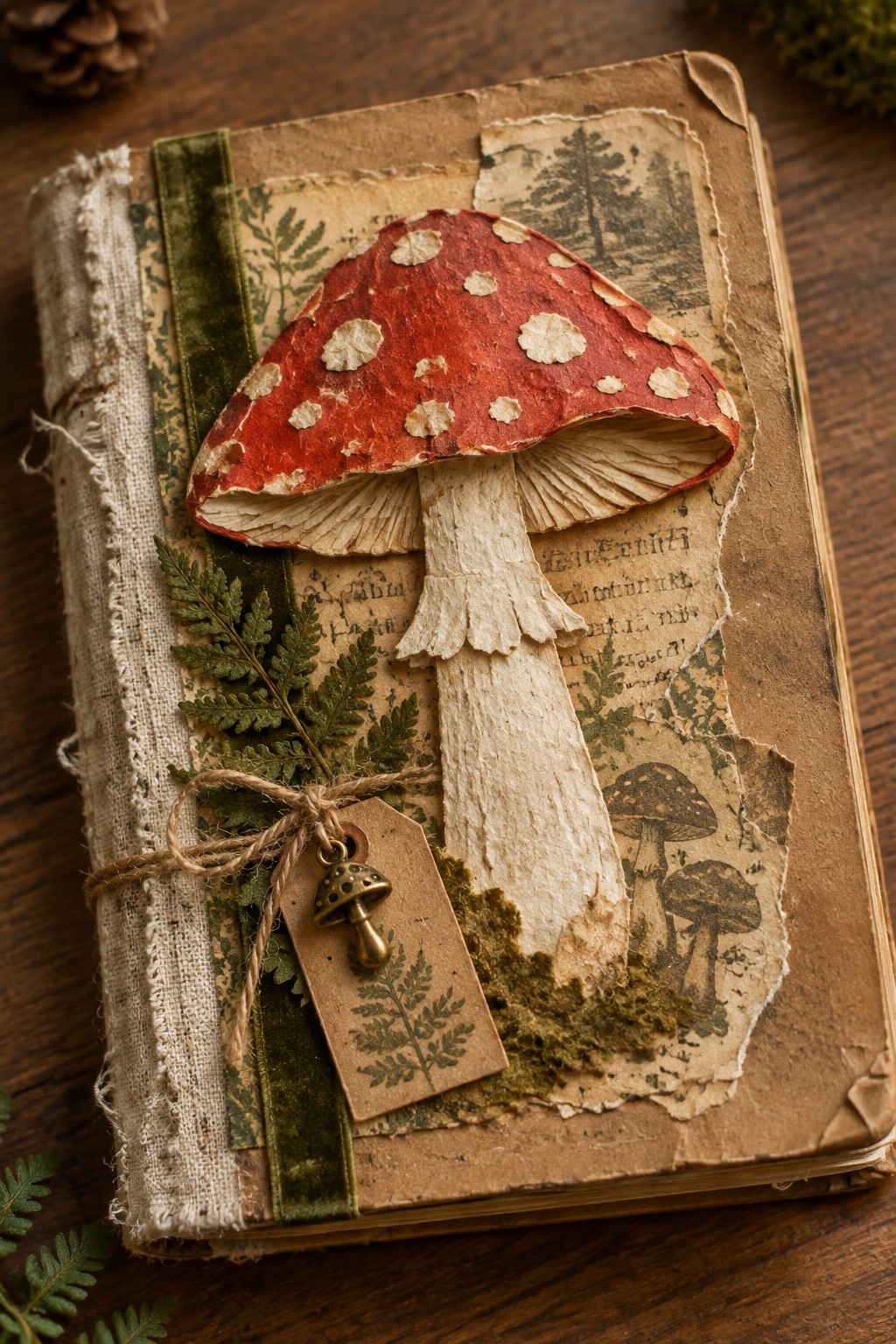
A large red-and-cream mushroom cutout anchors this woodland-inspired journal cover, layered over vintage-style botanical paper and faded printed text. The kraft-colored cover, frayed fabric spine, dark green ribbon, fern detail, and twine-tied tag create a mix of rough textures that suits the autumn theme.
The oversized mushroom is the key to the layout, so you could keep the surrounding layers simple with torn plant-print paper and a few fern cutouts. For a different seasonal take, replace it with a pumpkin or woodland animal illustration, while keeping the kraft paper, ribbon, and small tag for a similar layered cover design.
Mushroom Tag Pocket Page

A woodland mushroom pocket page brings together a large kraft-paper pocket, lace trim, and a cluster of layered tags. The mushroom illustrations anchor the design, while script paper, a map fragment, and muted botanical-patterned scraps add varied textures and a soft brown, green, and cream palette.
For a similar arrangement, use a pocket made from kraft paper or a fabric-textured paper scrap, then layer in tags with different shapes and finishes. Pair mushroom prints with leaf illustrations or map-style paper, and keep the lace along the pocket edge as a distinct detail; blank lined tags can also make the page useful for notes.
Woodland Mushroom Paper Tag
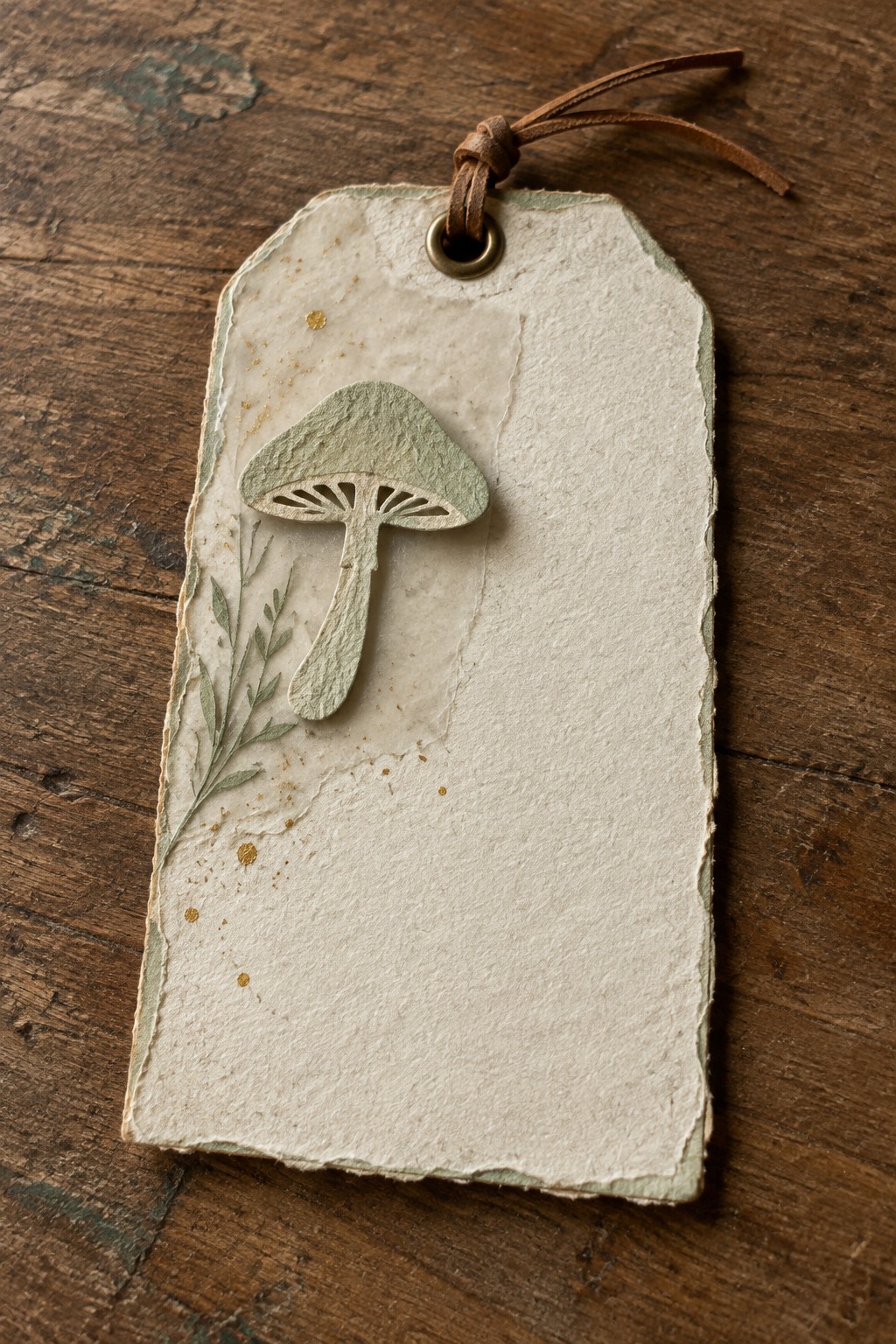
A woodland-inspired hanging tag pairs a raised paper mushroom cutout with a delicate leafy detail, gold speckles, and a narrow strip of torn paper layered over a larger cream tag. The rough deckled edges, muted sage-and-ivory palette, metal eyelet, and leather cord give this small composition a mix of soft paper texture and rustic finishing details.
The mushroom can be the main focal point on a journal cover or tucked into a pocket as a removable tag. For a similar look, layer torn cream and pale green paper, then add a mushroom illustration or cutout and a few botanical scraps; swap in acorns or autumn leaves to shift the woodland theme while keeping the same restrained palette.
Layered Woodland Mushroom Collage Cover

A woodland mushroom collage turns a journal cover into a dense arrangement of vintage-style botanical prints, torn paper, lace, and fabric scraps. A large red-and-white mushroom cutout anchors the center, while smaller mushroom illustrations, golden chanterelles, muted green and burgundy papers, and tucked tags create varied layers across the cover.
The layered composition is busy, so you could keep the same visual effect by choosing one oversized mushroom illustration and surrounding it with just a few smaller prints and torn paper scraps. Add a lace fragment or plaid fabric at the edges for texture, and use kraft tags or a small folded paper piece to introduce a practical detail without crowding the focal point.
Vintage Mushroom Field Journal Page
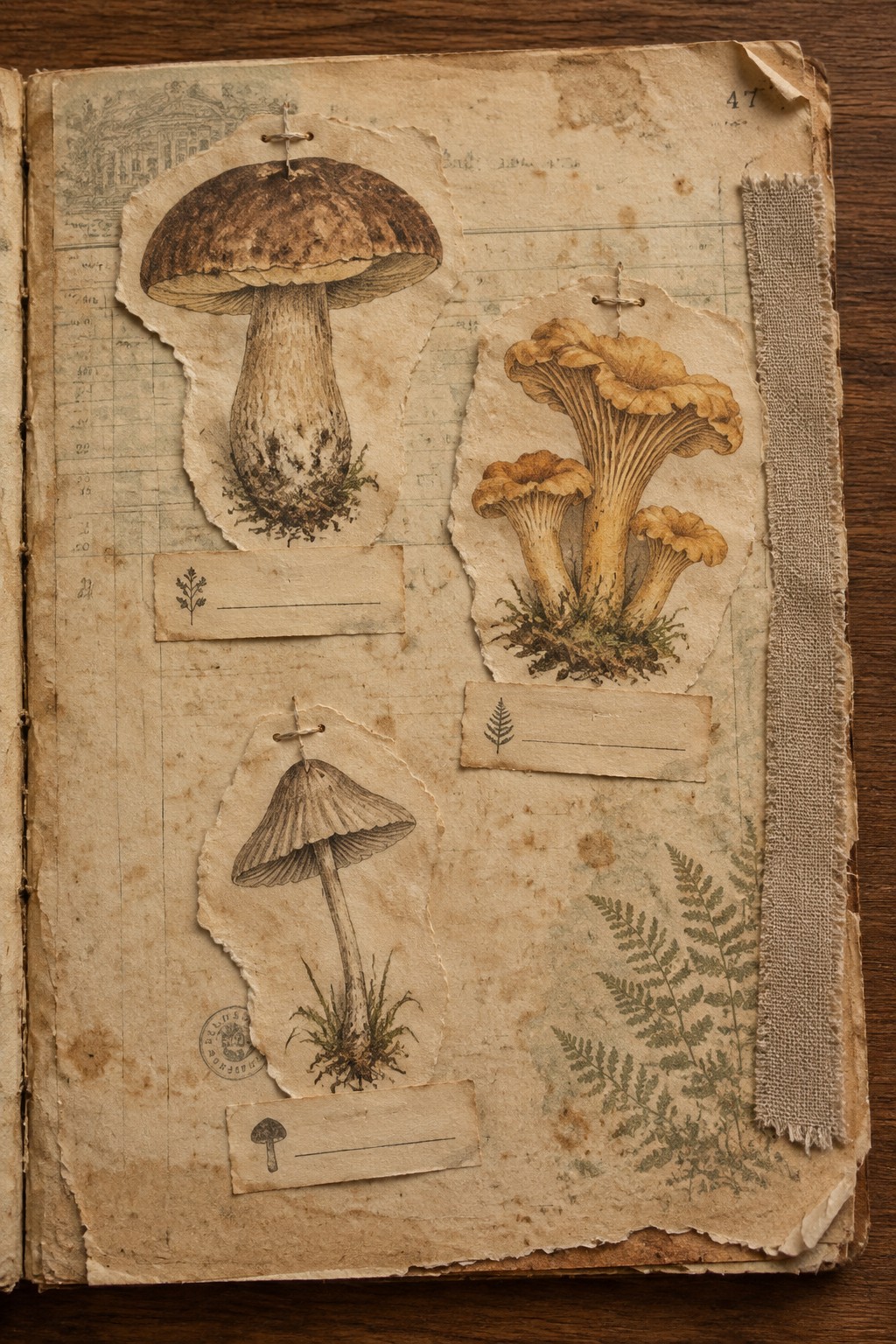
A vintage-style mushroom field journal page pairs botanical-style fungi illustrations with aged-looking ledger paper, torn paper mounts, and narrow labels that leave space for notes. The large capped mushroom and golden chanterelle cutouts create the main focal points, while a smaller mushroom illustration, fern details, and a strip of lace add varied shapes and textures to the layered layout.
The ledger-like background and paper labels make this idea especially suited to a woodland observation journal; use printed mushroom or fern cutouts with old-style book or scrapbook paper to build a similar page. Keep the layered look without making the composition too busy by choosing two prominent fungi illustrations and one small detail, then use the blank labels for handwritten names or dates.
Woodland Mushroom Pocket Page
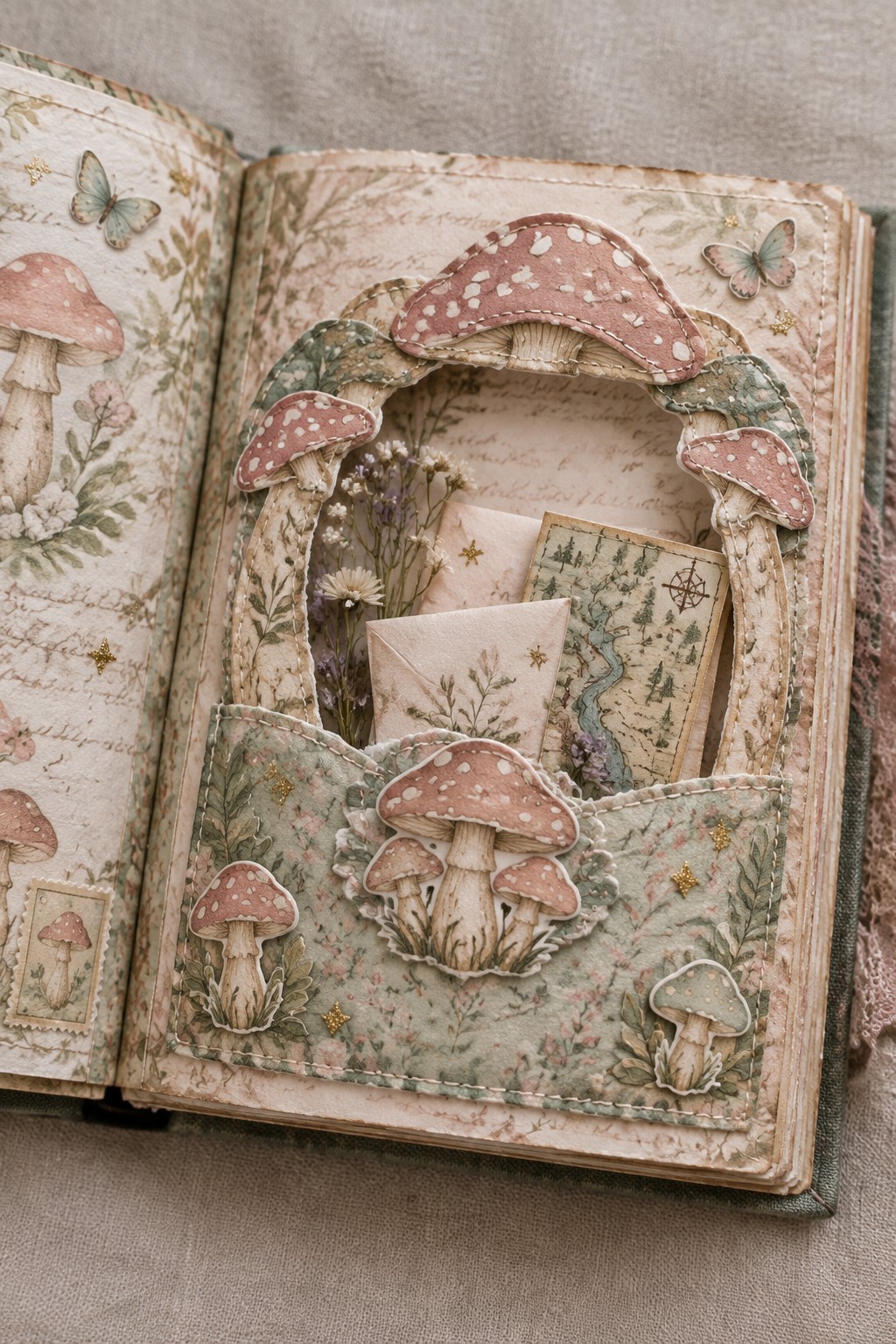
A woodland-themed pocket page pairs a layered, fabric-like mushroom arch with a floral pocket on an open journal page. The arched mushroom trim frames the tucked-in botanical card and envelope, while smaller mushroom cutouts, butterfly illustrations, and muted sage, blush, and cream papers tie the arrangement together.
The pocket layout gives you a useful way to display several coordinated pieces without covering the whole page. Try patterned scrapbook paper for the pocket and arch, then tuck in a small tag or envelope with botanical prints; for a simpler version, keep the arch and pocket but use just one larger mushroom cutout as the focal point.
Layered Mushroom Collage Journal Cover
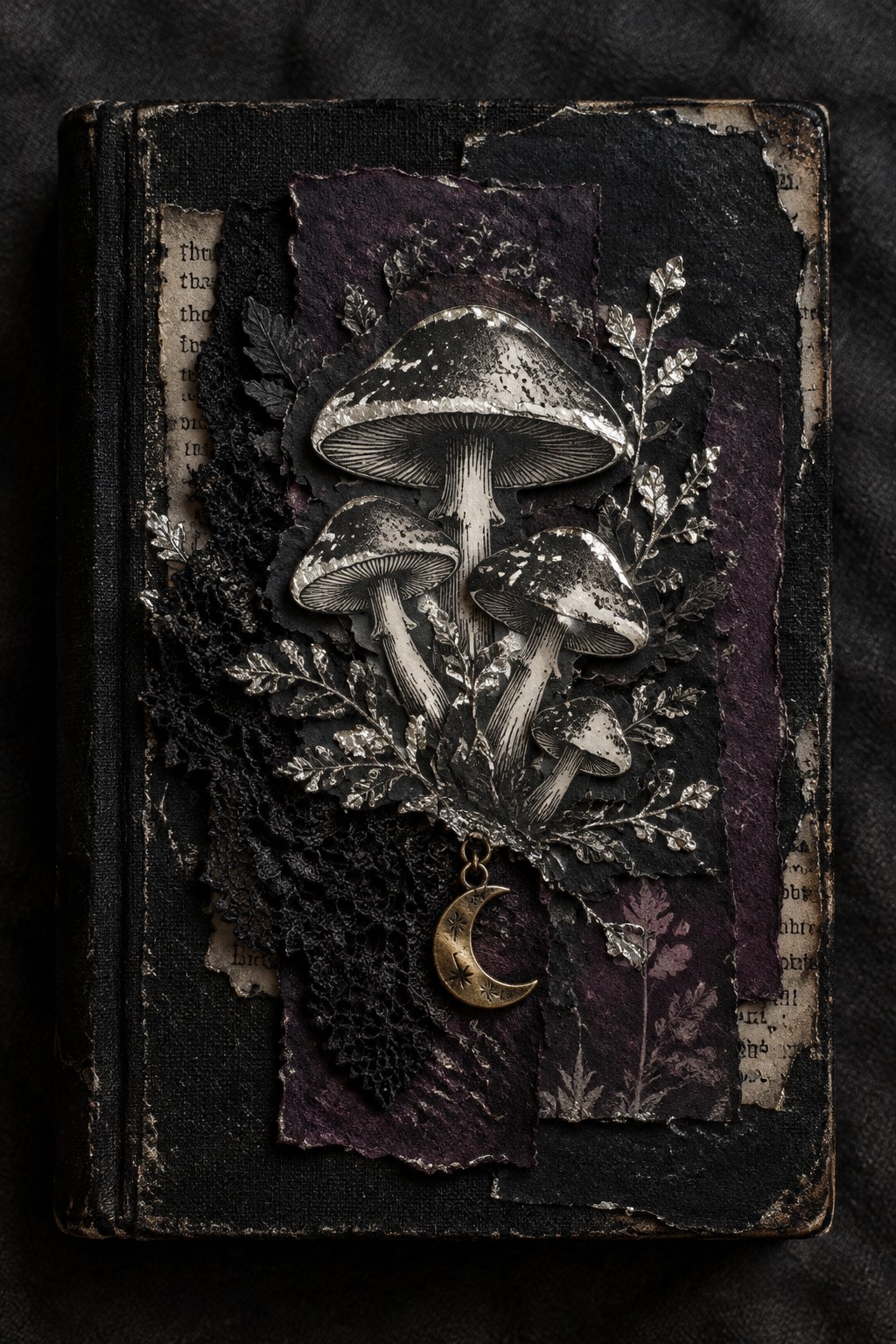
A cluster of vintage-style mushroom cutouts anchors this dark woodland journal cover, surrounded by torn black and plum papers, botanical details, and scraps of text-printed paper. The layered textures and muted cream, charcoal, and purple palette make the pale mushroom caps stand out against the worn-looking notebook.
For a similar cover, arrange mushroom illustrations over contrasting torn paper scraps, then add a few small leaf cutouts to connect the layers without crowding the focal point. A crescent-moon charm hangs near the bottom here; you could keep that detail or substitute another small seasonal motif, such as an acorn or leaf. To simplify the design, use one large mushroom cutout and just two or three paper layers.
Botanical Mushroom Journal Spread With Fern Pockets

This woodland-themed double-page spread pairs vintage-style mushroom illustrations with fern cutouts, mossy greenery, and layered paper in muted cream, rust, and olive tones. The two large mushroom cards act as focal points, while translucent paper strips, lace accents, and lower pockets holding smaller tags add texture and make the pages feel like a collected field journal.
You could build a similar spread around two coordinating nature prints, then use fern images or other botanical cutouts to frame them without crowding the focal points. The layered pockets and tags are useful for adding smaller notes or extra ephemera; for a simpler version, keep the mushroom cards and one pocket per page, using scraps of green paper and a small lace detail.
Woodland Mushroom Cottage Collage Cover
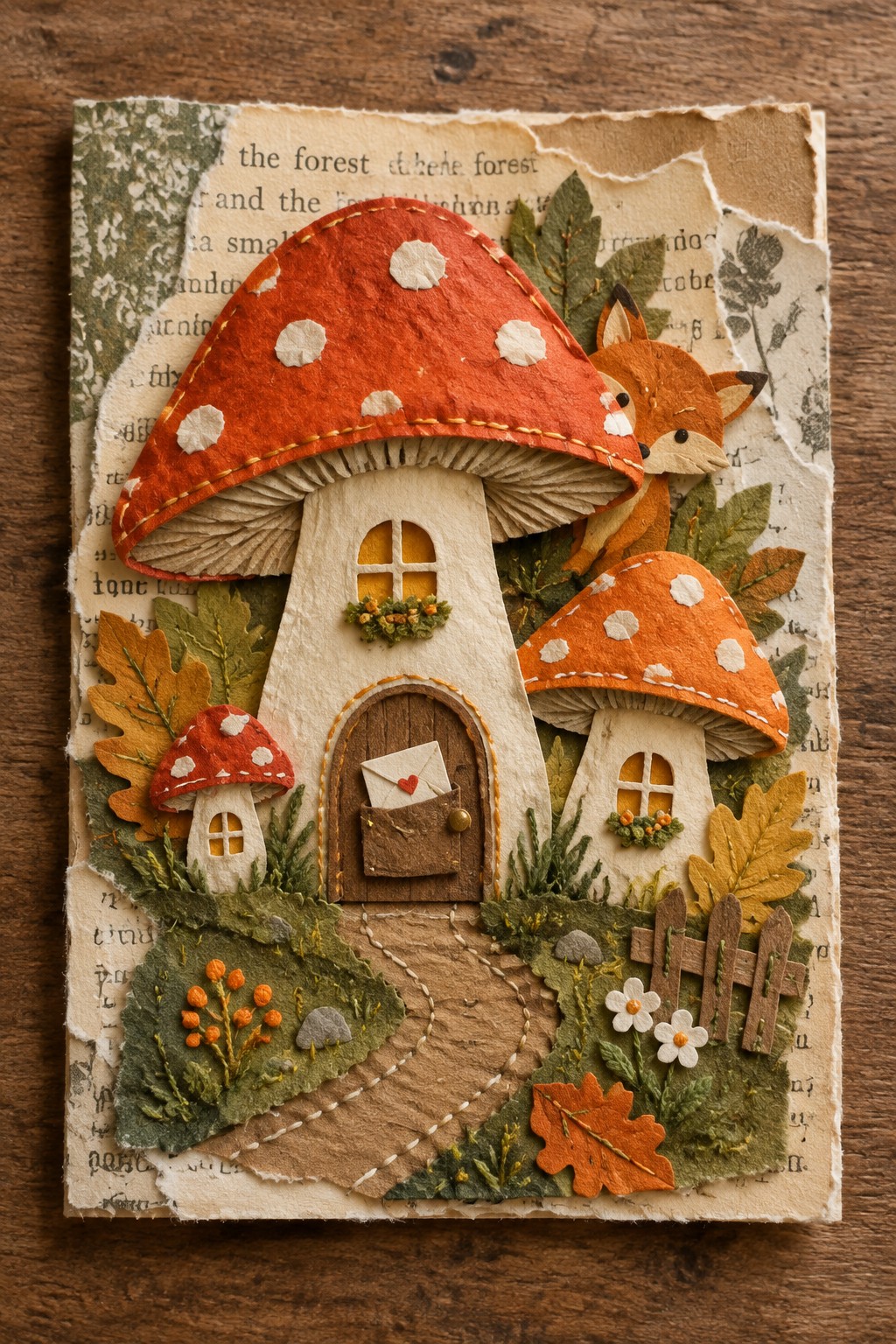
A woodland cottage scene makes a detailed junk journal cover, with red spotted mushroom roofs as the focal point and a small fox tucked among layered leaves. Torn vintage-style book pages form the background, while textured paper shapes, stitched-looking details, and tiny floral embellishments give the composition depth and a handmade patchwork look.
For a similar cover, build the scene around one large mushroom house, then use smaller paper mushrooms and leaf cutouts to fill the space without crowding the main focal point. A tiny paper envelope at the cottage door adds a personal detail; you could replace it with a small tag or leave it out to simplify the design, or swap the fox and autumn leaves for other woodland cutouts.
Vintage Mushroom Paper Tags
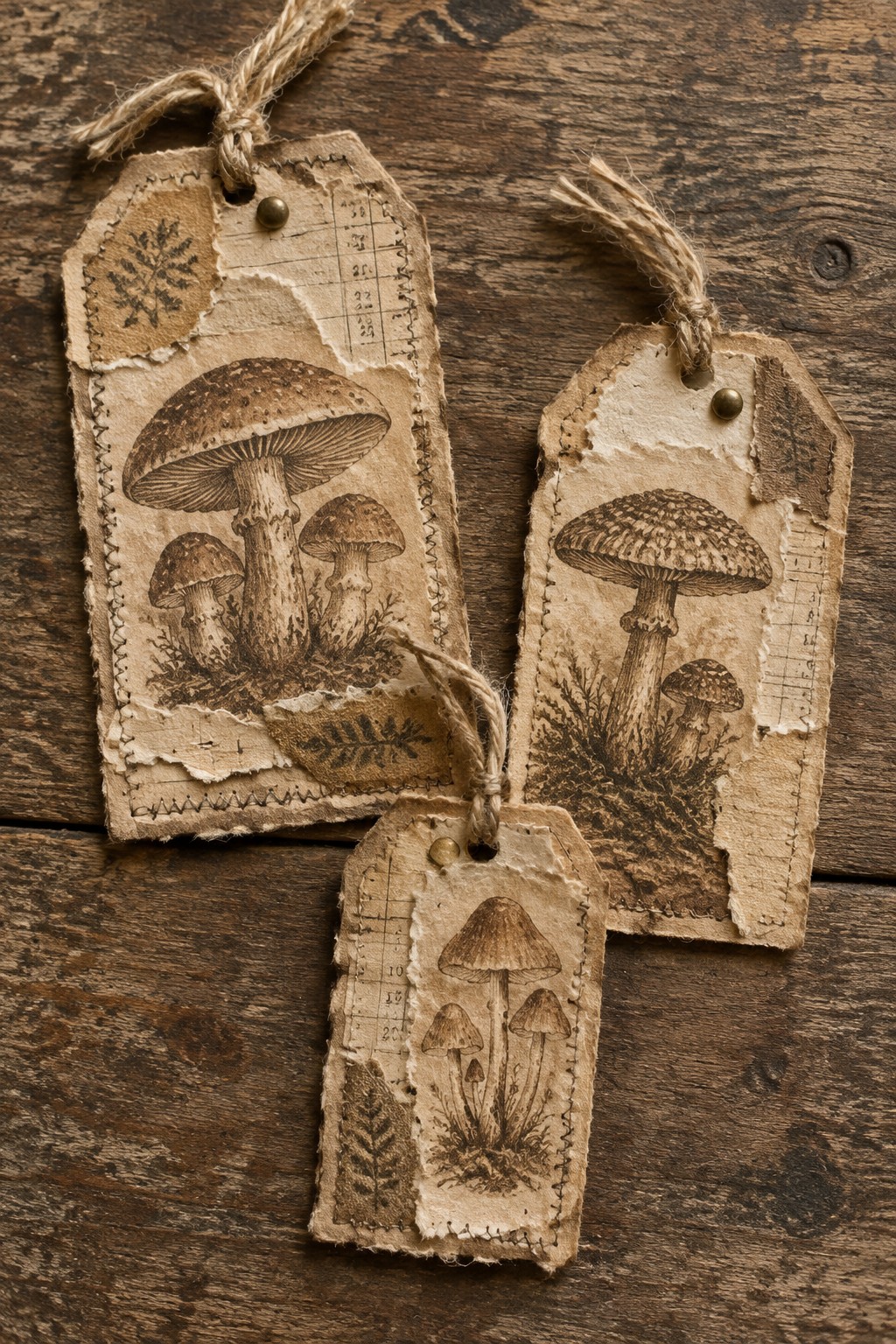
A set of irregular paper tags turns vintage-style mushroom illustrations into portable woodland ephemera for a journal or scrapbook. Each tag layers a central mushroom print with torn, aged-looking paper fragments and small botanical details, while stitched-looking border marks, twine loops, and brass-colored fasteners add texture; the varied sizes make the group feel collected rather than uniform.
You could create a similar set from kraft or cream paper scraps, using different mushroom prints as the focal points and adding small pieces of ledger-style paper or fern illustrations around them. Keep the palette to browns and muted greens for a field-guide look, or swap in autumn leaves and seed-packet prints to shift the tags toward a broader fall theme.
Pink and Sage Mushroom Tea Journal Spread
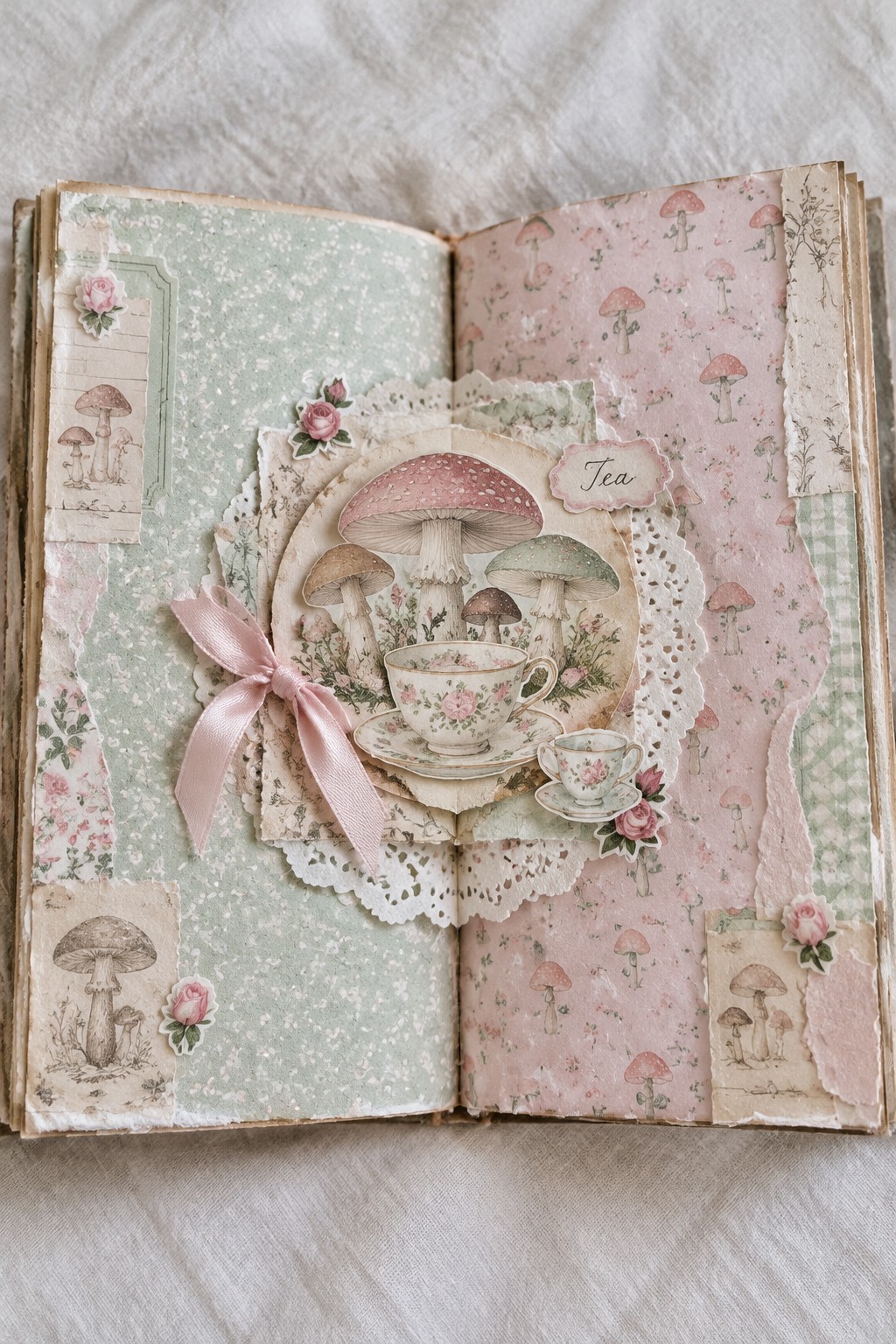
A woodland tea theme ties this open journal spread together, with pink mushroom-patterned paper on one page and soft sage floral paper on the other. A layered central collage combines a large mushroom illustration, floral teacups, lace-edged paper, a pink ribbon, and a small “Tea” label for a focal point that bridges both pages.
You could build a similar spread around one large printed illustration, then frame it with doilies or torn paper scraps and add a ribbon or a few floral cutouts for texture. Swap the teacups for a bird, cottage, or autumn leaf illustration to shift the theme, while keeping the paired pink-and-sage backgrounds for a gentle woodland palette.
Mushroom Ephemera Collage With a Twine-Tied Envelope
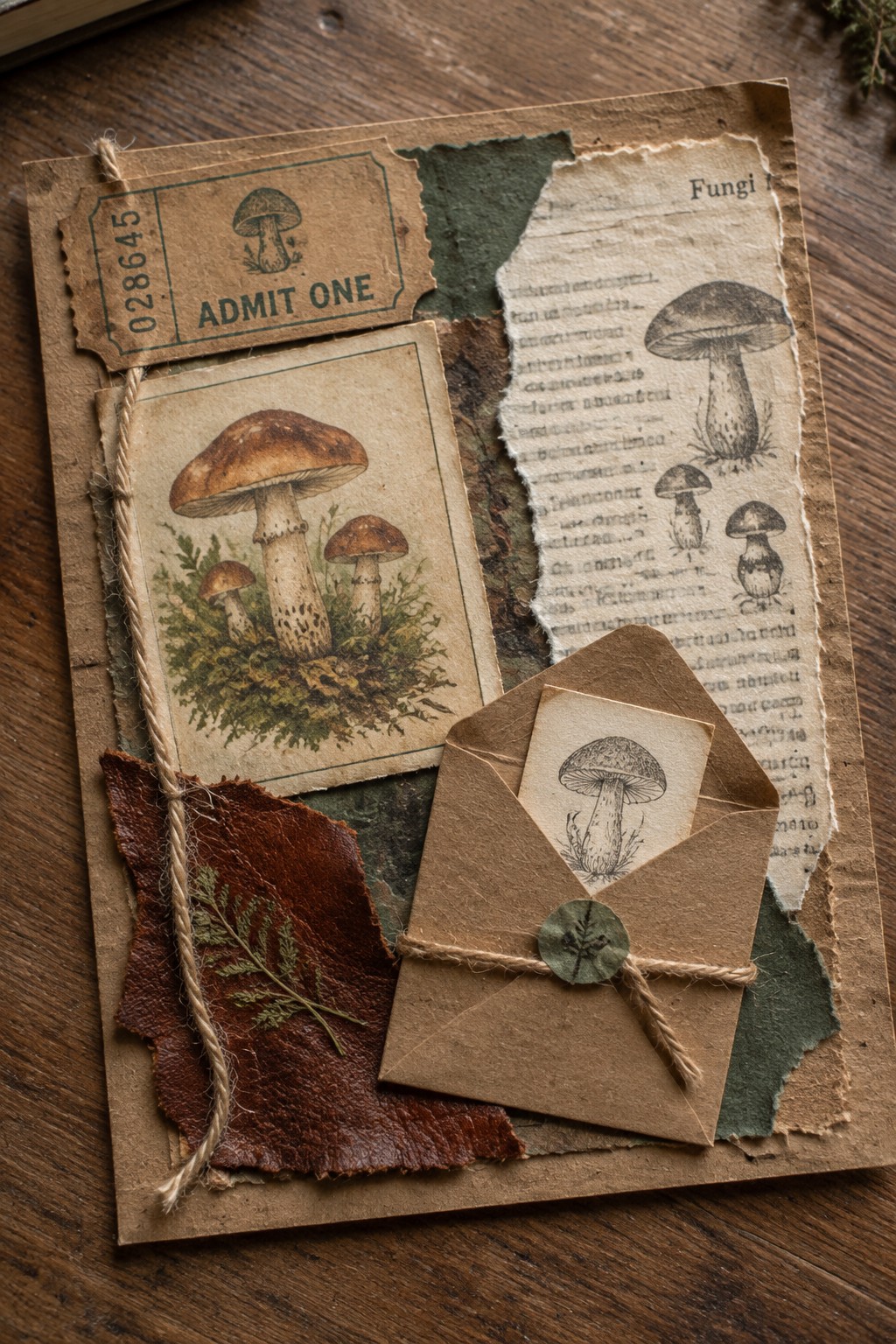
A woodland mushroom collage brings together a vintage-style mushroom ticket, botanical illustrations, torn book paper, and earthy paper scraps on a kraft backing. The large illustrated mushroom card anchors the layered arrangement, while a small twine-tied envelope adds a pocket-like detail and a matching mushroom insert.
The overlapping pieces make this a useful way to combine larger paper scraps with small bits of ephemera without needing a full journal spread. Try a mushroom print on the main card, then use torn book pages and green or rust-colored paper fragments around it; the envelope can hold a note or another small tag, or be left out for a simpler collage.
Accordion Woodland Mushroom Journal Spread
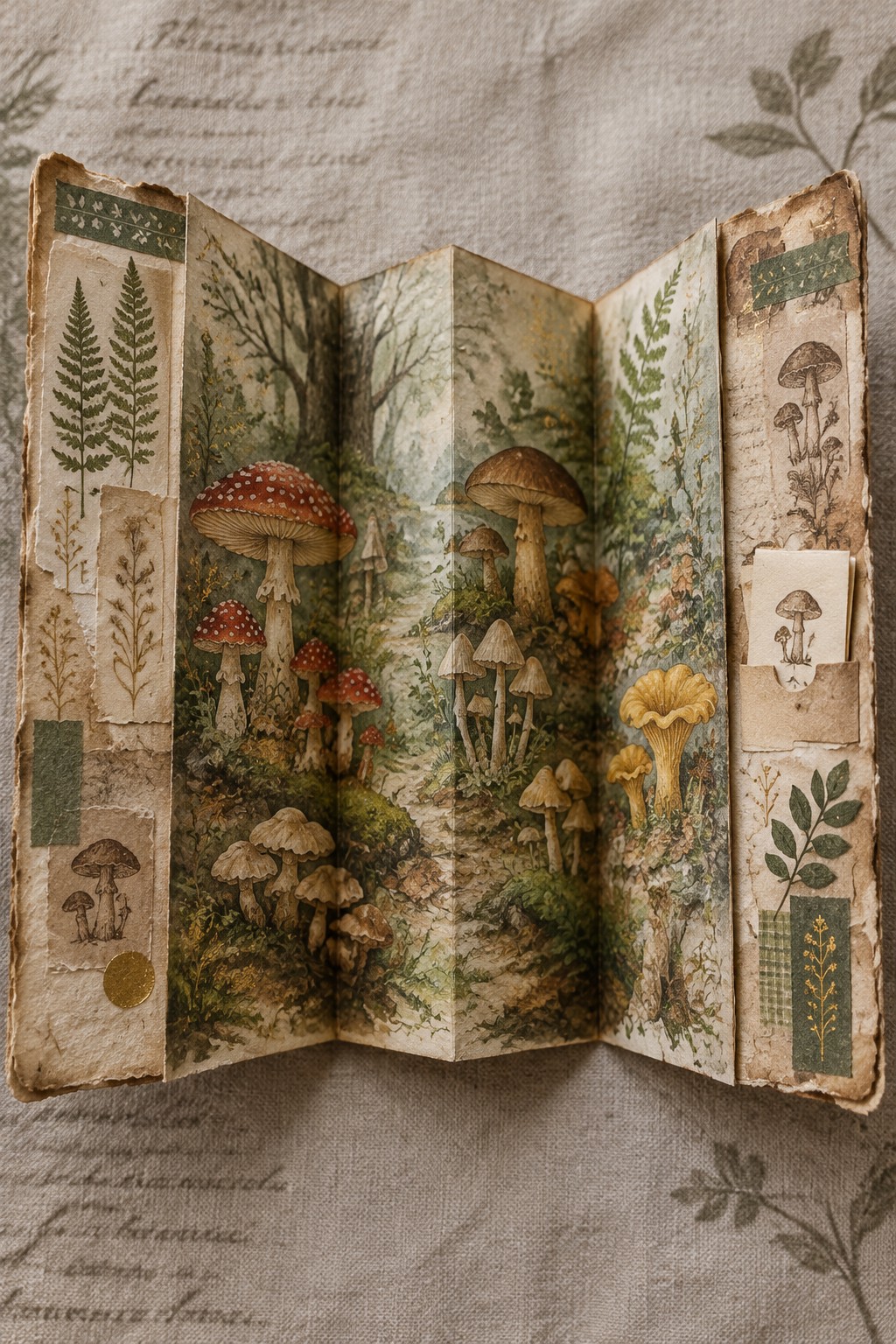
An accordion-fold woodland spread turns a forest scene into a continuous centerpiece, with mushroom illustrations set among layered greenery across the folded panels. Torn, vintage-style paper frames the scene, while fern prints, botanical scraps, and small mushroom cards along the outer panels add a field-notes feel.
You could build a similar layout from folded scrapbook paper and printed forest or mushroom illustrations, keeping the central scene continuous across the panels. Use a few fern cutouts and small paper pieces at the edges to echo the layered frame, or simplify the spread with one prominent mushroom illustration and a smaller selection of botanical details.
Floral Fabric Pocket With Mushroom Cards

A fabric journal cover becomes a woodland-themed pocket page with three rounded mushroom cards tucked behind a floral front panel. The printed mushroom illustrations provide the focal point, while the layered floral fabrics, crocheted lace trim, and button closure bring together soft cream, sage, and warm brown textures.
You could recreate the arrangement with a fabric or paper pocket over a patterned journal cover, then tuck in mushroom cards or seasonal tags. For a simpler version, use one floral paper pocket and two illustrated inserts; changing the cards to ferns, leaves, or acorns would keep the layered layout while shifting the woodland theme.
Midnight Woodland Mushroom Collage Cover

A layered journal cover built around a cluster of mushroom cutouts, with the largest cap and its pale gills taking center stage. Torn navy and plum paper sit over a worn-looking border, while small botanical and moth prints, scraps of text, stitched-looking marks, and a moon tag add detail without competing with the mushrooms.
For a similar cover, pair dark blue and berry-colored paper scraps with mushroom illustrations in contrasting purples and cream. Keep one large cutout as the focal point, then add just a few smaller fungi and botanical ephemera; a simple crescent-moon tag can carry the nighttime woodland theme without needing the many layers of the original composition.
Woodland Mushroom Diorama Spread With a Hidden Tag

A woodland mushroom diorama turns this open journal spread into a layered paper scene, with a large red-and-white mushroom framed by an irregular cutout and smaller forest details behind it. The yellow floral paper on the left and blue patterned paper on the right give the spread a bright, contrasting frame, while a small hinged door on the right page hides a mushroom tag in a pocket.
You could build a simpler version around one large mushroom illustration, adding smaller animal and plant cutouts in overlapping layers to suggest depth. A pocket with a hinged flap gives the right side a useful spot for a tag; swap in different woodland illustrations or seasonal paper patterns to shift the scene toward autumn, winter, or another forest theme.
Vintage-Style Mushroom Journal Cover

A woodland field-guide theme turns this journal cover into a simple layered composition, with an oval mushroom illustration as the focal point. Its cream textured-looking cover, muted green spine, botanical details, and blank label balance the larger illustration while keeping the palette earthy and restrained.
You could create a similar cover with a printed mushroom plate or cutout mounted on an oval paper backing, then add small leaf motifs and a framed label from coordinating scraps. Keep the cover uncluttered by using just one main illustration, or change the subject to autumn leaves or seed pods while keeping the same cream-and-sage color scheme.
Textured Mushroom Journal Page

A large red-brown mushroom cutout takes center stage on a page layered with torn, crumpled-looking cream papers and muted botanical prints. Narrow kraft tags with plant illustrations add a field-notes feel, while the mushroom’s pale gills and raised-looking stem stand out against the rough, neutral background.
The layered arrangement suits a woodland journal page when you want one bold illustration to anchor a mix of paper scraps and small ephemera. Try pairing a mushroom print with torn book pages, botanical paper, and kraft tags; a different mushroom illustration or a few fern and leaf cutouts can shift the focus without changing the earthy palette.
Layered Mushroom Collage Cover
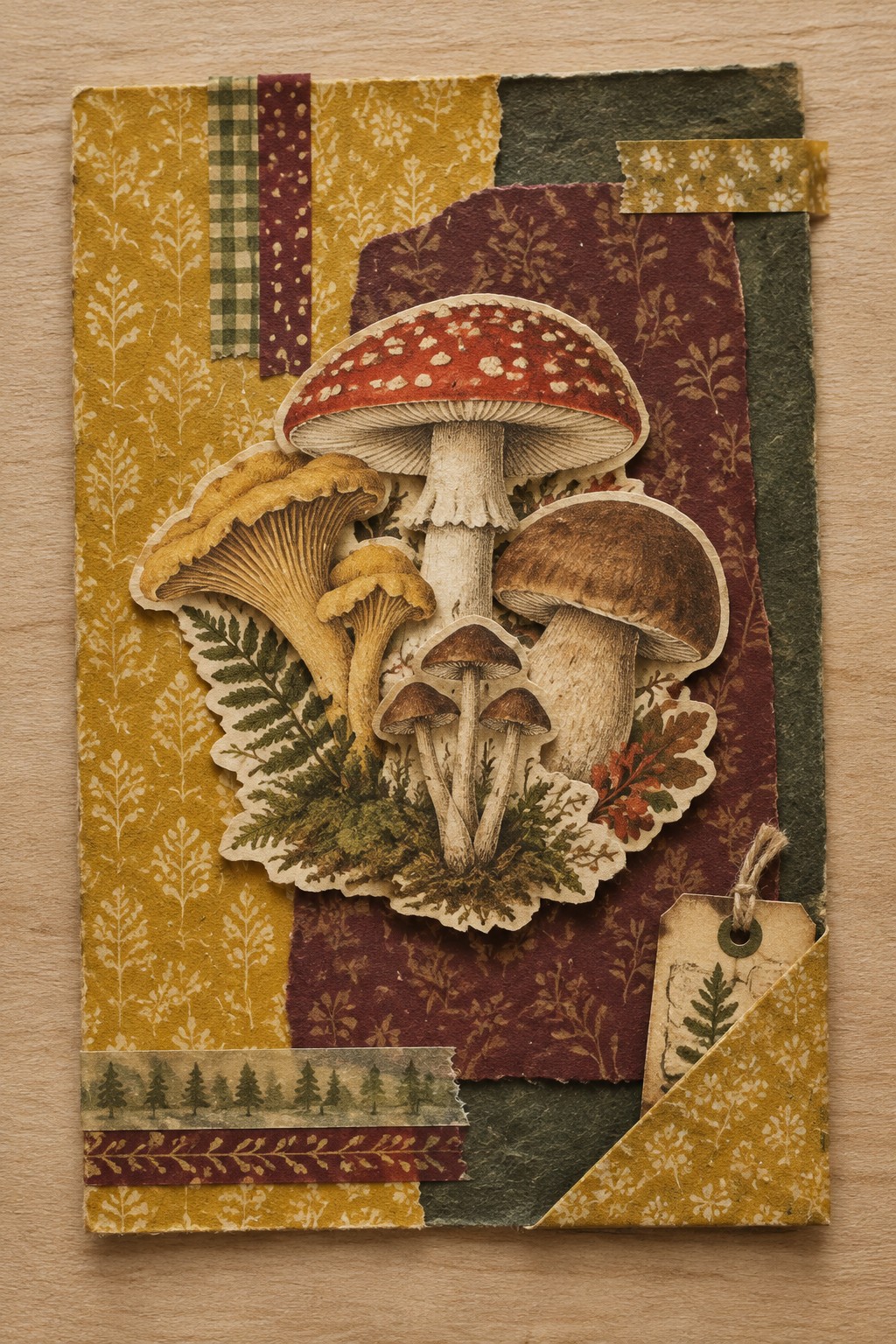
A woodland mushroom collage turns this journal cover into a cluster of botanical cutouts set against overlapping vintage-style papers. The large red-capped mushroom anchors the center, while smaller fungi and fern-like foliage sit over mustard floral paper, burgundy botanical paper, and a dark green layer, with narrow patterned strips and a small tag adding detail around the edges.
The contrasting paper panels give the busy mushroom grouping a clear backdrop, so you could use a few coordinated scrapbook-paper scraps and one large mushroom illustration to make a simpler version. Add smaller fungi cutouts and foliage around the focal point, then echo the paper patterns with a slim strip near an edge; a leaf tag can carry the same woodland theme without crowding the center.
Celestial Woodland Mushroom Journal Spread
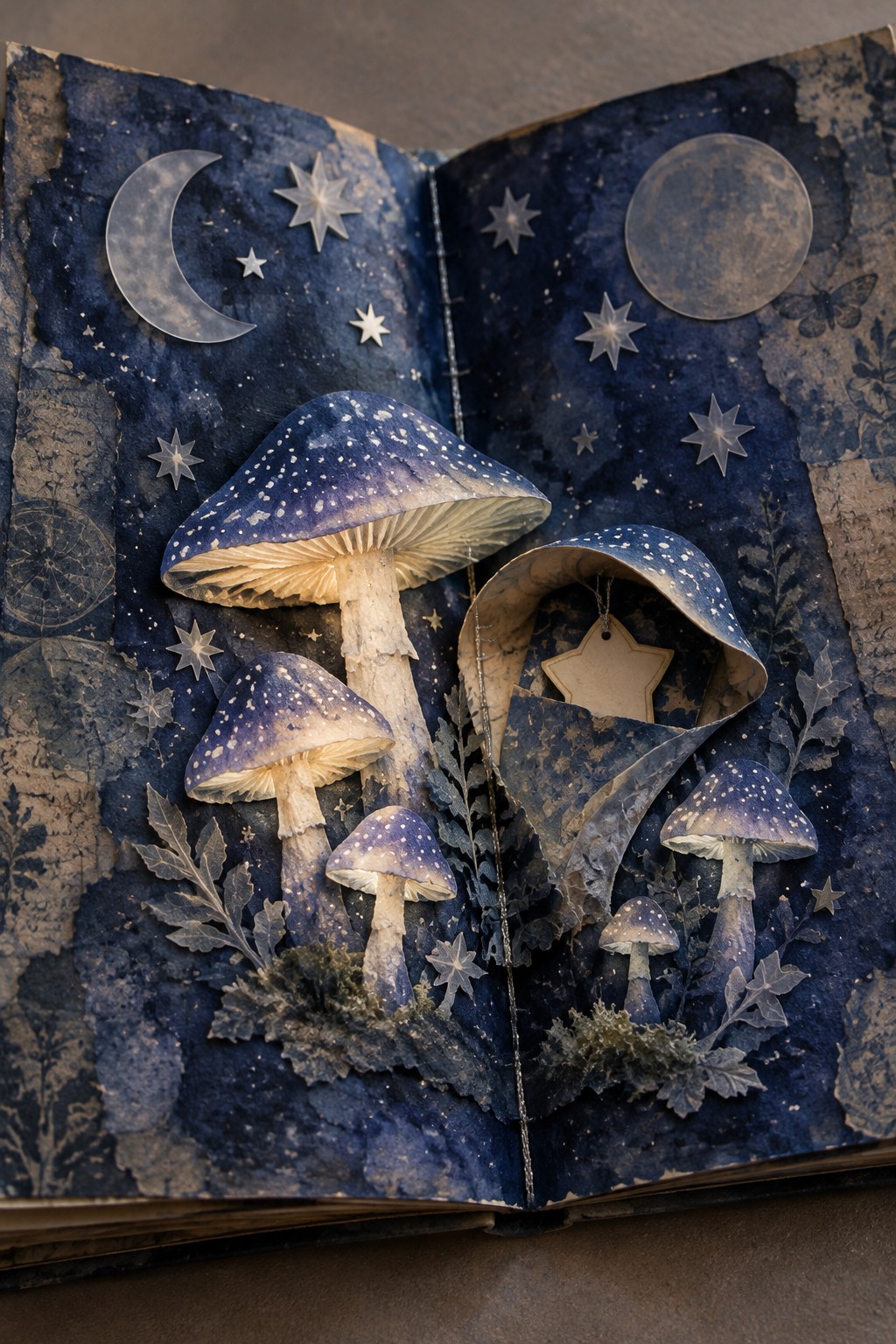
A deep blue, star-speckled double-page spread pairs a night-sky theme with layered woodland mushroom illustrations. The large mushrooms anchor the lower half, while metallic-looking moons and stars, leafy cutouts, and a small hanging star tag tucked beneath a curved paper flap add detail and depth across the open journal.
The dark patterned paper makes a strong background for pale mushroom shapes, so you could build a similar spread with printed scrapbook paper and mushroom or fern cutouts. Keep the arrangement simpler with one large mushroom and a few celestial shapes, or use a folded paper flap to tuck in a tag; changing the moon and star motifs to autumn leaves would shift the same woodland layout into a more seasonal design.
Frequently Asked Questions
Start with a mix of papers in warm autumn colors: rust, ochre, moss green, cream, and deep brown. Add mushroom illustrations, woodland prints, fallen-leaf patterns, and textured papers such as kraft paper, book pages, or paper bags. Useful extras include fabric scraps, pressed leaves, twine, buttons, stamps, and nature-inspired stickers. You do not need special supplies; recycled packaging and old magazines can work beautifully.
Choose one main mushroom image or focal point for each page, then build around it with just a few supporting elements. Layer papers in different sizes, tuck in a tag or journaling card, and add a small accent such as a leaf, label, or stamped detail. Leave some open space so the page feels balanced and has room for writing.
Make your own motifs by drawing or printing mushroom shapes, cutting them from magazines, or tracing them from public-domain illustrations. Leaf patterns, woodland animals, botanical prints, and earthy colors all complement mushrooms. You can also turn plain paper into a theme by adding hand-drawn caps, small spots, or simple forest-inspired borders.
Try fold-out pages, pockets, envelopes, belly bands, and tags that slide behind a mushroom illustration. A small flap can hide a journal prompt, while a pocket can hold leaf-shaped notes or mini nature observations. Make sure the pieces are attached securely, but avoid adding so much bulk that the journal becomes difficult to close.
Use fully dried, flat leaves rather than fresh ones, since moisture can lead to staining or mold. Attach delicate pieces with archival glue or place them inside a clear pocket so they are protected from handling. If you want a lower-maintenance option, use leaf rubbings, pressed-leaf scans, or paper cutouts to get a woodland feel without adding fragile natural materials.
