


I enjoy finding ways to make a journal’s spine feel just as considered as its pages, especially with a bit of stitching or a few well-chosen scraps.
For this collection, you’ll find ideas that mix thread, fabric, paper, and small embellishments in different ways.
Some look neat and simple, while others build up layers and texture, so there’s room to adapt them to the materials you have.
I often save leftover bits for little details like these, and they can be fun to arrange without needing a complicated plan.
These 18 spine ideas offer plenty of inspiration to try your own combinations.
Vintage Map Journal Cover With a Botanical Tag

A vintage-inspired travel journal cover brings together torn map-style paper, dark blue fabric, and a narrow tag decorated with a fern cutout. The tag sits over the larger map collage as the focal point, while the visible cord binding and beads along the spine add texture and echo the handmade feel of the layered cover.
The map and fern could be swapped for a different place or botanical print, while keeping the same arrangement of a larger paper collage and a smaller tag on top. Try pairing printed map paper with fabric scraps and a simple cord binding, or use fewer map fragments for a cleaner cover; the tag can also hold a small label or another flat cutout.
Lace-Bound Botanical Journal Spread

A vintage-style botanical spread pairs a large flower illustration with torn floral paper, script-print scraps, and a lace-trimmed spine secured with visible burgundy cross-stitching and metal rings. On the left, layered paper forms a pocket around a small blank card, while the botanical print on the right gives the open spread a clear focal point.
The spine details are worth adapting when you want the binding to become part of the design: lace can soften the edge, while contrasting thread makes the stitching stand out. Build a similar layout from floral scrapbook paper and kraft-colored scraps, then swap the flower illustration for another plant print or tuck a tag into the left pocket.
Pink Floral Journal Page With a Lace Pocket

A soft pink floral page combines torn patterned paper with vintage-style printed ephemera, a folded kraft-paper envelope, and a translucent-looking pocket holding a delicate botanical embellishment. The layered papers create a gentle collage, while the journal’s fabric-covered spine and pearl-trimmed lace add texture along the edge.
You could recreate the arrangement with floral scrapbook paper, a small envelope, and a stitched-look pocket made from vellum or another sheer paper. Tuck in a botanical cutout or a tag, and swap the rose pattern for leaves or seasonal flowers to change the theme while keeping the same layered layout.
Dark Celestial Journal Cover With Stitched Spine

A worn black cover, tied spine, and layered moon illustration give this journal a dark celestial theme with a handmade, assembled look. The large moon print anchors the cover, while torn cream paper, black lace along the edge, and a small phase-motif tag add contrasting textures around it.
For a similar cover, pair dark scrapbook paper with a moon or star illustration and frame it with uneven scraps of pale paper. Twine laced along the spine can echo the visible binding, while a small tag adds another layer; swap the lunar print for a sun, botanical image, or other theme to suit the journal.
Botanical Specimen Spread With Fabric Pockets

An open botanical journal spread pairs pressed-flower-style arrangements and vintage-style plant illustrations with layers of torn paper and small fabric pockets. The stitched spine connects the two cream pages, while green gingham tape and floral fabric scraps add texture around the botanical focal points.
You could build a similar spread around one large flower or plant illustration, then balance it with smaller cutouts and fabric pockets on the opposite page. Use leftover patterned cloth or scrapbook paper for the pockets, keeping the green accents consistent, or switch to autumnal browns and orange prints for a seasonal herbarium look.
Kraft Journal Cover With a Botanical Stamp Tag
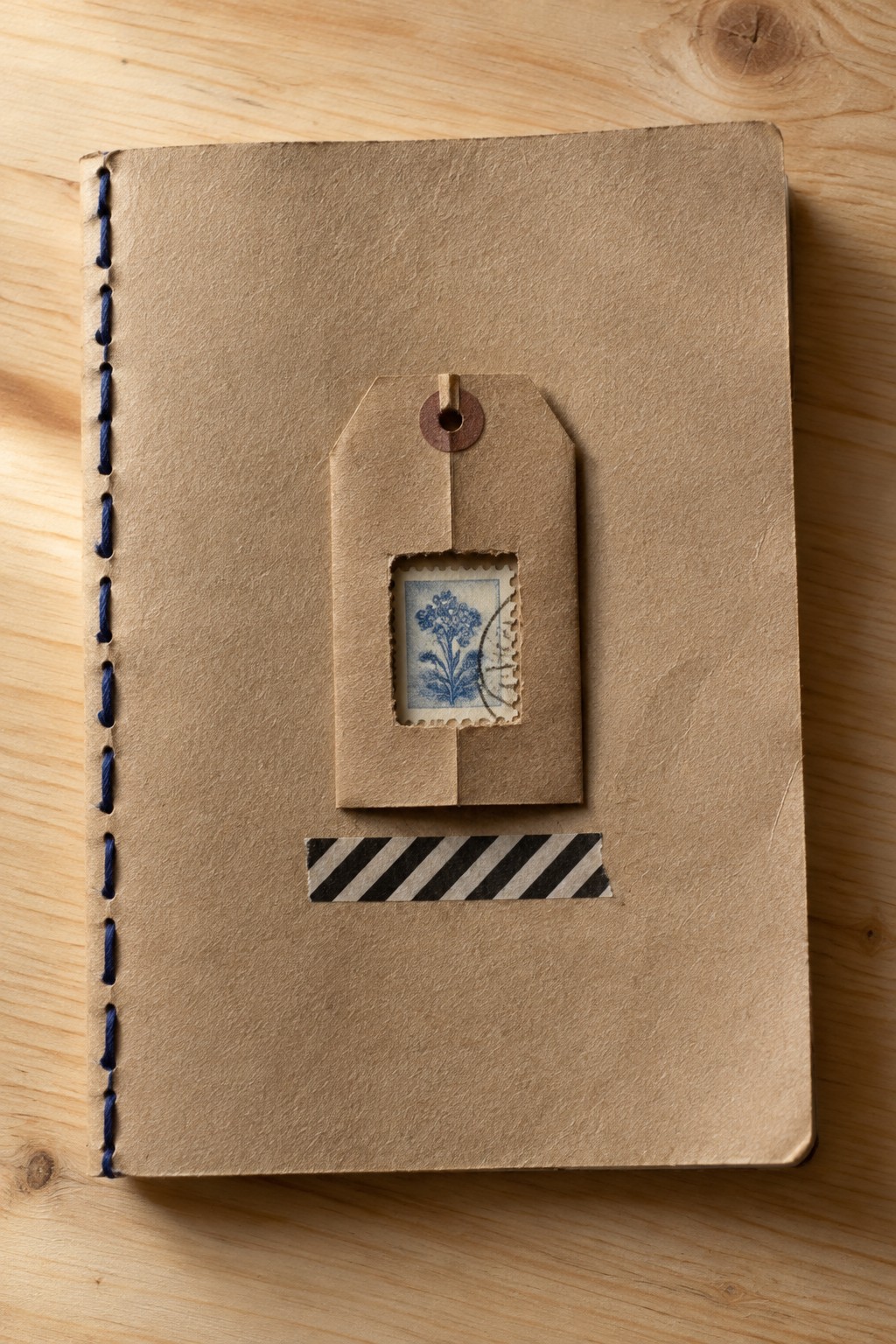
A kraft-paper cover gets a simple focal point from a small tag layered at the center, with a blue botanical stamp-style illustration set into its window. The tag’s folded shape, round reinforcement at the hole, and dark diagonal-striped strip below it add contrast and texture, while visible blue stitching along the notebook’s edge ties in with the stamp.
You could recreate the arrangement with a kraft cover, a folded paper tag, and a small botanical print or other postage-style ephemera. Keep the tag as the main feature, then choose a narrow strip of patterned paper beneath it to echo the illustration’s colors or introduce a sharper contrast.
Map-Cover Journal With a Postcard Pocket

A travel-themed cover pairs a dark blue fabric spine with a large vintage-style map collage, while visible cord lacing and brass-colored beads make the binding part of the design. A sepia-toned coastal postcard sits across the map, creating the main focal point and adding a layered, archival look alongside the small stamp embellishments.
You could build a similar cover around a printed map of a meaningful place, then layer on a postcard, ticket, or other travel ephemera as a flat decorative element or a tuck-in pocket. Keep the map and cover in muted tones, or choose a brighter fabric spine to contrast with the paper; simple cord lacing and a few beads can echo the visible binding without requiring a heavily decorated cover.
Stitched Spine Spread With Tag Pockets

A travel-inspired spread pairs coastal and cathedral illustrations with map fragments, botanical prints, and translucent paper layers. The focal point is the exposed red stitched binding, echoed by three small envelope-style pockets holding illustrated tags down the center fold; cream paper and muted blue-green tones keep the layered pages cohesive.
The repeated pockets make the spine both decorative and useful, and they can be adapted with folded paper scraps and tags cut from packaging or cardstock. Try changing the travel images to local maps or landscape prints, while keeping one thread color consistent across the binding and pocket edges to tie the spread together.
Layered Botanical Journal Cover With a Ribbon-Tied Spine

A cream, textured journal cover becomes a botanical collage through overlapping vintage-style plant prints and a translucent fabric panel with leaf cutouts. The focal panel sits over the illustrations, while visible cord binding and a leafy ribbon tied along the spine bring together the cover’s paper and fabric textures in muted greens and natural tones.
You could recreate the arrangement with a few printed botanical cards, paper scraps, and a sheer fabric or mesh piece to frame a different leaf or flower embellishment. Keep the cover uncluttered by overlapping just two or three pieces, or add a small tag tucked among the prints; a different ribbon pattern or plant illustration can shift the theme without changing the layered layout.
Coastal Map Journal Cover With a Pressed-Botanical Pocket

A coastal, travel-inspired cover combines a faded map print with torn kraft-colored paper and a translucent pocket holding slender botanical pieces. A small shell-printed tag and a pale shell embellishment echo the seaside theme, while turquoise binding stitches add a cool accent along the journal’s left edge.
For a similar arrangement, layer a map or other location-themed print over kraft paper, then use a translucent paper pocket to display leaf cutouts or botanical illustrations. A shell tag can be replaced with a ticket or handwritten label, and leftover blue thread or ribbon can tie the cover details together without crowding the map.
Citrus Summer Journal Cover With Decorative Stitching
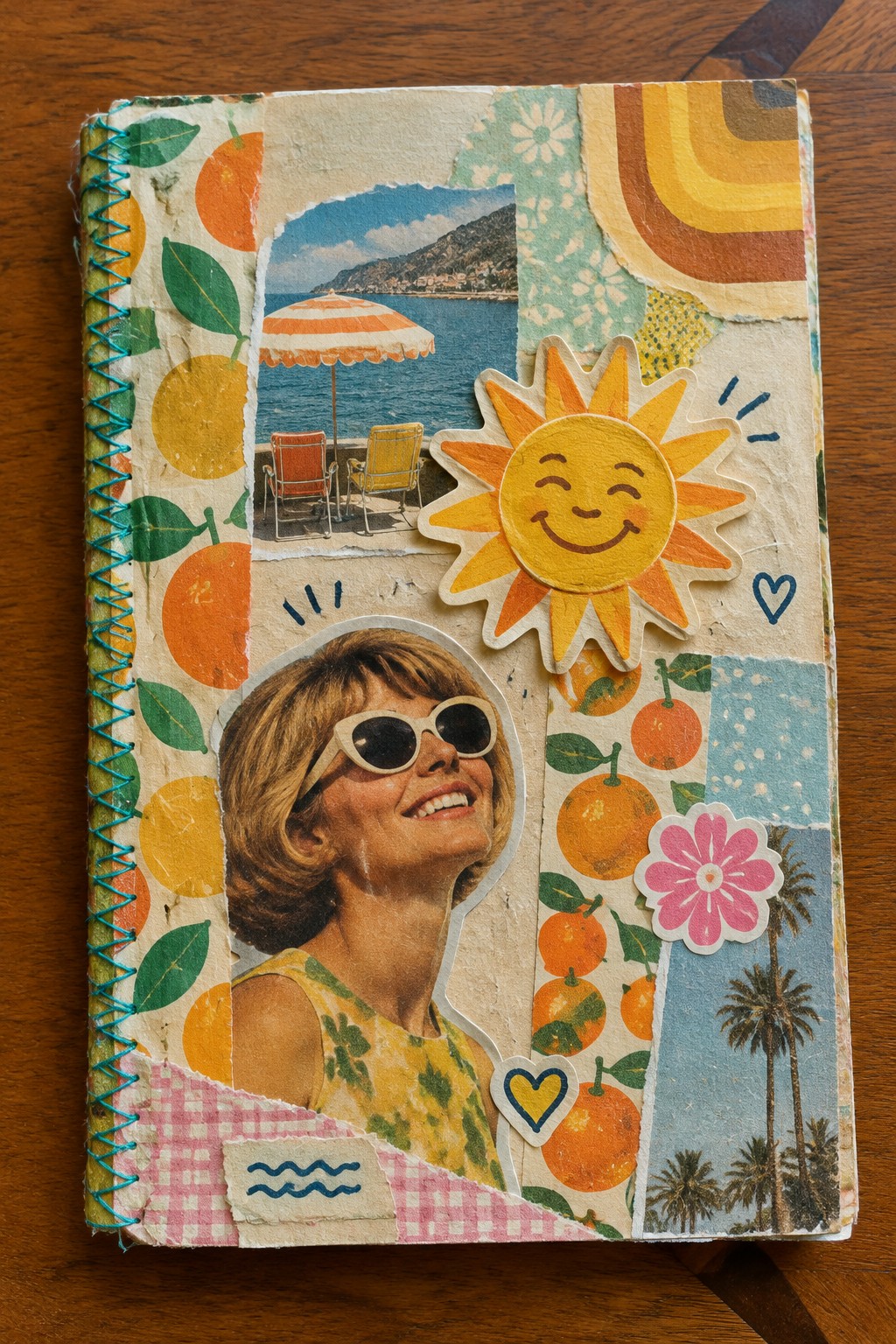
A bright summer collage turns this handmade journal cover into a seaside scene, with a smiling woman in sunglasses and a beach photograph as the main focal points. Citrus-patterned paper, torn cream layers, small floral cutouts, and a raised sun embellishment bring color and texture together, while the turquoise zigzag stitching along the spine frames the cover.
The mix of fruit prints and beach ephemera gives you a clear theme to build around, even with a smaller collection of scraps. Try pairing one travel photo or printed portrait with citrus paper and a few sun or flower cutouts, then use a contrasting thread color along the spine; a simpler version could keep the stitched edge and just one focal image.
Celestial Journal Spread With Decorative Spine Stitching

A dark celestial theme ties this open journal spread together, with gold moon phases and star-chart details set against layered navy paper. The narrow exposed spine is a focal point of its own, decorated with repeated star-shaped stitches between pale strips, while torn gray paper, a tag, and overlapping patterned scraps add contrast and texture.
For a similar look, pair star-map scrapbook paper with plain dark scraps and torn neutral paper, then let a visible line of decorative stitching connect the two sides of the spread. Small star motifs could be replaced with simple knots or another repeated embellishment, and the moon phases could give way to botanical prints or seasonal illustrations while keeping the dark-and-gold palette.
Vintage Postcard Journal Page With Ephemera Pockets
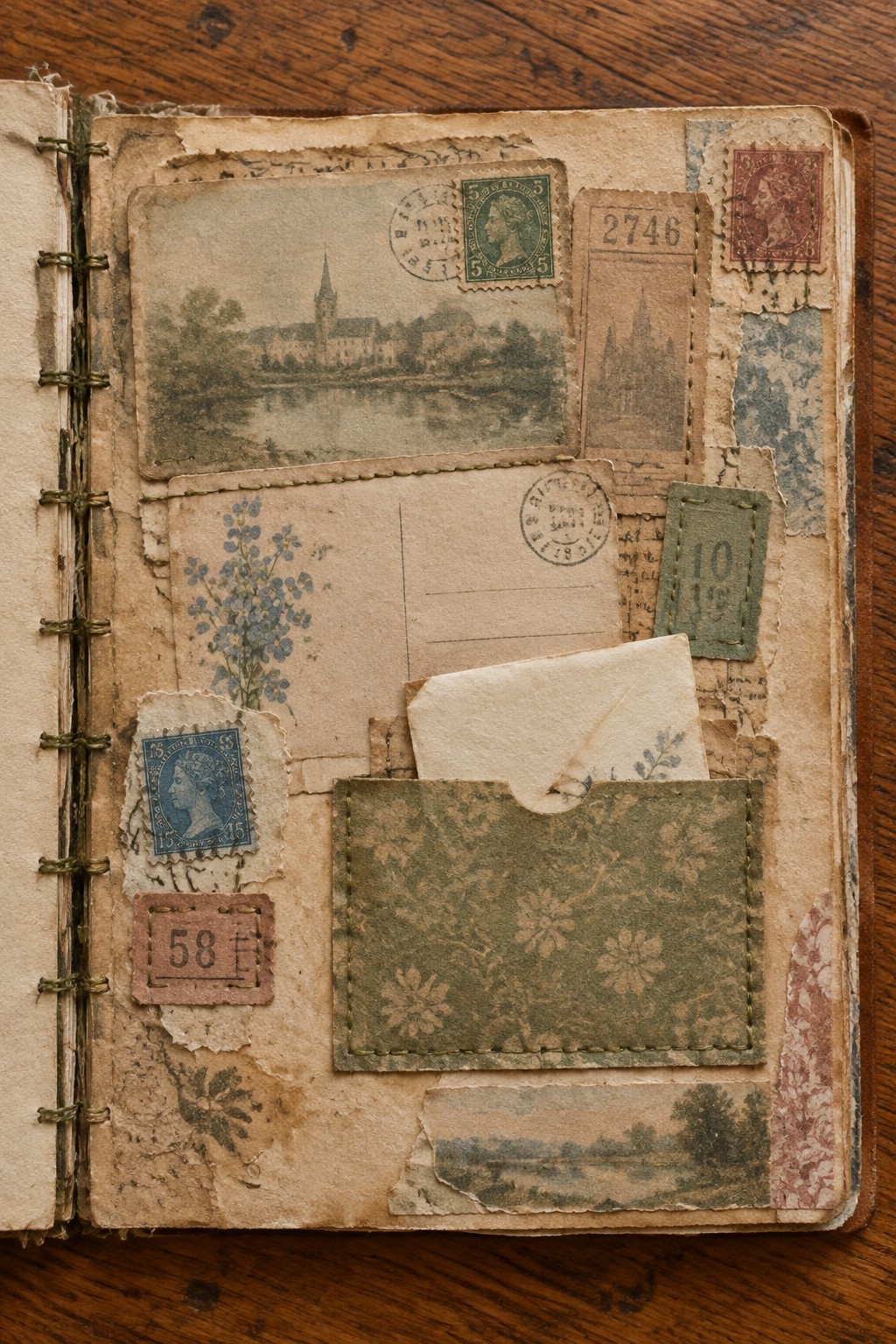
A layered vintage-style journal page brings together faded postcard imagery, old-fashioned stamp designs, numbered paper pieces, and a floral printed panel. The postcard landscape anchors the upper section, while overlapping paper scraps and a large patterned pocket create a collage-like arrangement; the exposed stitched binding adds a handmade detail along the edge.
The mix of muted cream, green, and dusty red papers makes this layout easy to adapt with travel postcards, ticket-style tags, or other printed ephemera. You could keep the landscape as the focal point and simplify the surrounding layers, or use the lower pocket to hold a folded note or tag, choosing patterned scrapbook paper that picks up the colors of the stamps.
Carousel Horse Journal Cover With a Beaded Spine

A carousel horse cutout anchors this layered journal cover, surrounded by torn gingham and floral papers, gauzy fabric, bunting, and small circus-themed embellishments. The turquoise fabric cover keeps the pastel collage cohesive, while the spine’s coral cord, wooden beads, and felt stars add texture and make the binding part of the design.
The layered papers give you room to build a similar cover around any large printed illustration, such as a flower, bird, or storybook character. For a simpler version, keep the horse as the focal point and use just two patterned scraps; for a more decorative spine, alternate beads and felt shapes along a ribbon or cord.
Sepia Portrait Spread With a Laced Spine

A Victorian-inspired portrait collage gives this open journal spread its focus, with sepia-toned portraits layered over torn, weathered-looking paper and dark patterned scraps. Black lace, a small photo pocket, and the crisscrossed stitching along the center spine bring together contrasting textures without making the two pages feel identical.
For a similar layout, pair portrait or landscape prints with scraps of cream paper and a bold dark pattern, then let the stitched spine connect the pages visually. A small corner pocket can hold a floral card or other narrow ephemera; for a simpler version, use one portrait on each page and keep just the lace and spine stitching as accents.
Patchwork Botanical Journal Cover With a Beaded Spine
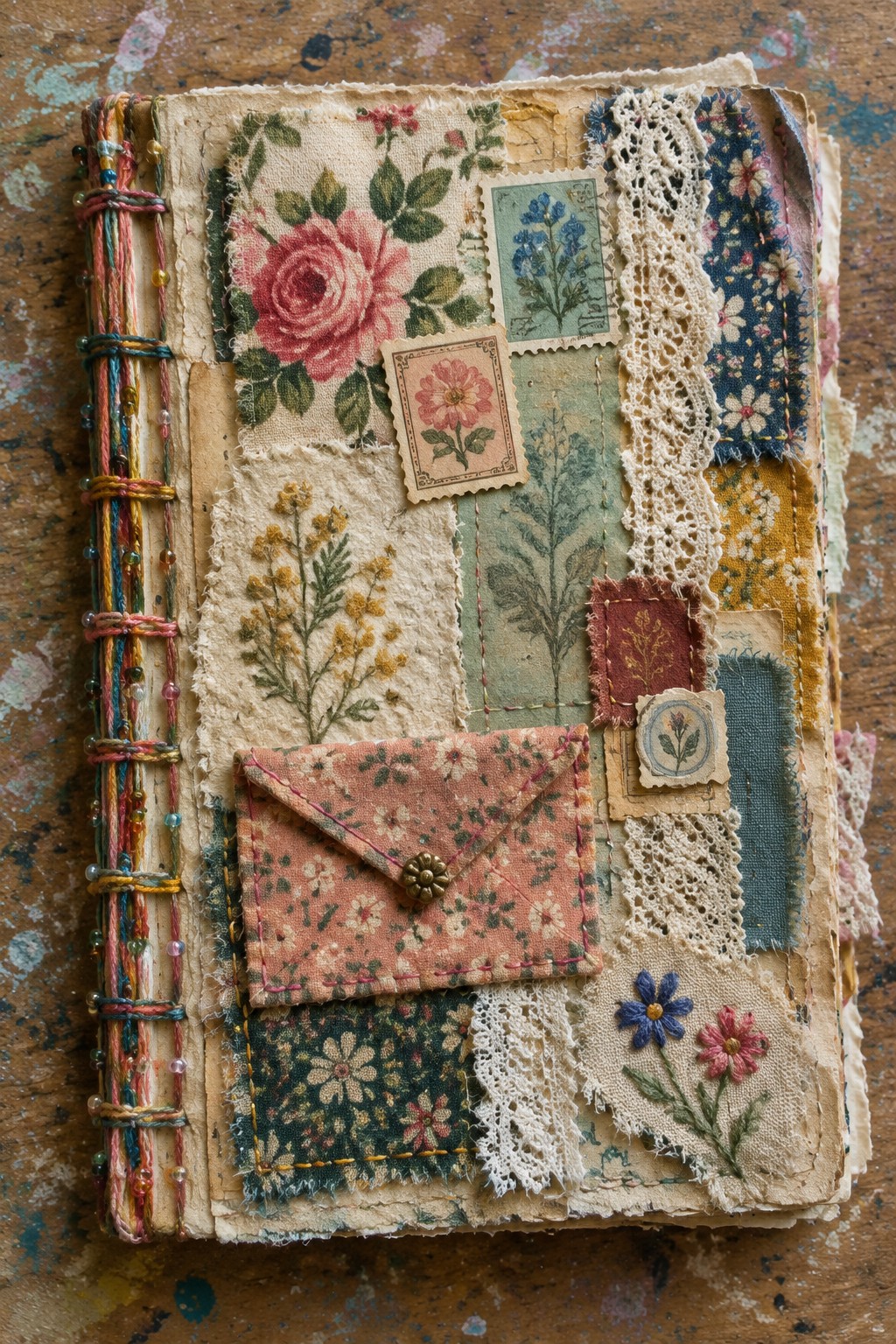
A botanical journal cover can bring together printed flower imagery, fabric scraps, lace, and visible binding details in one layered composition. A large rose-print panel anchors the cover, while smaller botanical cutouts and a floral fabric pocket add focal points; the colorful cord-and-bead spine balances the textured cream lace and uneven paper edges.
For a similar look, layer a large floral print with smaller plant illustrations, then add a fabric pocket across the lower half for a useful detail that also breaks up the collage. Use lace or a narrow fabric strip to create a contrasting vertical band, and adapt the spine with leftover ribbon, yarn, or beads in colors drawn from the cover prints.
Lace-Trimmed Journal Cover With Botanical Tags

A layered pair of kraft paper tags brings a botanical detail to this handmade journal cover, with a burgundy leaf cutout as the front tag’s focal point. Their stitched-looking borders, lace fragments, and twine tie echo the lace and visible binding along the spine, while the broad cream cover keeps the layered embellishments from feeling crowded.
You could recreate the arrangement with kraft paper scraps, a pressed-flower-style cutout or printed leaf, and small pieces of lace, then hang the tags from twine near the spine. For a simpler version, use one tag and a single lace accent; for a different theme, swap the leaf for a seasonal illustration while keeping the muted paper and fabric textures.
Forest-Inspired Journal Cover With a Stitched Spine
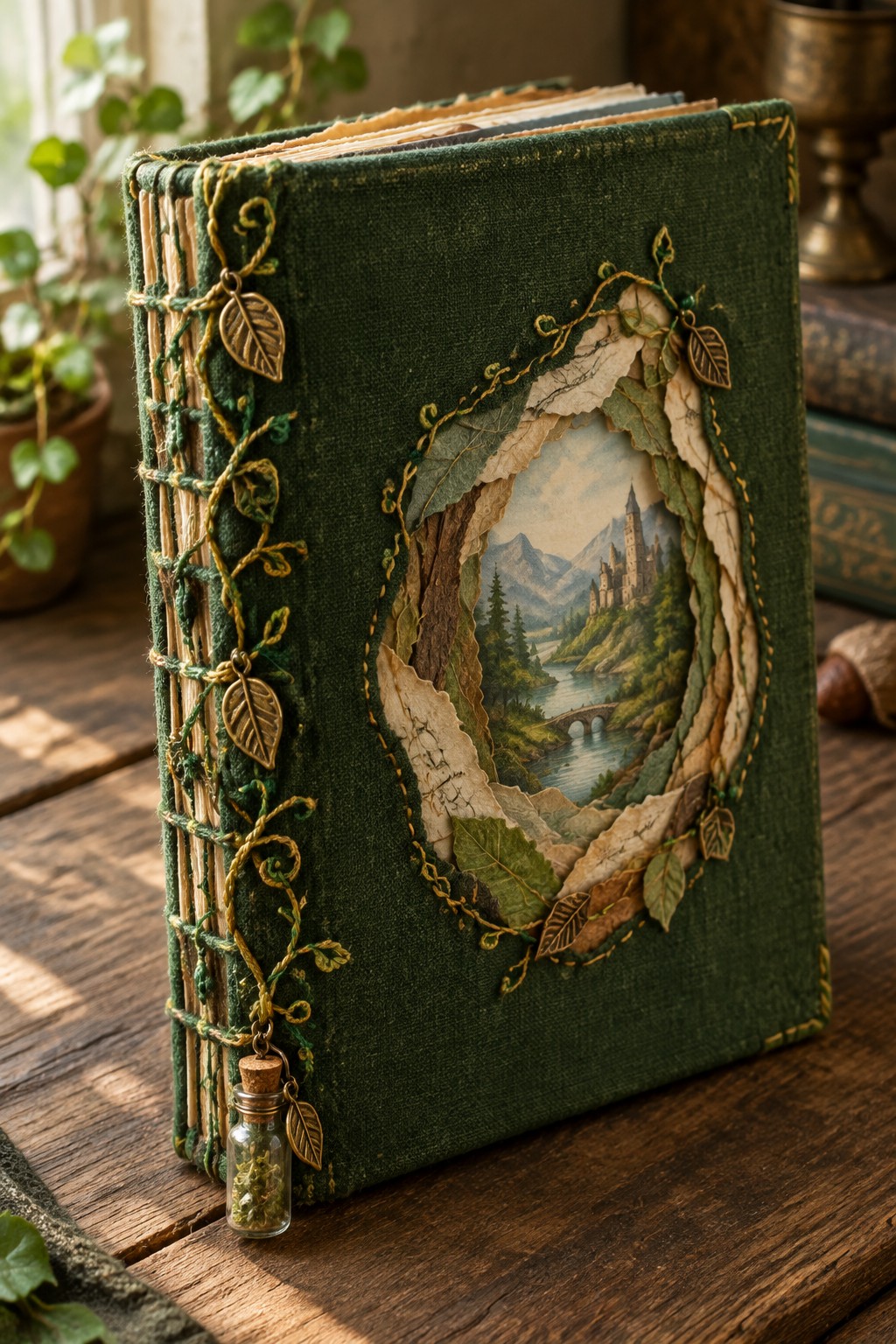
A forest-inspired cover pairs dark green fabric with a layered, torn-paper frame around a printed mountain-and-castle scene. The botanical details continue across the cover and spine in curling cord, leaf-shaped charms, and small fabric or paper accents, while the exposed page edges and visible binding give the journal a handmade, tactile look.
For a similar cover, build around a small landscape or woodland illustration and frame it with irregular layers of cream and muted green paper. Use a dark fabric cover as a backdrop, then add a few strands of decorative cord and leaf charms along the spine; simplifying the embellishments keeps the central scene prominent, and a different printed landscape can shift the theme toward a garden, seaside, or autumn setting.
Frequently Asked Questions
You can use embroidery floss, waxed thread, ribbon, lace, fabric scraps, beads, buttons, charms, paper strips, and small metal findings. Choose materials that suit your journal’s style, but keep the spine flexible and avoid bulky pieces that could make the journal difficult to open. If you’re adding beads or charms, place them where they won’t catch on nearby pages or covers.
First, decide where you want the stitches and mark the holes lightly with a pencil or awl. Use a bookbinding needle and thread that can withstand repeated opening and closing. A simple running stitch, chain stitch, or cross-stitch can add decoration without making the spine too stiff. If stitching through a thick cover, protect your work surface and make the holes before sewing.
Use small, lightweight embellishments and spread them out rather than clustering them in one spot. Flat lace, narrow ribbon, small fabric tabs, and stitched-on paper accents are good choices. For beads, buttons, or charms, use just a few and secure them firmly. Open and close the journal as you work to check that the spine still bends comfortably.
Not necessarily. A needle, thread, scissors, and an awl or sturdy needle for making holes are enough for many stitching designs. PVA bookbinding glue can help attach fabric or paper, while clips hold materials in place as they dry. Optional supplies, such as beads, charms, or specialty threads, can add detail, but everyday scraps often work just as well.
Use strong thread, make secure knots, and avoid placing stitches too close to the cover’s edges, where they may tear through. Attach heavier embellishments with both stitching and an appropriate adhesive when possible. Let glue dry fully before using the journal, and handle the spine gently while it breaks in. If the journal will be used often, choose flexible, firmly attached decorations over delicate or dangling pieces.
