

Have you ever been driving on a rainy day only to find your windshield wipers smearing dirt instead of clearing your view? A broken washer fluid hose could be the culprit, leaving you frustrated and unsafe on the road.
Key Takeaways
- Understanding Washer Fluid Hoses: Washer fluid hoses are vital for maintaining windshield visibility by transporting fluid from the reservoir to the wipers.
- Common Causes of Damage: Hoses can break due to extreme weather, road debris, poor installation, or exposure to chemicals. Identifying the cause is crucial for repair.
- Diagnosing Issues: Signs of a broken hose include lack of fluid dispersion, visible leaks, damaged appearance, and weak pump performance. Proper inspection can help pinpoint the problem.
- Repair Process: To fix a broken washer fluid hose, gather necessary materials, disconnect the old hose, install the new one securely, and test the system for leaks.
- Preventative Maintenance: Regularly inspect hoses for wear and tear, choose the right washer fluid for your vehicle, and perform checks every six months to ensure optimal performance.
Understanding Washer Fluid Hoses
Washer fluid hoses play a crucial role in keeping your windshield clean and your view clear. Understanding their function helps you maintain your vehicle’s safety during rainy conditions.
Recommended Products

HIGH QUALITY MATERIAL: The windshield washer hose kit is made of high quality rubber, soft and elastic, strong and durable.

Easy installation and replacement:Windshield washer hose kit directly replaces your aging hoses and accessories,It connects seamlessly to the car water pump and Windshield washer nozzles, ensuring stable and smooth water flow for a clearer, wider field of vision and safer driving

High Quality Material: The windshield washer hose kit is made of high quality rubber material, soft and flexible, strong and durable for long-term use. The front windshield nozzle is made of high quality plastic, which is tough, not easy to break, light weight and corrosion resistant, which can effectively extend the service life of the wiper blade.
Importance of Washer Fluid Hoses
Washer fluid hoses transport washer fluid from the reservoir to the nozzle, which sprays the windshield. Clear visibility is essential for safe driving, especially in inclement weather. A functioning hose ensures that wipers can effectively clear dirt, debris, and water, enhancing your overall driving experience.
Common Causes of Damage
Several factors contribute to the damage of washer fluid hoses:
- Weathering: Exposure to extreme temperatures can cause hoses to crack or become brittle over time.
- Debris: Road debris can puncture or obstruct hoses, leading to leaks.
- Poor Installation: Incorrectly secured hoses can experience excessive movement, causing stress and eventual breakage.
- Chemical Exposure: Certain cleaning products may degrade the material of the hoses, leading to weaken points.
Identifying the cause of damage is essential for taking appropriate steps in fixing or replacing the broken hose.
Diagnosing the Problem
Diagnosing a broken washer fluid hose involves identifying signs and using the right tools for a thorough inspection. A quick assessment can save time and ensure you address the issue effectively.
Signs of a Broken Washer Fluid Hose
- No Fluid Dispersion: If your windshield wipers aren’t spraying fluid, check the hoses.
- Visible Leaks: Look for fluid pooling under your vehicle. Leaks often indicate a punctured or cracked hose.
- Damaged Hose Appearance: Inspect the hose for cracks, bulges, or worn-out areas, which signify wear and tear.
- Weak Pump Performance: Listen for unusual noises from the washer pump. If it struggles to operate, a blockage or hose issue might exist.
- Flashlight: Use a flashlight to examine dark areas for visible damage.
- Wrench Set: Keep a wrench set handy for loosening or tightening fittings.
- Screwdriver: A screwdriver helps in accessing the washer fluid reservoir and hose connections.
- Rags: Use rags to clean up any spills and to keep your workspace tidy.
- Water or Washer Fluid: You’ll need these to test the system after inspection and repairs.
By recognizing the signs of a broken washer fluid hose and having the right tools, you can efficiently diagnose the problem before moving on to repairs.
Step-by-Step Guide to Fixing a Broken Washer Fluid Hose
Fixing a broken washer fluid hose improves driving visibility and ensures safety in adverse weather. Follow these steps to get the job done efficiently.
Recommended Products

Windshield Washer Hose Repair Kit -- The washer hose kit is easy to replace and install. Windshield washer hose kits help you easily and quickly replace aging hoses and properly connect your car's water pump to the windshield nozzle to ensure smooth water spraying and glass cleaning. You can replace the new windshield wiper hose repair kit by yourself to save money for your loved automotive car.

[Universal Fit & Complete Kit]: This windshield washer hose kit includes a 3-meter (9.84ft) high-quality hose and 12 essential connectors. It is engineered to replace aging or damaged lines, restoring smooth water spray to your windshield for clear visibility.

High quality material: windshield washer hose kit is made of high quality rubber, soft and flexible, strong and durable for long term use. The front windshield nozzle is made of high quality plastic, light weight and corrosion resistant, which can effectively extend the service life of wiper blades.
Gathering Necessary Materials
Gather the right materials before starting the repair. Essential items include:
- New washer fluid hose: Choose a hose that fits your vehicle’s specifications.
- Wrench set: Helpful for loosening and tightening hose connections.
- Screwdriver: Needed if there are clips or brackets securing the hose.
- Rags: Use these to clean up any spilled fluid during the process.
- Water or washer fluid: Required for testing the new hose after installation.
Having these materials on hand streamlines the repair process.
Disconnecting the Old Hose
Disconnecting the old hose involves several straightforward steps:
- Locate the hose: Find where the hose connects to the washer fluid reservoir and the nozzle.
- Loosen the clamps: Use a wrench or screwdriver to loosen any clamps holding the hose in place.
- Remove the hose: Gently pull the hose away from the connections. If it’s stuck, twist it slightly to break the seal.
Inspect the old hose and connections for damage. This helps identify any issues that led to the breakage.
Preparing and Installing the New Hose
Installing the new hose requires careful preparation. Follow these steps:
- Cut the new hose: If necessary, cut the new hose to the appropriate length using scissors. Ensure it matches the original hose length for a snug fit.
- Attach the new hose: Slide one end over the washer fluid reservoir connector and the other end over the nozzle. Push firmly to secure both ends.
- Secure with clamps: Use your wrench or screwdriver to tighten the clamps, ensuring there are no leaks once the system is pressurized.
- Test the installation: Fill the reservoir with water or washer fluid. Activate the washer system and check for proper fluid dispersion without leaks.
Completing these steps ensures your washer fluid system functions correctly, improving your visibility on the road.
Maintenance Tips for Washer Fluid Hoses
Keeping your washer fluid hoses in top shape ensures optimal visibility during driving. Regular maintenance can prevent issues down the line.
Recommended Products
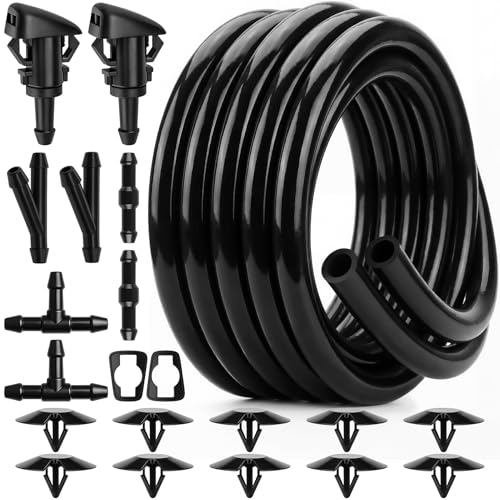
Durable Replacement Washer Hose Kit: Made of flexible rubber hose and tough plastic fan nozzles, resistant to cracking and corrosion, designed to replace aging or leaking windshield washer tubing and restore normal washer fluid flow.

[High Materials] Windshield washer hose is made of high-quality rubber material, which is soft and flexible and can adapt to extreme weather conditions such as high and low temperatures; the hose connector and windshield sprayer nozzle are made of high-quality plastic material, which is durable, not easy to break, not easy to deform, and has a longer service life.

EASY INSTALLATION & REPLACEMENT: Replace damaged windshield washer hoses anytime — even traveling or in emergencies; connect the water pump and windshield nozzle easily to restore smooth water spray, no special tools needed
Regular Inspections
Inspect washer fluid hoses every six months. Look for cracks, kinks, or signs of wear. Use your hands to feel for leaks or damp areas around the hose connections. Check the clamps as well; they should be tight, ensuring no fluid escapes. If any damage is present, replace the hose immediately. A working washer fluid system is crucial, especially in adverse weather.
Choosing the Right Washer Fluid
Select washer fluid that meets your vehicle’s specifications. Read the label for freeze protection and cleaning capabilities. Use the appropriate type, like all-season or winter blend, depending on your climate. Fill the reservoir to the designated line to avoid overflow. Regularly check levels to keep the system functional. High-quality fluid helps prevent nozzle clogs and improves performance.
Conclusion
Fixing a broken washer fluid hose might seem daunting but it’s a task you can handle with a little patience and the right tools. By keeping an eye on your hoses and performing regular checks you can avoid those frustrating moments when visibility is compromised. Remember to choose the right washer fluid for your vehicle and climate to keep everything running smoothly.
With these tips you can drive confidently knowing your washer fluid system is in top shape. So roll up your sleeves and get to work—your safety on the road depends on it!
Frequently Asked Questions
What problems can a malfunctioning windshield washer fluid hose cause while driving in the rain?
A malfunctioning windshield washer fluid hose can lead to reduced visibility during rain, making driving hazardous. Without proper washer fluid, dirt and grime accumulate on the windshield, obstructing your view and increasing the risk of accidents.
How can I identify a broken washer fluid hose?
Signs of a broken washer fluid hose include a wet or stained area under the car, lack of fluid on the windshield when activated, and visible cracks or kinks in the hose. Regular inspections can help catch these issues early.
How often should I inspect my washer fluid hose?
It’s recommended to inspect your washer fluid hose every six months. Regular checks can help identify cracks, kinks, or wear and ensure that clamps are tight, contributing to a fully functional washer fluid system.
What type of washer fluid should I use?
Choose a washer fluid that meets your vehicle’s specifications. Consider the climate to select a fluid that offers freeze protection and effective cleaning capabilities. Using the right type can prevent clogs and enhance performance.
How can I maintain my washer fluid system?
To maintain your washer fluid system, regularly check fluid levels, filling the reservoir to the designated line, and inspect hoses for damage. Replace any worn or damaged components immediately to ensure proper function during adverse weather.
