


I’m drawn to botanical pages with pressed flowers, old illustrations, and the soft, worn look of antique prints.
When I’m sorting through paper scraps, I enjoy seeing how a few leaves, labels, and layered pieces can come together in a spread.
These 17 ideas bring those vintage details together in approachable ways, with plenty of room to use what you already have.
I hope they inspire you to try a new arrangement and make each page your own.
Layered Botanical Journal Spread With Pressed Flowers
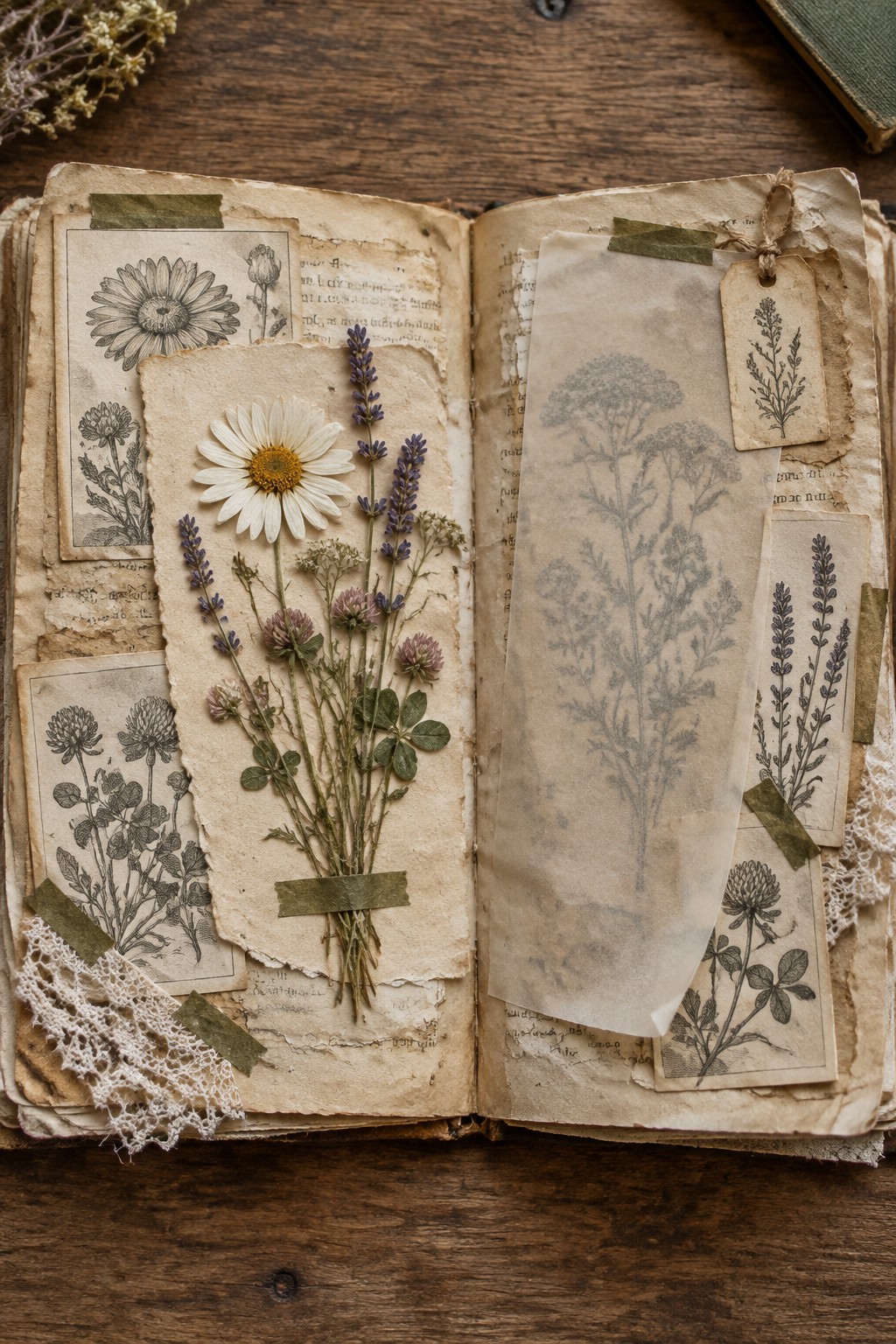
A pressed-flower-inspired arrangement anchors this vintage-style double-page spread, with a white daisy and purple flower stems layered over torn cream paper and old-looking book pages. Botanical print cutouts, a translucent sheet, a hanging plant tag, and small strips of green tape add variety while keeping the muted palette consistent across the open journal.
You could recreate the layout with a favorite flower or leafy stem as the main focal point, then frame it with plant illustrations and scraps of script-printed paper. A translucent paper layer on the opposite page can soften a larger botanical print, while a simple tag tied with twine gives you a place for a date or note; for a less detailed version, use just one flower, one print, and a small paper tag.
Pressed Flower Journal Cover With Lace and Ephemera

A vintage-style botanical cover comes together around an oval arrangement of pressed flowers, layered over torn patterned papers and postcard-style ephemera. The kraft cover, cream lace, muted ribbon, and small key charm create a tactile mix of textures, while the purple flowers stand out against the aged-looking neutrals.
The oval floral focal point gives the collage a clear center, so you could adapt the layout with another pressed flower or botanical cutout and scraps of printed paper. Keep the lace and ribbon for a similarly layered cover, or simplify the design by using just one patterned paper layer and a single flower while keeping the kraft background.
Layered Botanical Pocket Journal Page
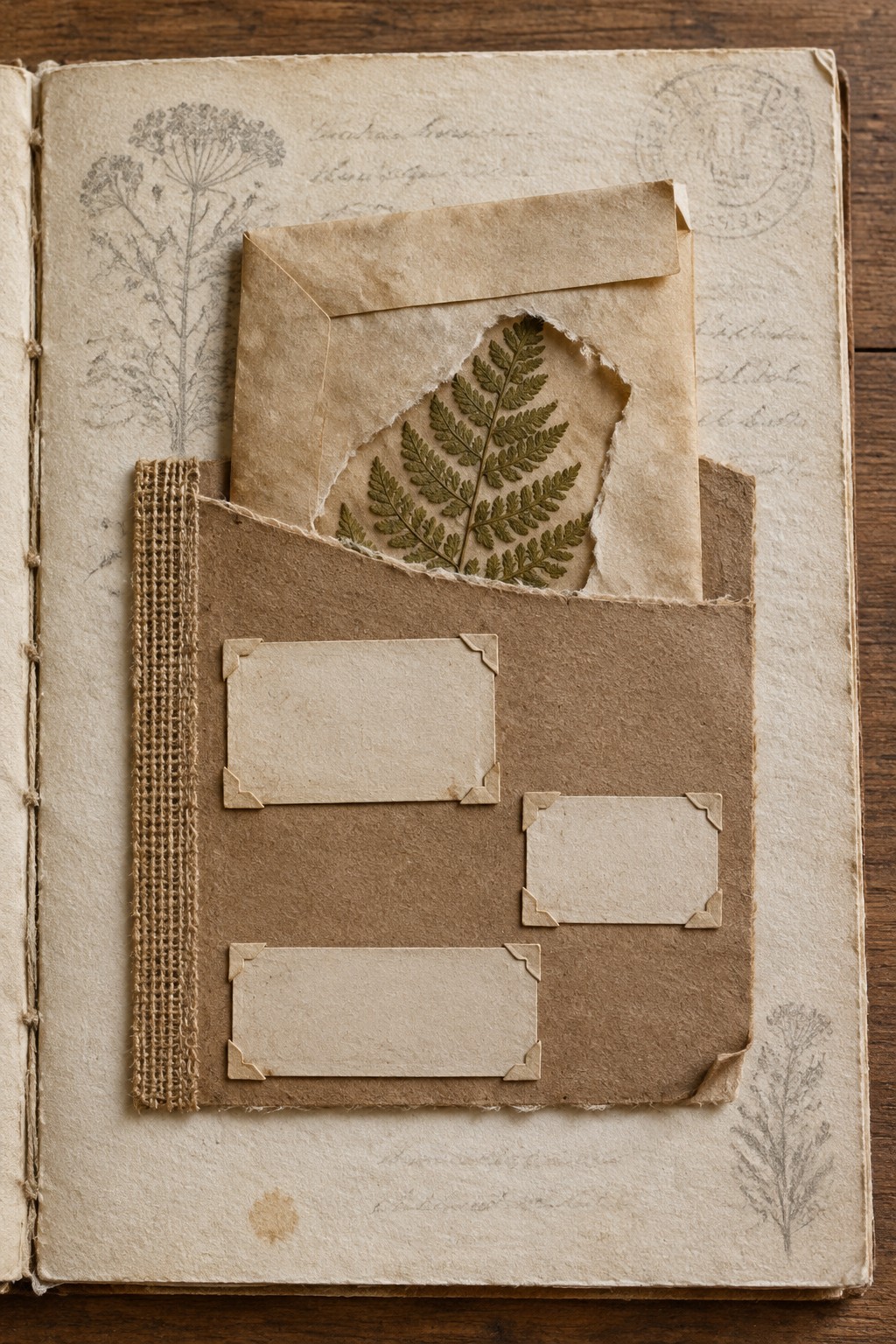
A fern cutout tucked behind torn paper becomes the focal point of this vintage-style journal page, with a small envelope layered above a kraft-paper panel. The burlap-like binding strip, muted botanical prints, and blank corner-mounted labels combine different textures while keeping the earthy palette consistent.
You could recreate the arrangement with a fern or flower print inside a torn-paper opening, then add a small envelope for another illustration or note. Use kraft scraps and a strip of textured fabric or ribbon for the lower panel, and leave a few labels blank for journaling; swapping the fern for seasonal foliage changes the theme without altering the layout.
Dark Botanical Specimen Journal Spread

A dark, vintage-style botanical spread pairs torn floral print fragments with a framed dried-rose specimen as its focal point. Black lace, layered cream papers, and the dark book pages create a strong contrast between delicate textures and muted sepia tones.
You could build a similar arrangement around a dried flower or a flat botanical cutout, then surround it with printed plant illustrations and torn paper scraps. For a simpler version, keep the framed specimen and one lace accent, or change the focal flower and prints to suit another season.
Fern Specimen Page With a Paper Tag

A single botanical journal page turns a pressed fern into a specimen-style focal point, mounted on a warm, vintage-style paper panel with folded photo corners. A smaller kraft tag with a delicate plant illustration overlaps the lower right, adding a second paper layer and a bit of twine without competing with the fern.
The arrangement is easy to adapt with a different pressed leaf or a vintage-style botanical print, using a paper panel and corner tabs to give it a mounted-specimen look. Try changing the tag illustration to match the main plant, or leave the tag blank for a handwritten label; the restrained cream and brown palette also lets the fern remain the focus.
Map and Botanical Ephemera Journal Spread

A travel-inspired double-page spread pairs vintage-style map paper with botanical illustrations and loose eucalyptus-like leaf cutouts. Torn map fragments cross the pages, while a large paper pocket on the right holds tags and numbered cards, with a small compass adding a distinct travel detail; the muted greens, browns, and cream papers tie the layered elements together.
You could recreate the layout with a printed map, plant illustrations, and a few leafy cutouts, leaving one page more open and using the other for a pocket of journaling tags. A ticket, label, or small folded note could replace the numbered cards, while a different map or botanical print would shift the theme without changing the spread’s layered structure.
Floral Tag Pocket With Lace Trim
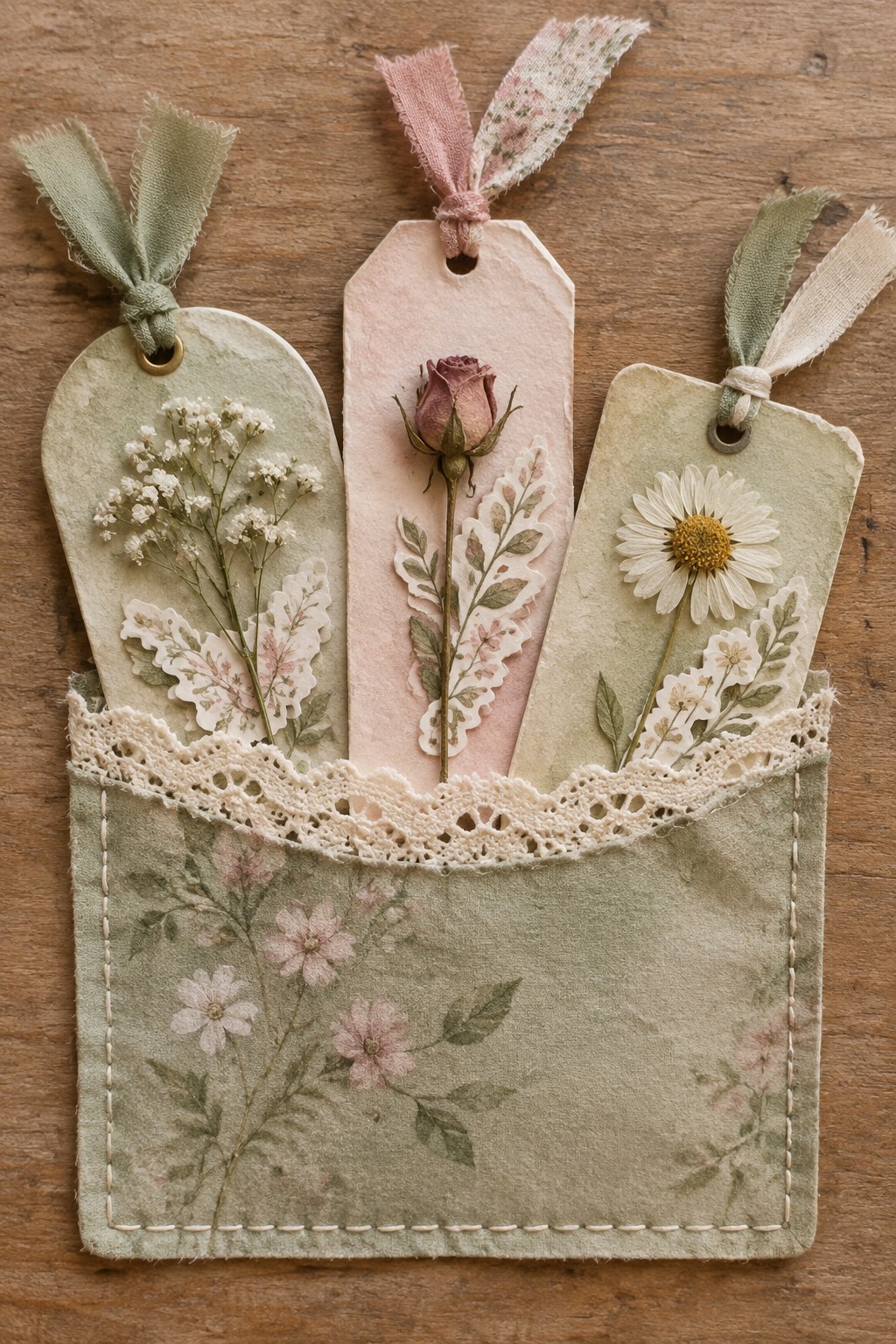
A fabric pocket decorated with a muted floral print holds three botanical tags, turning simple inserts into the main feature of this journal piece. The tags combine soft green and blush paper, floral cutouts, and ribbon ties, while the lace along the pocket opening adds a contrasting texture without crowding the arrangement.
You could recreate the pocket with a scrap of floral fabric or decorative paper and tuck in tags cut from coordinating cardstock. Add a dried-flower-style print, a small flower embellishment, or leafy cutouts as focal points, then vary the ribbon colors to suit a different season or palette.
Botanical Specimen Journal Spread

This open double-page spread arranges botanical specimens in separate paper mounts, giving each leaf and flowering stem its own space like an entry in a vintage-style field journal. The muted cream pages and narrow strips of brown tape tie the layout together, while a small folded paper flap on the right adds a dimensional detail among the larger mounted pieces.
You could recreate the specimen arrangement with pressed leaves, dried flowers, or botanical cutouts, leaving small blank labels beneath them for handwritten names or dates. Keep the mounts simple and evenly spaced, or use scraps in slightly different cream and tan shades; the small flap could also become a pocket for a tag or a loose botanical print.
Rose-Print Journal Cover With a Lace Pocket

A vintage-style rose cover gets extra texture from a scalloped circular window, a lace pocket, and a loosely tied floral ribbon. The small botanical card and rose tag tucked into the pocket echo the large printed roses, while their cream and dusty pink tones keep the layered details cohesive.
You could build a similar cover around one large flower print, then use lace to make a pocket for a few coordinating tags or small paper scraps. Try a different botanical motif, such as ferns or wildflowers, and keep the inserts simple if you want the cover to feel less busy; a ribbon tie can bring the colors together without adding another large focal point.
Layered Autumn Herbarium Journal Cover
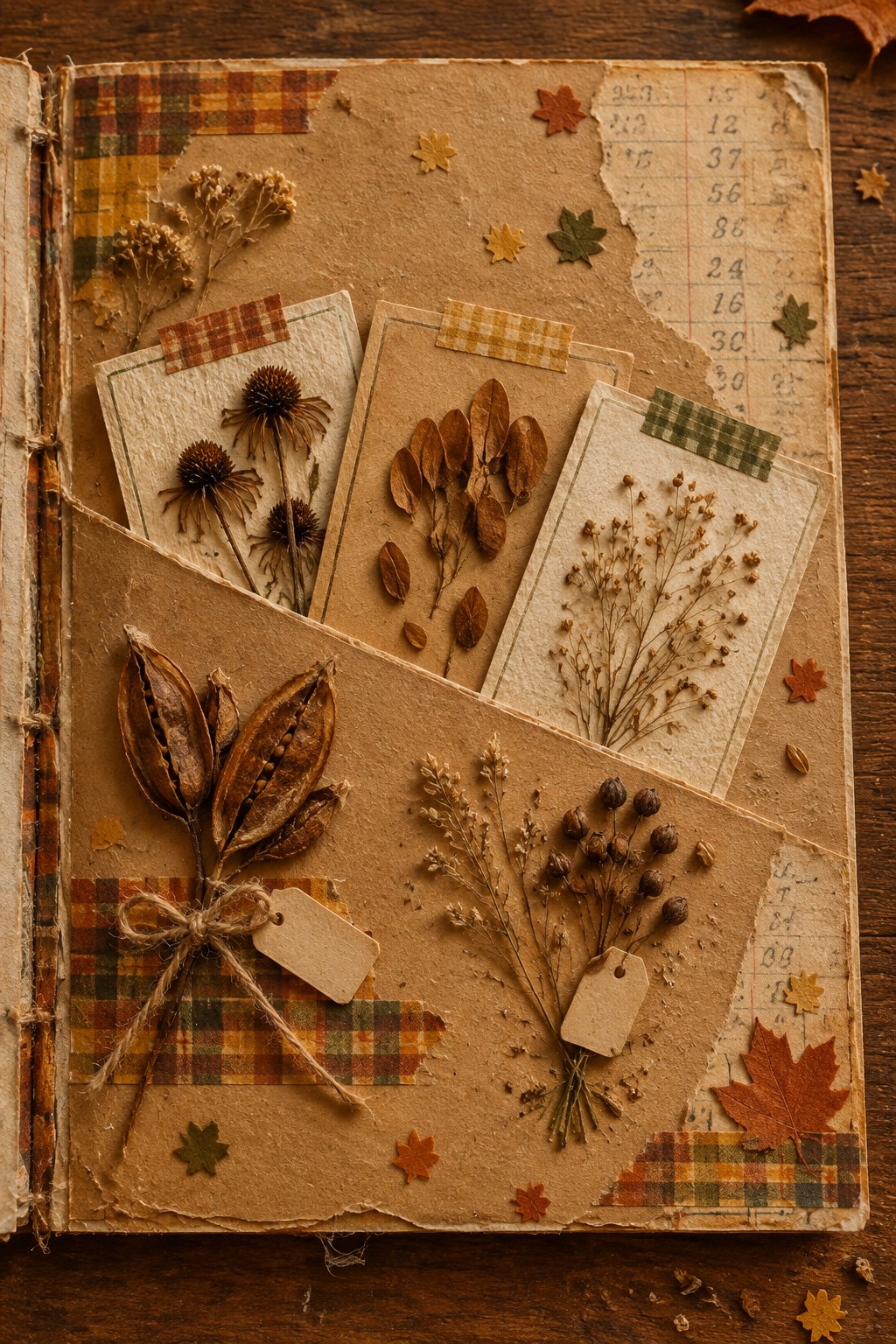
A kraft-paper pocket turns this botanical journal cover into a layered autumn collage, with small specimen cards tucked above it and dried plant forms arranged across the page. Plaid paper scraps, leaf cutouts, twine, and handwritten-looking number columns balance the botanical details, while the tilted cards keep the composition from feeling too orderly.
You could build a similar cover around a wide paper pocket and tuck in cards decorated with floral cutouts or vintage-style plant prints. For a simpler version, use just two specimen cards and a few plaid scraps, or switch the rust-and-olive palette for winter greens and cream paper while keeping the pocket and tag as the main features.
Pink Rose Botanical Journal Cover

A vintage-inspired botanical cover centers on a large rose print, layered over torn script and floral papers in muted pink, cream, and sage. Pressed-flower-style embellishments, pearl-like accents, narrow floral paper strips, and a translucent paper overlay add texture around the focal illustration without hiding it.
The central rose print can be swapped for another flower or plant illustration while keeping the layered-paper arrangement. For a simpler version, use fewer paper scraps and just one small floral embellishment; to echo the detailed cover, combine script-patterned paper with botanical prints and a few dimensional accents.
Enchanted Forest Journal Spread With Layered Pockets

A forest illustration framed by a large arched opening anchors this layered double-page spread, while fern cutouts and mushroom shapes extend the woodland theme around it. On the facing page, muted green and rust-colored paper panels hold small fabric-look pockets filled with moss-like and floral embellishments, combining printed map paper, textured paper, and dimensional details.
The arched frame gives a woodland print a strong focal point, so you could adapt the layout with another forest, mountain, or garden illustration and coordinate the surrounding paper scraps to its colors. For a simpler version, keep the framed picture and a few pockets, using paper leaves or floral cutouts instead of moss and several embellishments; the pockets can hold small notes or additional tags.
Cornflower and Marigold Botanical Journal Cover

A layered botanical journal cover pairs vintage-style flower prints with kraft-paper tags, fabric fragments, lace, and torn paper. The large cornflower and marigold cards form the main focal points, while a dried-looking flower embellishment, smaller botanical tags, and blue patterned scraps add depth to the warm, worn-looking cover.
You could build a similar arrangement around two favorite flower illustrations, using kraft tags to break up the larger printed cards and lace or fabric scraps to soften the edges. Keep the blue accents for contrast, or switch to another color found in your chosen flowers; a single large print and one tag would also capture the idea with fewer layers.
Foldout Botanical Journal Spread With Specimen Pockets

This vintage-style foldout spread pairs fern and flower specimens with small botanical print cards, using three cream paper panels to give each plant its own space. The pressed-flower-style embellishments stand out against the muted paper, while scalloped lace-like edges and fabric pockets add texture and structure across the open journal.
The separate panels make the arrangement easy to adapt: use different leaf or flower cutouts and matching printed plant illustrations, then tuck small tags or paper scraps into pockets along the bottom. For a simpler version, decorate just two panels and use one fabric pocket, keeping the coordinated cream and green palette to tie the spread together.
Botanical Specimen Cards on a Vintage-Style Journal Page

A vintage-inspired herbarium layout pairs three framed botanical prints with a cream, script-patterned page, while a loose sprig overlaps the center card to add a dimensional detail. The white paper borders and small brass-colored fasteners make each flower illustration read like a separate specimen card, and the muted green strip along the bottom anchors the composition.
You could adapt this arrangement with printed flower or leaf cutouts mounted on cream paper scraps, using small brads or drawn-on dots to echo the visible fasteners. Keep the cards slightly staggered and let one real or paper botanical sprig overlap a frame; swapping the flowers or bottom strip color can shift the theme without changing the tidy specimen-style layout.
Coastal Botanical Journal Spread With Shell Prints

A coastal herbarium theme ties this open spread together, pairing seaweed-like botanical cutouts tucked into translucent paper pockets with shell illustrations and small floral details. The warm, map-patterned pages, narrow navy accents, and rough-edged paper pieces create a layered, collected look without making either page feel too crowded.
You could build a similar spread around a few large botanical pockets, then balance them with small printed shells or other seaside ephemera. Use translucent paper or folded scrap-paper pockets to keep the plant details visible, and swap in different leaves, pressed-flower-style cutouts, or seasonal illustrations to shift the theme while keeping the same layered arrangement.
Wildflower Seed Pocket Journal Spread
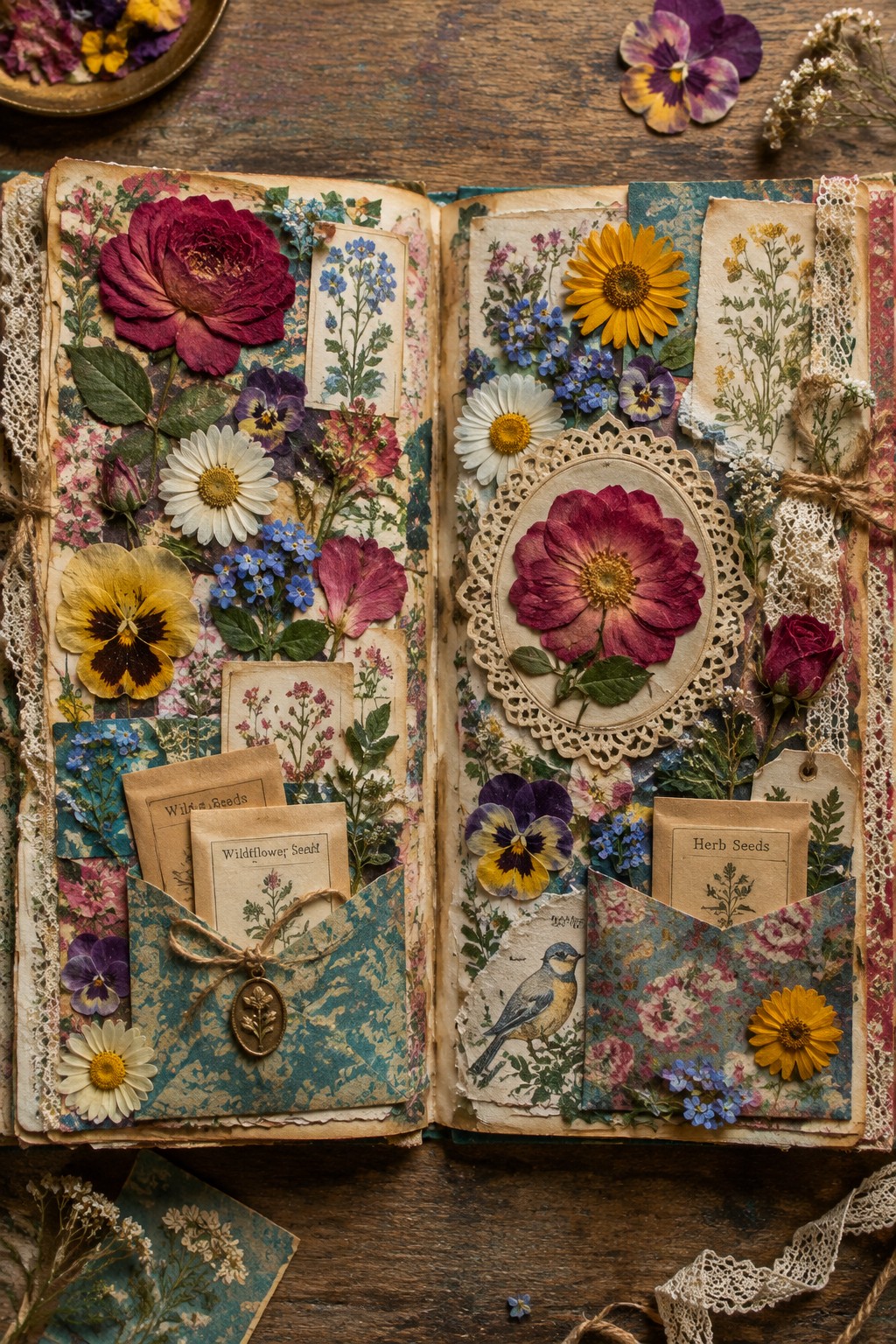
A layered botanical spread pairs vintage-style floral papers and plant prints with dimensional flower embellishments, including prominent rose and daisy shapes. Lace borders, a central rose mounted on a paper doily, and patterned pockets filled with kraft seed tags give the two pages a coordinated look while keeping the composition varied.
The pockets and seed tags make the layout especially useful for storing notes, small clippings, or extra botanical cards. To adapt it, choose one large flower as the focal point, then combine a few smaller floral cutouts with printed plant pages and lace; using fewer flowers or just one pocket can keep the busy arrangement more manageable.
Frequently Asked Questions
Gather a journal or a few sheets of sturdy paper, botanical prints or photocopies, dried flowers or leaves, and vintage-style papers such as book pages, ledger sheets, or tea-stained paper. You may also want scissors, a glue stick or archival adhesive, washi tape, and a pen. Keep fragile originals safe by using copies of antique prints rather than cutting up valuable books or artwork.
Make sure pressed flowers are completely dry before adding them to a page. Handle delicate petals with tweezers, then attach them with a small amount of archival glue or place them inside a clear pocket. For flowers you want to protect from frequent handling, sandwich them between transparent paper or add them beneath a piece of clear film. Avoid thick flowers, which can make a journal difficult to close.
Look for botanical illustrations in public-domain archives, old books, estate sales, thrift shops, and flea markets. Many museums and libraries offer digital images that can be printed at home. Check the source’s usage terms before reproducing an image, especially if you plan to sell finished journals. Printing a copy lets you preserve the original while still enjoying its vintage look.
Choose a simple palette, such as faded green, cream, brown, and muted pink, and repeat those colors across both pages. Pair one main botanical print with smaller paper scraps and a pressed flower, leaving some open space so the spread does not feel crowded. Layering papers at different sizes adds interest, while consistent tones help unrelated materials look like they belong together.
Vary the layout and materials to keep a collection of 17 spreads interesting. Try a pressed-flower specimen page, a seed-packet collage, a vintage book-page background, a botanical letter, a garden-planning layout, or a pair of matching pages built around one antique print. You can also create a pocket for plant notes, a seasonal leaf collection, a field-guide-inspired page, or a simple composition that lets one carefully chosen flower take center stage.
