


I’m always saving interesting paper scraps, so fold-out pages are a fun way to give those little bits more room to shine.
The multi-panel designs in these ideas add extra space for layers, notes, and small decorations without making a page feel complicated.
I like how a simple fold can turn a handful of papers and cutouts into a layout with little details to discover.
These 18 ideas offer plenty of ways to play with different materials and find a fold-out style that feels like your own.
Botanical Fold-Out Journal Spread

A three-panel botanical spread turns a small collection of plant illustrations into a layered display, with the stitched-looking center seams giving each section its own space. Printed flowers and leaves sit among torn vintage-style paper, translucent-looking overlays, green tape, and kraft pockets holding small tags.
The pocket-and-tag arrangement is easy to adapt using scraps of kraft paper and botanical prints, with different tags or small notes tucked into each panel. To simplify the busy spread, keep one prominent plant illustration per section and use the pockets as the main interactive detail; seasonal leaves or seed-packet-style prints could shift the theme without changing the layout.
Vintage Map Fold-Out Journal Spread

A travel-themed fold-out spread uses overlapping map panels to create a broad backdrop for coastal photographs, compass motifs, and small paper details. Torn edges, taped photo corners, and pockets on the outer panels add texture, while the muted blue, cream, and kraft tones keep the multi-panel layout visually connected.
You could adapt the arrangement with printed maps of a favorite region, postcards, and travel ephemera, keeping a few map sections visible as a common background. The fabric pocket and paper envelope can hold tags or extra notes, while a simpler version could use fewer photos and one compass cutout as the focal point.
Vintage Family Photo Journal Spread
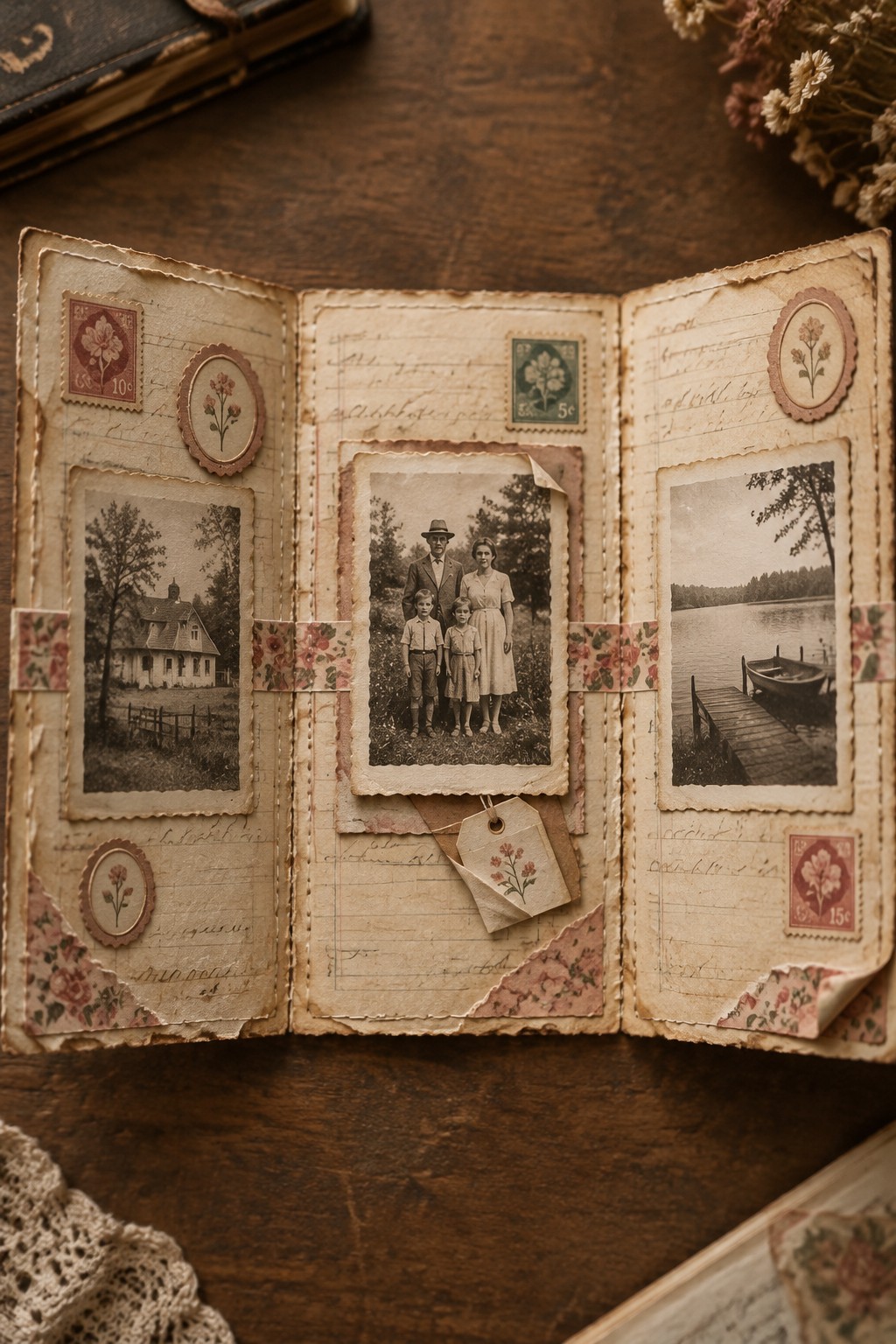
A three-panel fold-out spread pairs a central family portrait with smaller vintage-style photographs of a cottage and lakeside, making the pictures the main focal points. Script-patterned paper, floral tape, scalloped photo edges, botanical medallions, postage-style cutouts, and a dangling paper tag create a layered cream-and-sepia layout across the open panels.
You could build a similar spread around a travel theme, using a central group photo or map surrounded by smaller snapshots of places and keepsakes. Script-print paper and floral scraps help tie the panels together, while a few tags or postage-style cutouts add detail; for a simpler version, keep the central photo and choose just one smaller image for each side.
Vintage Ephemera Fold-Out Pocket

A narrow multi-panel fold-out turns vintage-style travel ephemera into both decoration and storage, with floral paper layered across the lower sections and postcard, round-trip ticket, and tramway ticket designs as focal points. The upright panels, angled pocket fronts, and small lace-and-clip detail give the piece a mix of flat printed imagery and tactile paper layers.
You could adapt the layout with folded paper scraps and pocket fronts, then tuck in your own tags or ticket-shaped cutouts. Keep the floral paper as a unifying layer, or replace it with map prints, book pages, or seasonal patterns to suit a different theme; swapping the travel ephemera for other small illustrations also changes the subject without altering the multi-panel format.
Vintage Tea-Themed Multi-Panel Journal Insert

A vintage-style tea theme runs across a staggered set of overlapping paper panels, with a floral teapot illustration as the main focal point. Cream and sage papers, mustard gingham strips, botanical details, and projecting tab-like tops give the insert a layered, cascading look while keeping the colors coordinated.
You could build a similar arrangement from patterned scrapbook paper and a teapot or kitchen-themed print, letting one larger illustration span the central panels. Keep the staggered edges and gingham bands for definition, or simplify the design with fewer panels and use different prints, such as mushrooms or autumn leaves, for a new theme.
Celestial Multi-Panel Journal Fold-Out
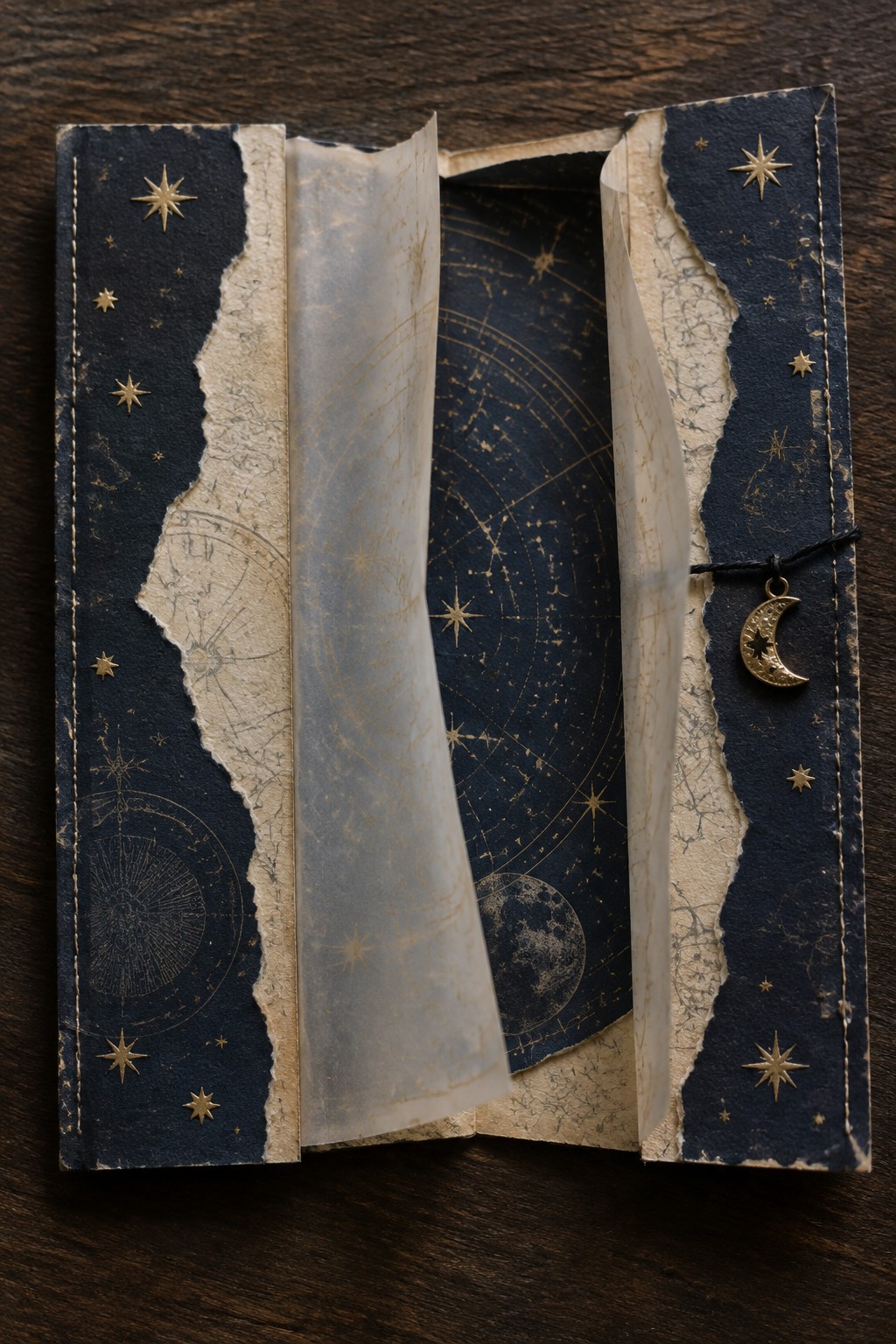
A dark celestial design turns this multi-panel fold-out into a layered journal feature, with navy panels framing a central star-chart illustration. Torn cream paper and translucent-looking folded sheets add contrasting textures, while gold star details and a dangling crescent charm draw attention to the narrow outer panels.
The layered arrangement could be adapted with printed astronomy charts, dark scrapbook paper, and torn book-page scraps, keeping the star map as the central focal point. For a simpler version, use fewer panels and a single celestial print; for another theme, replace the stars and moon with botanical diagrams or vintage maps while keeping the same alternating dark and pale layers.
Coastal Travel Fold-Out Journal Panels
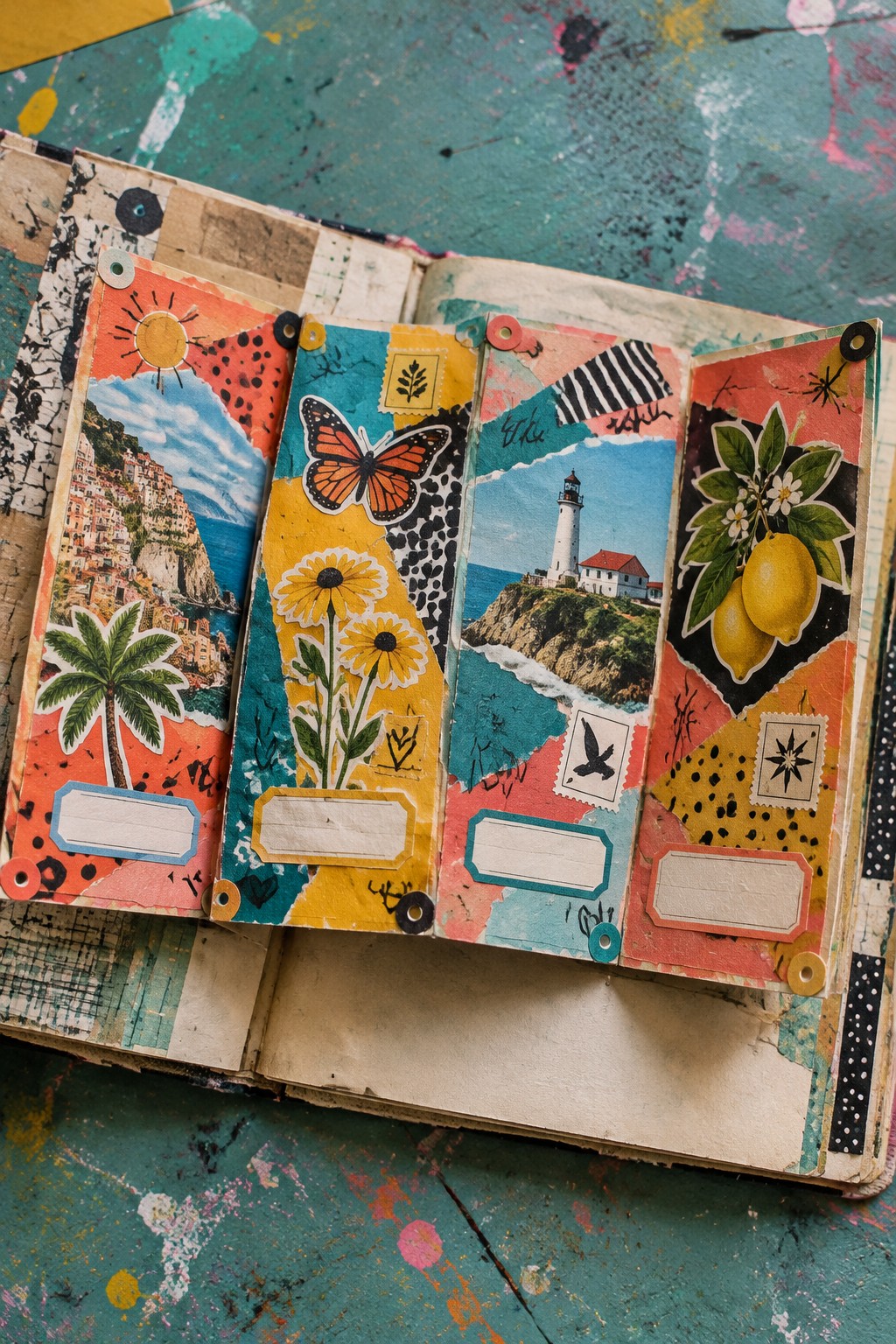
A coastal travel theme gives this multi-panel fold-out the feel of a compact scrapbook insert, with each narrow panel pairing a seaside photograph-style illustration with bright collage details. Torn blue paper, coral and mustard backgrounds, botanical and butterfly cutouts, small stamp-like motifs, and blank label tags create variety while keeping the panels connected through their warm Mediterranean palette.
The separate panels make it easy to assign a different travel memory or destination to each section, using printed scenery, paper scraps, and a few standout cutouts rather than filling every space. You could replace the lighthouse, cliffside town, and lemons with landmarks and plants from another trip, while keeping the blank labels for dates or brief notes.
Enchanted Forest Fold-Out Shrine

An arched forest scene becomes a dimensional fold-out spread, framed by two tall paper doors decorated with muted botanical prints. Inside, layered tree cutouts surround a printed woodland path and deer, while small mushroom details add depth near the bottom; the olive, brown, and cream palette keeps the many layers cohesive.
You could create a similar opening with folded scrapbook paper or cardstock panels, then build the interior around one small landscape illustration. Add overlapping tree cutouts and a few mushroom or fern embellishments for dimension, or simplify the scene with fewer layers and a larger focal image; swapping the woodland print for a garden, seaside, or seasonal landscape would change the theme while keeping the same multi-panel layout.
Lace and Kraft Paper Fold-Out Journal

A vintage-inspired journal cover anchors this multi-panel design, with kraft-paper panels opening to reveal smaller pages, tags, and pockets. A layered lace medallion with a botanical print draws the eye, while black lace, cream trim, twine, and muted paper ephemera create contrast across the folds.
You could adapt the arrangement with kraft paper or other muted scrapbook papers, using a large lace-trimmed circle as the cover focal point and smaller pockets or tag holders inside. Keep the palette to a few coordinating neutrals, or replace the botanical prints with another theme, such as mushrooms or travel ephemera, to suit your journal.
Concert Ticket Multi-Panel Fold-Out

A row of four connected paper panels turns concert and city ephemera into a compact fold-out, with each window framing a different printed image or ticket detail. Patterned borders in black, red, and aged cream give the sections a coordinated look, while the guitar silhouette, crowd scene, transit illustration, and seating information keep each panel distinct.
You could recreate the layout with small concert-ticket prints, music illustrations, or travel ephemera, framing each piece with scraps of patterned scrapbook paper. Keep a shared palette across the panels so the fold-out feels unified, or use different motifs for each section to suit a tour diary or city-themed journal.
Layered Floral Multi-Panel Journal Fold-Out

A flower-shaped fold-out brings several botanical mini-collages together around a central cluster of floral embellishments. Each rounded panel has its own patterned-paper backing and focal plant illustration, with torn cream paper, narrow decorative strips, and small accents creating a coordinated mix of blush pink, sage green, and soft yellow.
The separate panels make this layout useful for displaying different botanical prints while keeping them tied together by a shared palette. Try shaping paper scraps into rounded panels and pairing each with a different flower, fern, or leaf illustration; a smaller cluster of paper flowers in the middle can connect the sections, or be left out for a flatter version.
Botanical and Landscape Fold-Out Panels

Four textured paper panels fold out into a compact display of botanical and landscape illustrations, with each panel holding its own small framed print and blank label area. The white deckle-edged papers stand out against the neutral fabric background, while yellow and blue flowers, a sunset coast, and a forest scene give the accordion-style arrangement a varied but coordinated look.
You could adapt the layout with a different set of small prints, such as seasonal plants, travel sketches, or animal illustrations, and use matching paper panels to tie them together. Leave the label areas blank for later notes, or add short captions; if you want a simpler version, use two or three panels and keep the same mix of framed images and textured borders.
Autumn Leaf Pocket Fold-Out Journal

A three-panel autumn journal spread pairs rust, olive, and kraft-colored pockets with layered leaf cutouts and vintage-style botanical papers. The leaves are the focal point, while the stitched-looking pocket edges, small label cards, and overlapping paper panels give the spread a tactile, collected feel; a separate twine-tied booklet echoes the same palette.
You could recreate the arrangement with scrapbook-paper pockets and leaf illustrations or cutouts, using different leaves across each panel to keep the spread varied. The pockets can hold small tags or notes, and a matching folded insert tied with twine makes use of the same paper scraps without crowding the open pages.
Vintage Travel Journal With Layered Pockets

A vintage-inspired travel journal spread combines map-patterned panels, botanical prints, and kraft-paper pockets, with a compass illustration as the focal point on the center panel. Tags and small printed images peek from the pockets on either side, creating a layered, multi-panel layout that feels both decorative and useful for storing ephemera.
You could recreate the arrangement with coordinating scrapbook papers, folded kraft pockets, and travel or nature-themed cutouts, then tuck in tags, notes, or small map pieces. For a simpler version, use a compass or another central illustration with just one pocket on each side; swapping the maps and botanicals for seaside, garden, or camping prints can shift the theme while keeping the same structure.
Pastel Pocket Pages With Layered Tags
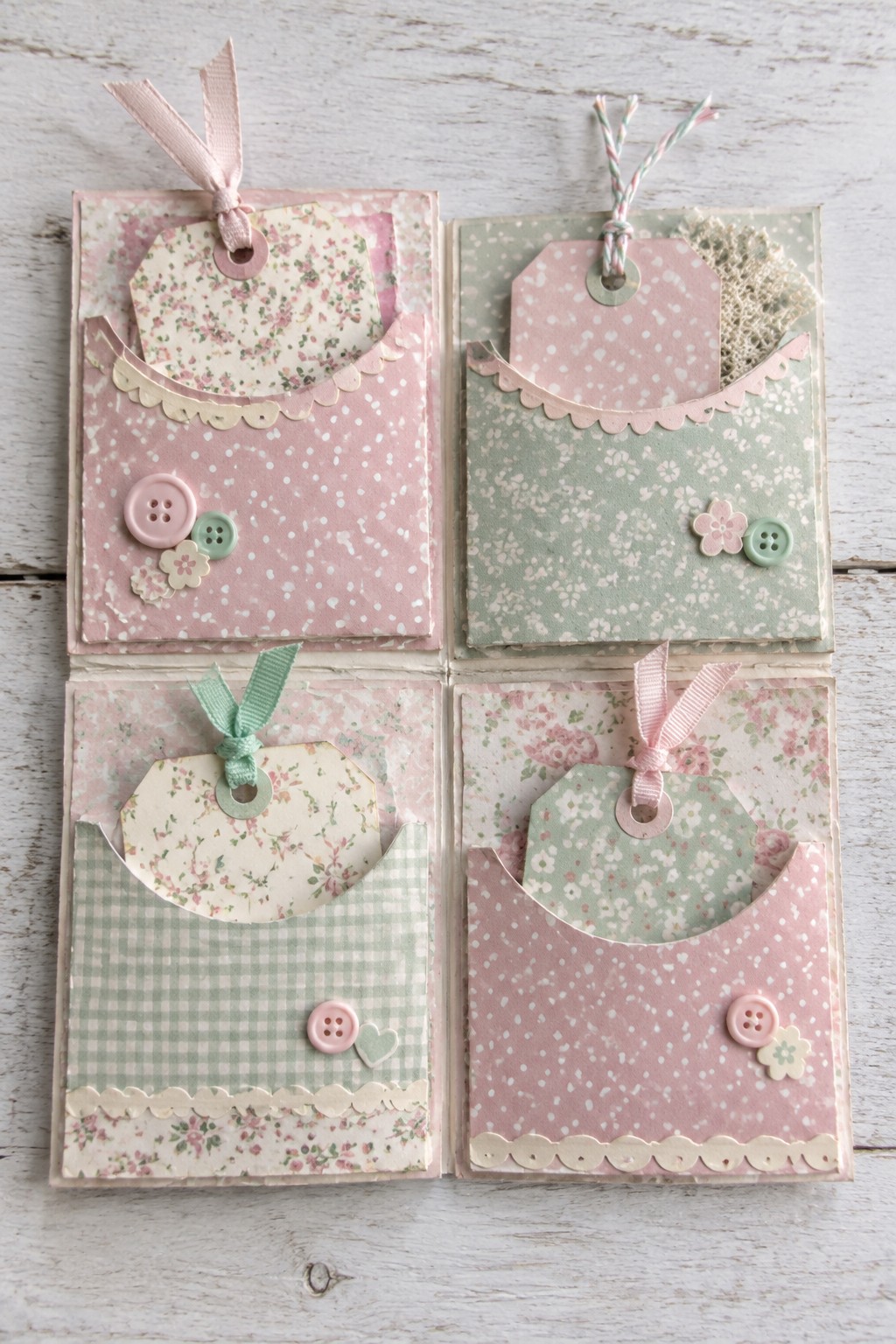
A coordinated set of pastel pocket pages pairs pink polka-dot paper, sage floral prints, and gingham with removable-looking tags peeking above curved pockets. The tags, tied with ribbon or twine, create the main focal point, while scalloped trim, small buttons, and floral embellishments give each panel its own variation.
You could recreate the arrangement with leftover scrapbook paper, making each pocket a different pattern while keeping the colors consistent across the set. Change the tag shapes or tie them with narrow fabric ribbon, and use the pockets for journaling cards or other paper inserts; simpler versions can skip the buttons and keep the focus on the layered papers and scalloped edges.
Victorian Stage-Themed Fold-Out Journal

A theatrical, Victorian-inspired fold-out spread uses layered panels to create a small stage scene at its center, framed by floral paper, lace, and gold-toned decorative details. Burgundy ribbon, dangling key and pocket-watch charms, portrait medallions, and translucent paper draped across the central illustration give the multi-panel arrangement its depth and rich mix of textures.
You could adapt the stage-like focal point with a small printed landscape, portrait, or other illustration, then frame it with patterned paper and lace scraps. For a simpler version, keep the central scene and one or two overlapping panels, using burgundy ribbon or a single charm as an accent; a pocket or tag tucked among the layers could add a practical place for journaling notes.
Frequently Asked Questions
A fold-out page is a page or insert attached to your journal that opens to reveal extra panels, writing space, pockets, or decorations. Unlike a standard page, it can unfold in one or more directions, making it useful when you want to include more content without adding a separate page. Fold-outs can be made from cardstock, scrapbook paper, envelopes, tags, or other lightweight materials.
There are many ways to arrange multiple panels. Try an accordion fold that opens in a zigzag, a gatefold with two flaps that meet in the middle, or a tri-fold that opens like a brochure. You can also make a waterfall design with panels that flip down one at a time, or a layered fold-out with a large center panel and smaller side flaps. Choose a layout based on how much space you need and how you want the page to open.
Lightweight cardstock and scrapbook paper are reliable choices because they fold easily and hold their shape. For a softer, vintage look, use book pages, old maps, patterned paper, or carefully reinforced ephemera. Glue sticks or double-sided tape work well for paper joins, while washi tape can reinforce hinges and add decoration. If you plan to add bulky embellishments, use sturdier paper and keep the layers light so the journal does not become difficult to close.
Attach the fold-out along one edge, leaving the rest free to open. You can use a narrow paper hinge, a strip of washi tape, or a fabric hinge secured with strong adhesive. Before gluing, test the fold and check that the panels open in the direction you want. Reinforce the hinge if the fold-out will be handled often, and avoid putting heavy decorations directly on the hinge line.
Plan the decorations before adding them, and spread visual weight across the panels. Use flat elements such as stamps, printed images, labels, handwriting, and thin paper layers. Add pockets or small tags only where they will not interfere with the folds. Leave some space for journaling, and close the fold-out several times as you work to make sure nothing catches, overlaps awkwardly, or prevents the journal from lying flat.
